Non-Contact Measurement vs Contact Gauging: Accuracy, Speed, and Use Cases
Non-Contact Measurement vs Contact Gauging: Accuracy, Speed, and Use Cases
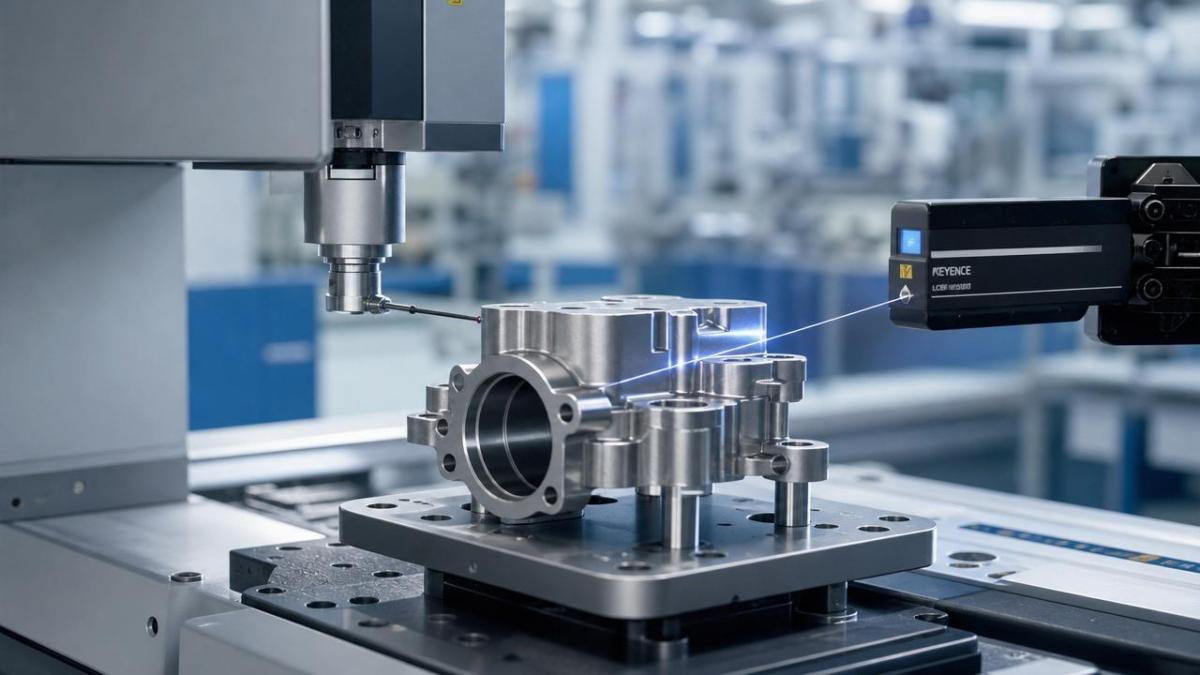
Choosing between contact gauging and non-contact measurement directly affects inspection accuracy, cycle time, and shop-floor reliability.
Delicate surfaces, high-speed lines, hot parts, and micron-level tolerances all change the measurement decision.
The right method determines whether data is repeatable, actionable, traceable, and safe to collect.
This article compares tactile gauging and non-contact measurement across accuracy, speed, limitations, and industrial use cases.
Basic Measurement Principles
Contact gauging uses a physical probe, stylus, anvil, or fixture to touch the target surface.
Common examples include dial indicators, micrometers, CMM touch probes, bore gauges, and displacement transducers.
The method relies on mechanical contact, controlled force, stable fixturing, and calibrated reference geometry.
Non-contact measurement captures dimensions or surface features without physically touching the inspected object.
Typical technologies include laser triangulation, confocal sensors, structured light, vision systems, OCT, and optical profilometry.
Some non-contact measurement systems also use ultrasonic, capacitive, eddy-current, or radar-based sensing principles.
Contact methods usually measure fewer points with strong mechanical certainty.
Non-contact measurement often captures dense point clouds, profiles, or images at much higher sampling speeds.
Industry Context and Current Inspection Priorities
Modern manufacturing is moving from isolated inspection toward connected metrology and real-time process intelligence.
Industry 4.0, digital twins, and predictive maintenance all require reliable physical data from production assets.
In this environment, non-contact measurement is no longer limited to laboratories or specialized optical rooms.
It is now embedded in automated lines, NDT workflows, semiconductor inspection, and material testing processes.
Precision instruments increasingly act as the tactile and visual nerves of industrial systems.
They translate surface shape, displacement, vibration, temperature, and hidden defects into usable process data.
Accuracy, Repeatability, and Measurement Uncertainty
Accuracy is not defined by sensor type alone.
It depends on calibration, environment, target properties, setup stability, and the measurement task.
Contact gauging can be highly accurate for simple, rigid, accessible features.
A calibrated micrometer or CMM touch probe remains excellent for shafts, bores, flats, and datums.
However, contact force may deform soft materials, thin films, rubber, foams, or delicate coatings.
In those cases, non-contact measurement avoids probe pressure and preserves the measured geometry.
Optical methods can also detect micro-defects, edge profiles, warpage, and surface texture at high point density.
Yet non-contact measurement may be affected by reflectivity, transparency, color, vibration, ambient light, and surface angle.
A polished metal part may create glare, while black rubber may return weak optical signals.
Transparent glass, liquids, and multilayer films require careful selection of wavelength and sensing principle.
Practical accuracy comparison
- Use contact gauging for rigid parts with clear datums and low inspection speed.
- Use non-contact measurement for fragile, hot, moving, or easily deformed surfaces.
- Use optical 3D scanning when shape deviation matters across an entire surface.
- Use tactile references when standards require traceable mechanical confirmation.
The best result often combines both approaches within one controlled measurement strategy.
Speed, Automation, and Data Density
Speed is where non-contact measurement often provides a decisive advantage.
Laser and vision systems can inspect moving parts without stopping the production line.
They can measure profiles, gaps, thickness, height, width, position, and surface defects in milliseconds.
Contact gauging is usually slower because each reading requires approach, touch, stabilization, and withdrawal.
This limitation becomes significant when inspection must follow every part in high-volume production.
Non-contact measurement also generates richer datasets for statistical process control and digital twin models.
Instead of one diameter value, a scanner can reveal ovality, taper, waviness, and localized defects.
This supports root-cause analysis, tool wear tracking, and earlier process correction.
However, higher data volume also requires stronger filtering, synchronization, and interpretation discipline.
Fast measurement without validated algorithms can produce confident but misleading results.
Typical Use Cases Across Industrial Fields
The choice depends on material behavior, tolerance class, geometry, environment, and inspection frequency.
No single method is universally superior across all industrial measurement problems.
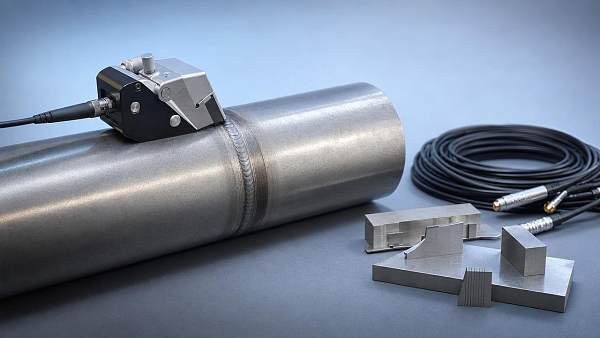
NDT workflows also benefit from non-contact measurement when surface access is limited or contamination is unacceptable.
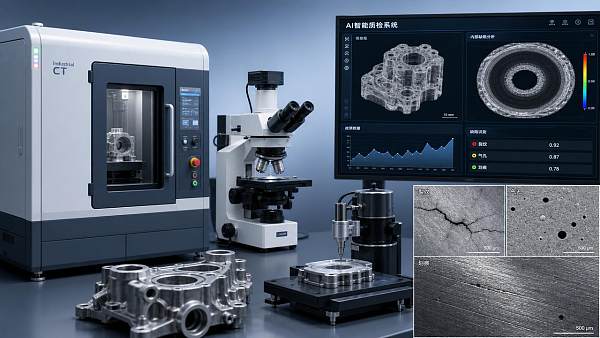
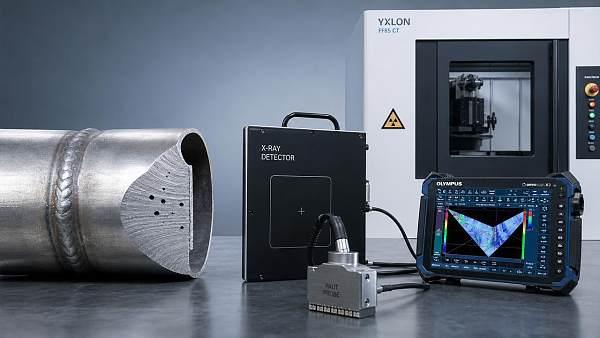
Industrial CT, ultrasonic inspection, and optical microscopy often complement dimensional inspection with internal defect evidence.
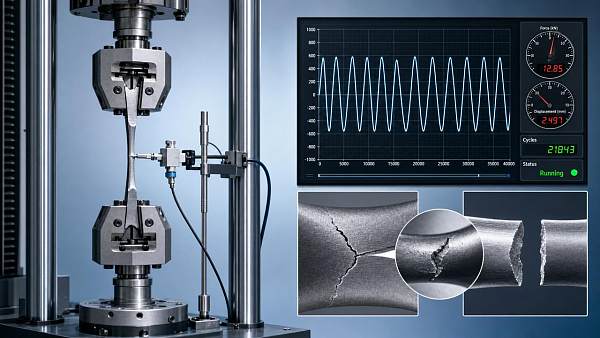
Material testing may use contact extensometers for standards compliance and optical systems for full-field strain mapping.
Business Value and Operational Meaning
Measurement strategy influences scrap reduction, production availability, compliance evidence, and product consistency.
Non-contact measurement can reduce handling damage and eliminate delays caused by manual part positioning.
It can also support 100% inspection when sampling is no longer sufficient for risk control.
For regulated or safety-critical sectors, contact gauging remains important for certified reference checks.
A tactile method may provide simpler uncertainty budgets for well-defined dimensional features.
The business value comes from matching the method to the failure mode being controlled.
If scratches, burns, deformation, or missed defects are costly, non-contact measurement can protect both quality and throughput.
If a tolerance is simple, stable, and mechanically accessible, contact gauging may remain the most economical option.
Implementation Considerations and Good Practice
A robust measurement decision should start with the feature, not the instrument catalog.
Define the tolerance, surface condition, production speed, environment, and required reporting format first.
- Confirm whether the part can tolerate physical contact without deformation.
- Check whether the surface is shiny, transparent, dark, rough, or wet.
- Validate gauge repeatability and reproducibility under real operating conditions.
- Control vibration, temperature drift, dust, oil mist, and lighting variation.
- Use certified artifacts to verify calibration and traceability.
- Compare measurement results against production decisions, not only sensor specifications.
For non-contact measurement, pay special attention to target presentation and algorithm settings.
Edge detection, filtering, thresholding, and surface compensation can change reported dimensions.
For contact gauging, monitor probe wear, contact force, alignment, and operator-dependent variation.
Both approaches require disciplined metrology practice to produce defensible data.
Selection Framework for Reliable Results
A practical framework helps avoid overengineering and under-measuring.
Use contact gauging when mechanical access is easy, the feature is simple, and throughput pressure is moderate.
Use non-contact measurement when parts move quickly, surfaces are sensitive, or geometry is complex.
Use hybrid inspection when certification, dense mapping, and process control must coexist.
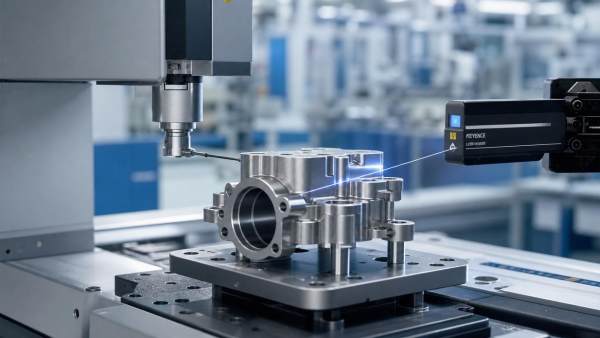
Hybrid systems may combine CMM probing, laser scanning, machine vision, and NDT data.
This creates a stronger picture of dimensional accuracy, surface integrity, and internal condition.
Before investment, run a capability study on real parts with real environmental disturbance.
Review false rejects, false accepts, maintenance needs, integration effort, and data usability.
Conclusion and Next Steps
Contact gauging remains valuable where tactile certainty, simple geometry, and mechanical traceability are priorities.
Non-contact measurement is stronger for speed, delicate surfaces, hot parts, complex profiles, and automated inspection.
The most reliable strategy is based on uncertainty, repeatability, surface behavior, and production decision risk.
For advanced industrial environments, non-contact measurement also supports richer data for digital twins and predictive maintenance.
The next step is to map each critical feature to its risk, speed requirement, and acceptable uncertainty.
Then compare contact gauging, non-contact measurement, and hybrid inspection through controlled trials on representative parts.
PIAS continues tracking metrology, NDT, optical inspection, and sensing technologies for data-driven industrial precision.
Related Intelligence
 RTD/Thermocouple Sensors)Jun 05, 2026How to Evaluate a Temperature Transmitters Exporter for Certifications and Lead TimeTemperature transmitters exporter evaluation starts with certifications, documentation, and lead time. Learn how to compare suppliers, reduce sourcing risk, and choose a reliable partner.
 Industrial X-ray/CTJun 05, 2026AI Defect Recognition in Industrial Inspection: Best Use Cases and Common LimitsAI defect recognition in industrial inspection delivers faster, more reliable defect screening. Explore top use cases, hidden limits, and what to evaluate before scaling deployment.
 Commercial InsightsJun 05, 2026Process Control Instrumentation Selection Guide for Chemical Plants and Utility SystemsProcess control instrumentation selection guide for chemical plants and utility systems. Learn practical tips to improve safety, uptime, compliance, and lifecycle performance.
 High-frequency Fatigue TestersJun 05, 2026Anti-Fatigue Lifespan Testing Explained: Methods, Load Profiles, and Failure CriteriaAnti-fatigue lifespan testing explained: explore key methods, realistic load profiles, and clear failure criteria to compare results, assess durability, and make smarter industrial validation decisions.
 Silicon Pressure TransmittersJun 05, 2026How to Request a Pressure Transmitters Quotation: Specs, Incoterms, and Hidden Cost ChecksPressure transmitters quotation guide: learn how to confirm specs, Incoterms, certifications, and hidden costs to compare suppliers faster and reduce sourcing risk.
![]() High-frequency Fatigue TestersJun 04, 2026Anti-Fatigue Lifespan Testing: What Load, Frequency, and Cycles Should You Validate?Anti-fatigue lifespan testing made practical: learn how to validate load, frequency, and cycles for reliable durability, faster qualification, and stronger compliance decisions.
High-frequency Fatigue TestersJun 04, 2026Anti-Fatigue Lifespan Testing: What Load, Frequency, and Cycles Should You Validate?Anti-fatigue lifespan testing made practical: learn how to validate load, frequency, and cycles for reliable durability, faster qualification, and stronger compliance decisions.![]() Silicon Pressure TransmittersJun 04, 2026How to Request a Pressure Transmitters Quotation: Specs, Certifications, and Cost DriversPressure transmitters quotation guide: learn what specs, certifications, and cost drivers to include in your RFQ to get accurate quotes, avoid risks, and compare suppliers with confidence.
Silicon Pressure TransmittersJun 04, 2026How to Request a Pressure Transmitters Quotation: Specs, Certifications, and Cost DriversPressure transmitters quotation guide: learn what specs, certifications, and cost drivers to include in your RFQ to get accurate quotes, avoid risks, and compare suppliers with confidence.![]() Digital Profile ProjectorsJun 04, 2026Precision Measurement Instruments: Key Specs to Compare Before Buying for QCPrecision measurement instruments for QC: compare repeatability, drift, environmental fit, and data integration before buying to reduce risk and improve inspection confidence.
Digital Profile ProjectorsJun 04, 2026Precision Measurement Instruments: Key Specs to Compare Before Buying for QCPrecision measurement instruments for QC: compare repeatability, drift, environmental fit, and data integration before buying to reduce risk and improve inspection confidence.![]() Commercial InsightsJun 04, 2026Polymer Analysis Methods Explained: Which Tests Matter for Material Selection?Polymer analysis methods explained for smarter material selection. Learn which tests matter most for thermal, mechanical, chemical, and long-term performance decisions.
Commercial InsightsJun 04, 2026Polymer Analysis Methods Explained: Which Tests Matter for Material Selection?Polymer analysis methods explained for smarter material selection. Learn which tests matter most for thermal, mechanical, chemical, and long-term performance decisions.![]() Wireless IIoT NodesJun 04, 2026How to Choose Extreme Environment Sensors for High Heat, Pressure, and Corrosive SitesExtreme environment sensors selection guide for high heat, pressure, and corrosive sites. Learn how to compare materials, sealing, drift, and lifecycle risk for safer, smarter decisions.
Wireless IIoT NodesJun 04, 2026How to Choose Extreme Environment Sensors for High Heat, Pressure, and Corrosive SitesExtreme environment sensors selection guide for high heat, pressure, and corrosive sites. Learn how to compare materials, sealing, drift, and lifecycle risk for safer, smarter decisions. Phased Array Ultrasonics - PAUTJun 03, 2026Phased Array Ultrasonics for Weld Testing: Parameters That MatterPhased array ultrasonics improves weld testing accuracy when key parameters are controlled. Learn essential setup tips to boost flaw detection and reduce false calls.
 Industrial X-ray/CTJun 03, 2026Weld Porosity Inspection: X-ray, PAUT, or CT—Which Method Fits?Weld porosity inspection made clear: compare X-ray, PAUT, and CT by accuracy, access, cost, and compliance to choose the safest method for your welds.
 Evolutionary TrendsJun 03, 2026Digital Twins Instrumentation: Data, Sensors, and Integration NeedsDigital Twins instrumentation starts with trustworthy sensors, data quality, and integration. Learn how to build reliable twins for predictive maintenance and smarter decisions.