Comparing Industrial Measurement Equipment Quotes: Hidden Costs to Check

The lowest industrial measurement equipment quotation can become the most expensive purchase once calibration, installation, software licensing, and ongoing support enter the picture. For procurement teams sourcing flow meters, NDT systems, optical instruments, or material testing machines, the challenge is not simply finding a competitive price. It is identifying what that price actually buys—and what the plant will still need before producing reliable measurements.
A quotation may describe a complete instrument without describing a complete, usable measurement system. Missing fixtures, unsuitable calibration coverage, or an unpriced software interface can turn an apparently straightforward purchase into months of additional approvals. Before issuing a purchase order, compare suppliers against the same operating requirements, delivery scope, and ownership period.
Start by making the quotations comparable
Two instruments with similar catalog specifications may not deliver equivalent results in your application. One supplier may include installation and application setup; another may quote only the hardware. Even the word “accuracy” can conceal differences in reference conditions, measuring range, and calculation method.
Send each supplier a common requirements sheet covering the measurand, operating range, materials, environment, throughput, interfaces, and acceptance criteria. Ask for a line-by-line response marked included, optional, excluded, or not applicable. Blank spaces should become clarification questions, not assumptions.
Keep technical compliance separate from commercial scoring. An instrument that cannot meet a mandatory inspection or process requirement should not win because its missing capability makes it cheaper.
The costs hidden between delivery and first use
Calibration is not the same as application acceptance
“Calibration included” deserves a follow-up question: included for which quantity, range, conditions, and measurement points? A certificate may cover the instrument’s standard configuration but not the probe, load cell, temperature range, or complete measurement chain you intend to use.
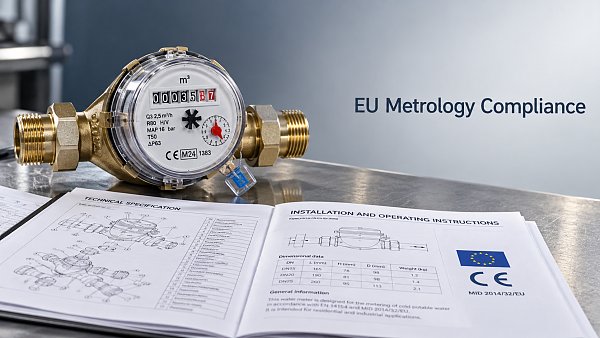
Where accredited calibration is required, confirm that the laboratory’s ISO/IEC 17025 accreditation scope covers the relevant service. Accreditation alone does not establish that every calibration offered is within scope. Request an example certificate and check uncertainty, traceability information, and the identification of supplied components.
Calibration also does not prove that a system performs adequately on your production parts. You may still need method validation, measurement system analysis, or an on-site acceptance study. Allocate responsibility and cost before ordering, especially when suppliers and internal quality teams use different definitions of “ready for production.”
Installation often belongs to more than one contractor
A supplier’s installation charge may cover positioning and startup, but exclude unloading, rigging, foundations, piping modifications, electrical work, or network connections. Ask for a site-readiness document early enough for facilities and engineering teams to price their work.
For a process instrument, replacement may require isolation, draining, decontamination, and a planned shutdown. A testing machine may need a foundation assessment or sufficient clearance for specimen handling. An optical measurement system may require temperature control and vibration isolation. These are not peripheral expenses if the equipment cannot perform without them.
Clarify who pays when the site is not ready at the scheduled visit. Waiting time, return travel, and rescheduling charges can be avoidable—but only when readiness requirements are explicit.
Training must cover the job, not just the buttons
Basic familiarization may teach operators how to start a measurement without teaching them how to recognize an unreliable result. Ask whether training includes application setup, reference checks, troubleshooting, reporting, and routine maintenance.
Confirm participant limits, shift coverage, training materials, travel expenses, and whether follow-up sessions are included. For NDT work, supplier equipment training should not be confused with any personnel qualification or certification required by the applicable inspection scheme.

Where hidden costs differ by equipment type
A useful industrial measurement equipment quotation reflects the physics and practical demands of the application. The same cost checklist cannot capture every risk across process measurement, inspection, microscopy, and mechanical testing.
Flow, level, temperature, and pressure instruments
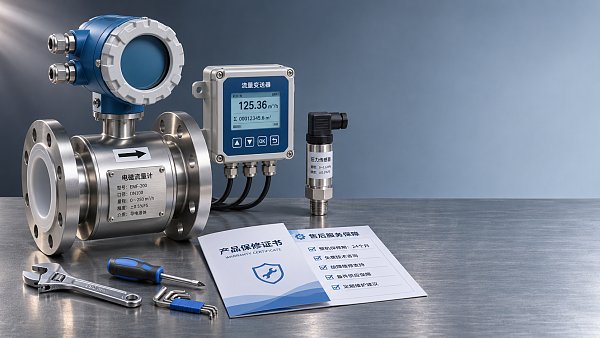
Check process connections, wetted materials, pressure and temperature ratings, enclosure protection, and any required hazardous-area approvals. A nominally equivalent transmitter may need a manifold, mounting bracket, remote seal, capillary, thermowell, or special cable before it can replace the existing device.
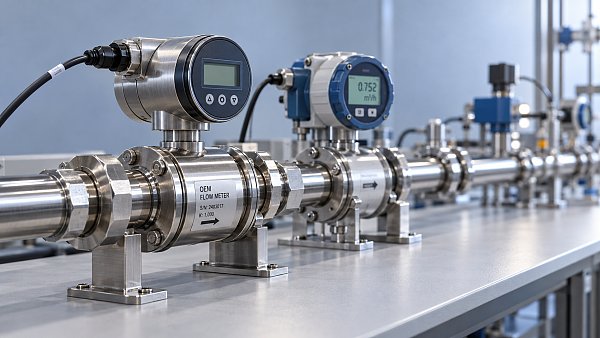
Flow meter installation requirements depend on the measurement principle and service conditions. Straight-run provisions, grounding, flow conditioning, pressure loss, and fluid compatibility can change the installed cost. Radar level instruments may require suitable mounting hardware and application setup to manage obstructions or difficult surface conditions.
For remote devices, include access costs in maintenance planning. A low-priced sensor that requires scaffolding or a process shutdown for routine attention may carry a higher ownership burden than expected.
NDT equipment
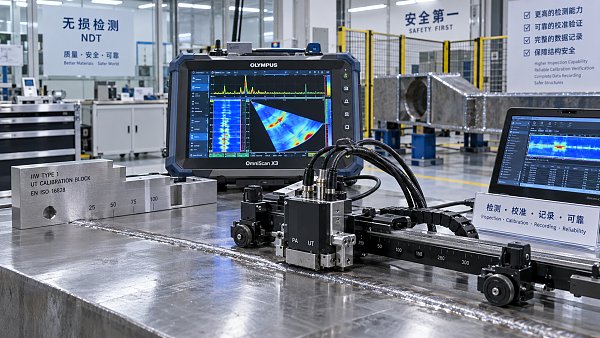
With ultrasonic and phased-array systems, inspect the scope for probes, wedges, scanners, encoders, reference blocks, couplant, and analysis software. Confirm whether the quoted configuration supports the required inspection procedure rather than merely offering the relevant technology.
Industrial CT brings a different set of questions: shielding arrangements, local radiation-safety obligations, cooling, reconstruction computing, storage, and service access. Ask which wear components are covered by warranty and which are excluded. High-volume image generation also makes data retention and transfer costs worth checking before purchase.
Optical microscopes and measurement systems
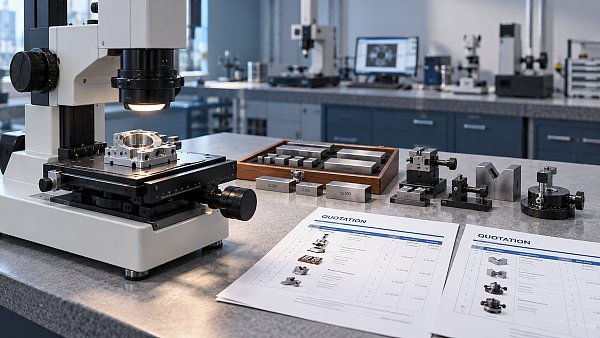
The quoted microscope body may exclude the objective, camera, motorized stage, illumination, or software module needed for your task. Distinguish image resolution from dimensional measurement capability; a visually sharp image does not establish the uncertainty of a measured feature.
Request a demonstration using representative parts with relevant surfaces, geometries, and tolerances. Budget for calibration artifacts, fixturing, environmental control, and analysis tools where needed. If automated inspection is planned, include recipe creation and changeover work—not just acquisition speed.
Material testing machines
A load frame price is rarely the price of a complete testing capability. Grips, compression platens, extensometers, additional load cells, protective guarding, and environmental chambers can materially change the total.
Ask suppliers to identify the exact fixtures and software required for your intended test methods. Consider specimen preparation, grip-face wear, chamber utilities, and periodic verification. For fatigue testing, confirm cooling and power requirements alongside service coverage for components exposed to sustained cycling.
Software and integration: small line items, long commitments
“Connectivity included” is not a sufficient integration specification. A physical Ethernet port does not guarantee compatibility with your PLC, SCADA, MES, LIMS, or quality management system. Likewise, a 4–20 mA output may deliver the process value without exposing the diagnostics your maintenance team expects.
Ask suppliers to name supported protocols, available data fields, interface licenses, and engineering responsibilities. Establish who handles configuration, cybersecurity review, user permissions, timestamp alignment, and validation of transferred results.
- License basis: Is software perpetual, subscription-based, per workstation, per user, or tied to a specific instrument?
- Feature access: Are advanced analysis, automated reporting, APIs, and batch processing separately licensed?
- Data ownership: Can you export raw measurements and results in usable formats without an active subscription?
- Continuity: What happens if a license server fails, a workstation is replaced, or internet access is unavailable?
- Updates: Are updates optional, and who pays for compatibility checks or revalidation after changes?
For Industry 4.0 and digital-twin projects, usable measurement data matters more than a connectivity claim. Include the work needed to preserve units, calibration status, asset identity, and measurement context. Otherwise, the equipment may connect successfully while supplying data that downstream systems cannot trust.
Build a lifecycle comparison without false precision
Choose a comparison period that matches your organization’s planning horizon and the expected service life. Apply the same assumptions to every supplier, including utilization, service coverage, calibration frequency, and software access.
Comparable ownership cost = acquisition + delivery and import costs + installation and qualification + software and integration + operating and maintenance costs + end-of-life costs − supportable residual value.
Keep recoverable taxes separate where appropriate, and avoid counting costs twice when they are already included in a service package. Treat residual value conservatively unless there is evidence for it.
Downtime deserves attention, but not an invented number. Develop a separate risk scenario using your plant’s own labor, production, and quality data. Compare local service availability, spare-part lead times, loan equipment terms, and recovery options. Where supplier information is incomplete, show a cost range or flag the uncertainty instead of presenting a misleadingly precise total.
Also check consumables and mandatory replacement parts. Ask for current prices, recommended replacement conditions, and any available price-validity commitments. A maintenance interval should reflect actual duty and environment, not automatically become an annual purchasing assumption.
Commercial terms that can undo a good technical decision
Delivery terms affect both cost and responsibility. Specify the agreed Incoterms® rule, named place, and version, then identify who handles freight, insurance, customs clearance, duties, unloading, and installation. Do not assume that delivery terms determine title transfer or payment conditions; address those separately.
Check quotation validity, currency exposure, lead-time assumptions, and dependencies on drawings, samples, or advance payments. For cross-border purchases, verify any applicable export restrictions, licenses, and destination requirements before committing to a production schedule.
Warranty wording needs equal care. Does coverage begin at shipment, delivery, or acceptance? Are labor, travel, freight, and replacement components included? A repair warranty is not a guaranteed response time, and a response-time commitment is not a guaranteed restoration time.
Before approval, close the gaps in writing
The final comparison should show three things clearly: the price of the offered configuration, the additional spending required to make it usable, and the remaining operational risks. Ask shortlisted suppliers for a consolidated quotation incorporating all agreed clarifications rather than relying on scattered emails.
Attach measurable acceptance criteria to the purchase order: representative parts or process conditions, required performance, test methods, documentation, and responsibility for correcting nonconformities. Where commercially feasible, link part of the payment schedule to demonstrated acceptance.
The strongest industrial measurement equipment quotation is not necessarily the longest or cheapest. It is the one that leaves the fewest consequential assumptions unresolved. When procurement, engineering, quality, IT, and maintenance agree on those assumptions before purchase, the budget becomes more defensible—and the instrument is more likely to deliver reliable measurements when production needs them.
Questions about radar level measurement? Leave a message for application guidance from PIAS.
We respect your privacy. Your information is strictly confidential.
Related Intelligence
 Commercial InsightsNov 09, 2026Comparing Industrial Instrument Suppliers: Warranty Coverage and ExclusionsMake a smarter supplier comparison for industrial instruments warranty terms. Discover hidden exclusions, service costs, and key questions before you buy.
 Commercial InsightsNov 07, 2026Industrial Level Meter Costs: Purchase, Installation and MaintenanceCompare industrial level meters cost across purchase, installation, and maintenance. Learn how to evaluate lifecycle costs and choose the right meter.
 Commercial InsightsOct 27, 2026Optical Microscope Distributors in Europe: How to Verify Service and WarrantySearching for “optical microscopes distributor Europe”? Learn how to verify authorization, repair support and warranty terms to choose confidently and reduce costly downtime.
 Commercial InsightsOct 24, 2026Choosing an OEM Flow Meter Supplier: Calibration, Customization, and Lead TimesSource flow meters OEM teams can trust. Compare supplier calibration, customization, and lead times to reduce integration risks, control costs, and secure reliable supply.
 Commercial InsightsOct 19, 2026MDF Six-Sided Drilling Machines: Assessing Setup and Changeover NeedsExplore MDF six-sided drilling process details to assess setup, changeovers, tooling and connector fit. Discover practical checks to compare machines and make a confident purchase.
 Commercial InsightsOct 19, 2026Comparing Industrial Measurement Equipment Quotes: Hidden Costs to CheckCompare your industrial measurement equipment quotation with confidence. Uncover hidden calibration, software, and installation costs to avoid surprises and choose better value.
 Commercial InsightsOct 18, 2026EU Metrology Compliance: When Do MID and National Rules Apply?Navigate metrology regulation compliance Europe-wide: discover when MID or national rules apply, verify instrument approvals, and avoid costly deployment mistakes.
 Commercial InsightsOct 16, 2026Industry 4.0 in Southeast Asia: What Factory Data Should You Collect First?Explore Industry 4.0 data needs Southeast Asia factories should prioritize. Learn which machine, downtime, and quality data to collect first to reduce losses and guide smarter decisions.
 Commercial InsightsOct 15, 2026Dimensional Inspection System Prices: How Accuracy and Automation Affect CostCompare dimensional inspection systems price quotes to see how accuracy, automation, and ownership costs affect value. Learn what to ask suppliers before you invest.
 Commercial InsightsOct 13, 2026Choosing an NDT Equipment Exporter: Calibration, Warranty, and Import ChecksChoosing an NDT equipment exporter? Learn how to verify calibration, compare warranties, and check import requirements to avoid delays and buy with confidence.
 Commercial InsightsOct 09, 2026When do manufacturing inspection solutions reduce rework on production lines?Manufacturing inspection solutions reduce rework by detecting defects early, enabling faster corrective action, stronger traceability, and more efficient production lines.
 Commercial InsightsOct 09, 2026What Should Be Included in an NDT Equipment Specification?What should be included in a non-destructive testing equipment specification? Explore essential requirements for capability, calibration, data, safety, and compliance.
 Commercial InsightsOct 01, 2026Selecting Process Instrumentation Solutions for Chemical Plants: Measurement RisksProcess instrumentation solutions for chemical plants: identify measurement risks, improve reliability, and choose technologies that support safer, smarter operations.