Comparing Industrial Instrument Suppliers: Warranty Coverage and Exclusions
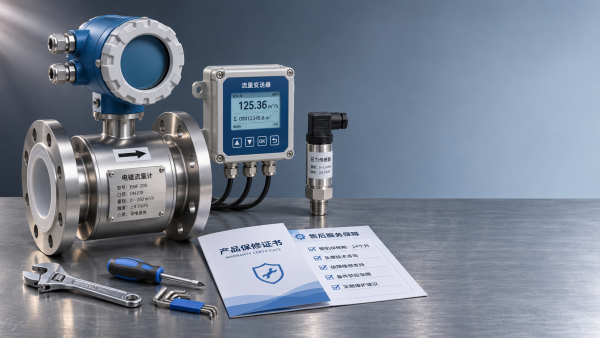
A longer warranty does not necessarily offer better protection for an industrial instrument. A supplier may cover replacement parts while excluding site labor, freight, recalibration, or damage associated with the process environment. For a critical meter or testing machine, those exclusions can cost more than the original price difference between competing bids.
A useful supplier comparison for industrial instruments warranty terms starts with a practical question: if this instrument fails during normal operation, who pays to restore it to service, and how quickly can that happen? Compare the answer across the full scope of supply, the stated operating conditions, and the supplier’s actual claim process—not just the number of months printed on the quotation.
Start with what the warranty actually covers
Ask each supplier for its complete warranty terms alongside the quotation. Marketing summaries often state a coverage period without explaining which components, services, and failure causes are included. The purchase order, manufacturer’s warranty, distributor terms, and any service agreement may each address different parts of the transaction.
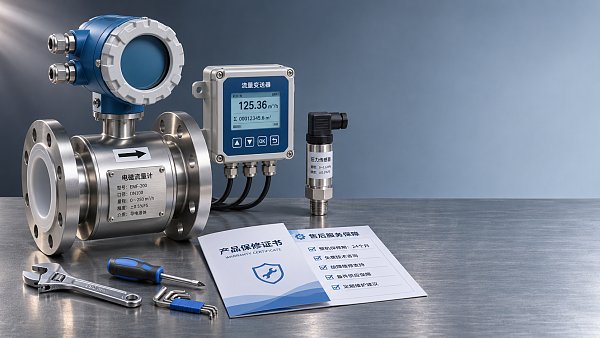
For an instrument package, identify coverage by component. A flowmeter assembly, for example, may include a sensor, transmitter, display, wiring accessories, and software. A material testing system may include a load frame, load cell, grips, controller, and environmental chamber. These items can have different warranty periods or be supported by different manufacturers.
Also establish when coverage begins. A warranty starting at shipment can lose practical value if equipment spends a long time in transit, installation, or project storage. A start date tied to commissioning may suit a capital project better, provided the agreement defines commissioning and any maximum period between delivery and startup.
Read exclusions against the real operating environment
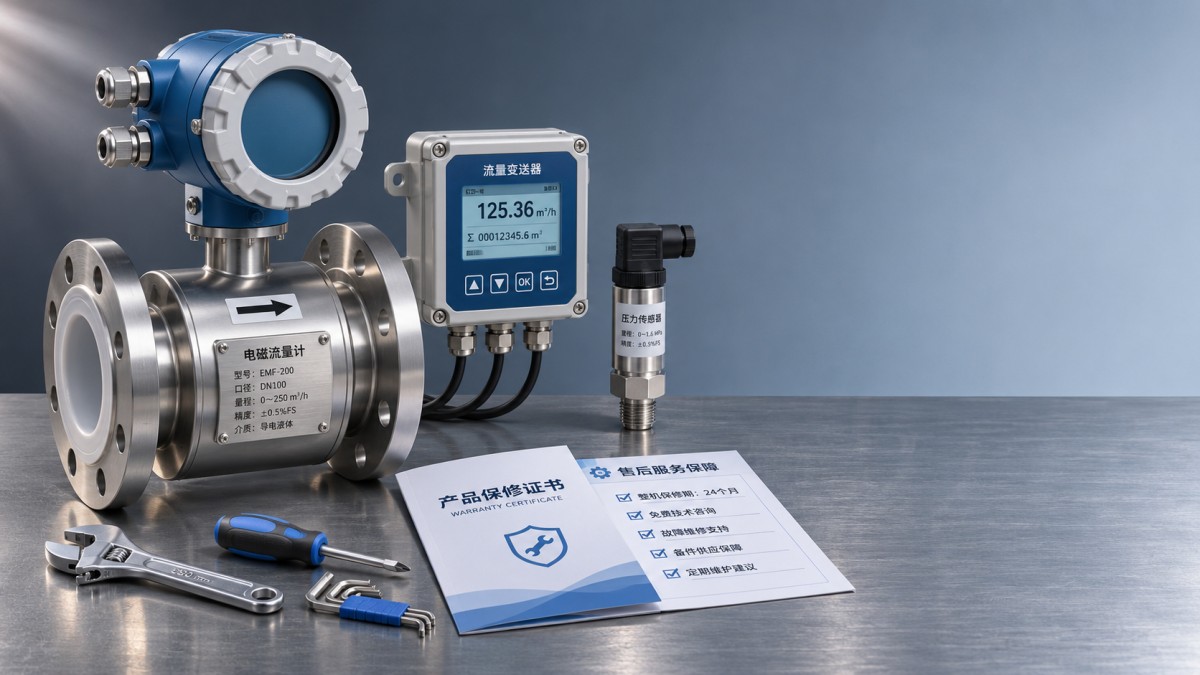
Most industrial instrument warranties focus on defects in materials or workmanship. They commonly exclude some combination of misuse, incorrect installation, unauthorized modification, normal wear, and damage outside specified conditions. Those categories sound straightforward until a failure has more than one plausible cause.
For process instruments, compare the stated limits and material compatibility with the actual fluid, temperature, pressure, cleaning chemicals, and expected operating cycles. A corrosion-related exclusion matters much more when the supplier selected the wetted materials from process information provided during the sale. Record the operating conditions and the supplier’s material recommendation in the purchase documentation; that gives both parties a clearer basis for assessing a later claim.
Environmental exposure deserves the same attention. Moisture ingress, vibration, dust, electrical disturbances, and unsuitable storage can affect instruments in different ways. A transmitter installed outdoors may need protection against condensation as well as rain. An NDT instrument moved between sites faces handling and transport risks that a laboratory microscope may not. The relevant question is whether the proposed installation and use fall within the equipment’s specified conditions and the warranty’s requirements.
Pay particular attention to exclusions for consumables and wear items. Probes, cables, couplants, lamps, grips, seals, and other accessories may be treated differently from the main instrument. A blanket exclusion for a probe may be reasonable for contact wear but less attractive if it also excludes an early manufacturing defect. Ask suppliers to distinguish normal wear from a covered defect and to price replacement items where practical.
Calibration and accuracy: separate the instrument from the service
A warranty on an instrument does not automatically include periodic calibration. Calibration checks or establishes the relationship between an instrument’s readings and reference values; adjustment and repair are separate activities. A calibration certificate supplied at delivery also does not, by itself, guarantee that the instrument will remain within specification throughout its warranty period.
Ask what happens if equipment fails an accuracy check during the coverage period. Will the supplier investigate, adjust, repair, or replace it? Who pays for the calibration service and any repeat certificate? The answer can depend on whether the cause is a covered defect, ordinary drift, damage, or operation outside specified conditions.
For instruments used in quality acceptance, research, or regulated processes, restoration involves more than making the device power on. Agree on the required post-repair verification, the certificate or report needed, and who bears the cost if a covered repair makes recalibration necessary. The warranty may address the instrument itself while leaving investigation of potentially affected measurements to the user; include that possibility in the risk assessment.
Compare the claim process before a failure occurs
A favorable warranty is less useful if the claim route is slow or unclear. Establish whether the distributor handles diagnosis and authorization or whether the instrument must be returned to the manufacturer. Where multiple companies supplied a package, identify the contact responsible for coordinating a fault that could involve more than one component.
Ask suppliers to describe the steps from the first fault report to return to service. Useful details include the evidence required, who performs initial troubleshooting, whether remote support is available, and when the supplier can inspect the equipment. A response-time commitment should specify what counts as a response: acknowledging an email is different from assigning a qualified technician or attending site.
Repair turnaround is another separate measure. If a supplier offers a target rather than a binding commitment, treat it as planning information rather than a guaranteed deadline. For equipment that cannot be easily removed, establish whether on-site repair is available and whether travel, access arrangements, and replacement parts are included.
For critical measurements, ask about loan equipment or advance replacement. A loaner only reduces downtime if its range, interfaces, configuration, and calibration status suit the application. Where a substitute is unavailable, keeping a compatible spare may be more valuable than buying an extended warranty with uncertain repair timing.
Put warranty differences into the total cost comparison
Build the comparison around a plausible failure, not just the annualized purchase price. For each bid, list the buyer’s likely costs for diagnosis, removal, shipping, replacement equipment, reinstallation, and post-repair verification. Add the expected operational impact of waiting for service, using your organization’s own downtime assumptions.
Consider two hypothetical transmitter offers. Supplier A has a longer parts warranty but requires the buyer to remove and ship the unit and pay for site labor. Supplier B offers a shorter warranty with included on-site diagnosis and replacement for covered faults. If the transmitter is easy to isolate and a spare is already in stock, A may be adequate. If removal requires a production shutdown and specialist access, B’s service terms may provide better value.
Do not add every potential charge as though it will certainly occur. Use the scenario to expose which costs remain with the buyer and how those costs change if the claim is accepted or rejected. Request written rates for non-warranty diagnosis, travel, and repair where those charges could materially affect the decision. Also establish whether the supplier will seek approval before beginning chargeable work.
Extended warranties and service contracts solve different problems
An extended warranty can lengthen protection against specified defects. A service contract may instead provide preventive maintenance, calibration, priority support, or scheduled site visits. Some agreements combine these elements, but the labels alone do not establish what is included.
An extension is more compelling when an instrument is expensive to repair, difficult to replace, or likely to remain in service well beyond its initial coverage. It is less compelling when the excluded components account for much of the exposure, the remedy is limited to depot repair, or the buyer already maintains suitable spares and in-house support.
Before accepting an extension, compare its price with the protection it adds after the standard warranty ends. Check whether it covers the same components and remedies, whether maintenance by an authorized provider is required, and whether coverage can be transferred if the equipment moves to another site. An extension that depends on paid servicing should be evaluated together with that servicing cost.
Turn the preferred terms into a purchase requirement
Send suppliers the same operating and service information so their responses can be compared fairly: instrument configuration, process or laboratory conditions, installation location, commissioning schedule, criticality, and required return-to-service arrangements. Ask them to identify exceptions in writing rather than relying on a general statement that their standard warranty applies.
Before placing the order, resolve differences between the quotation and the warranty documents. The agreed contract should identify the covered equipment, start and end conditions, exclusions, claim contact, allocation of service and logistics costs, and any response or replacement commitments. If a supplier has recommended materials, installation conditions, or maintenance practices that affect coverage, retain those recommendations with the order.
The strongest offer is the one that leaves an acceptable share of cost and operational risk with the buyer. For a noncritical instrument with a readily available spare, basic defect coverage may be sufficient. For equipment that controls a process or supports high-value inspection, documented service access and a workable recovery plan can justify a higher purchase price.
Questions about radar level measurement? Leave a message for application guidance from PIAS.
We respect your privacy. Your information is strictly confidential.
Related Intelligence
 Commercial InsightsNov 09, 2026Comparing Industrial Instrument Suppliers: Warranty Coverage and ExclusionsMake a smarter supplier comparison for industrial instruments warranty terms. Discover hidden exclusions, service costs, and key questions before you buy.
 Commercial InsightsNov 07, 2026Industrial Level Meter Costs: Purchase, Installation and MaintenanceCompare industrial level meters cost across purchase, installation, and maintenance. Learn how to evaluate lifecycle costs and choose the right meter.
 Commercial InsightsOct 27, 2026Optical Microscope Distributors in Europe: How to Verify Service and WarrantySearching for “optical microscopes distributor Europe”? Learn how to verify authorization, repair support and warranty terms to choose confidently and reduce costly downtime.
 Commercial InsightsOct 24, 2026Choosing an OEM Flow Meter Supplier: Calibration, Customization, and Lead TimesSource flow meters OEM teams can trust. Compare supplier calibration, customization, and lead times to reduce integration risks, control costs, and secure reliable supply.
 Commercial InsightsOct 19, 2026MDF Six-Sided Drilling Machines: Assessing Setup and Changeover NeedsExplore MDF six-sided drilling process details to assess setup, changeovers, tooling and connector fit. Discover practical checks to compare machines and make a confident purchase.
 Commercial InsightsOct 19, 2026Comparing Industrial Measurement Equipment Quotes: Hidden Costs to CheckCompare your industrial measurement equipment quotation with confidence. Uncover hidden calibration, software, and installation costs to avoid surprises and choose better value.
 Commercial InsightsOct 18, 2026EU Metrology Compliance: When Do MID and National Rules Apply?Navigate metrology regulation compliance Europe-wide: discover when MID or national rules apply, verify instrument approvals, and avoid costly deployment mistakes.
 Commercial InsightsOct 16, 2026Industry 4.0 in Southeast Asia: What Factory Data Should You Collect First?Explore Industry 4.0 data needs Southeast Asia factories should prioritize. Learn which machine, downtime, and quality data to collect first to reduce losses and guide smarter decisions.
 Commercial InsightsOct 15, 2026Dimensional Inspection System Prices: How Accuracy and Automation Affect CostCompare dimensional inspection systems price quotes to see how accuracy, automation, and ownership costs affect value. Learn what to ask suppliers before you invest.
 Commercial InsightsOct 13, 2026Choosing an NDT Equipment Exporter: Calibration, Warranty, and Import ChecksChoosing an NDT equipment exporter? Learn how to verify calibration, compare warranties, and check import requirements to avoid delays and buy with confidence.
 Commercial InsightsOct 09, 2026When do manufacturing inspection solutions reduce rework on production lines?Manufacturing inspection solutions reduce rework by detecting defects early, enabling faster corrective action, stronger traceability, and more efficient production lines.
 Commercial InsightsOct 09, 2026What Should Be Included in an NDT Equipment Specification?What should be included in a non-destructive testing equipment specification? Explore essential requirements for capability, calibration, data, safety, and compliance.
 Commercial InsightsOct 01, 2026Selecting Process Instrumentation Solutions for Chemical Plants: Measurement RisksProcess instrumentation solutions for chemical plants: identify measurement risks, improve reliability, and choose technologies that support safer, smarter operations.