When optical profilometry beats contact surface testing
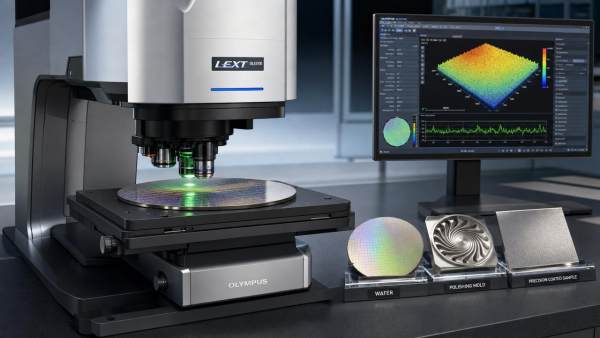
When delicate surfaces, soft materials, or high-value components cannot risk probe-induced damage, optical profilometry often outperforms contact surface testing.
It captures fast, non-contact 3D surface data with excellent repeatability.
That matters across industrial metrology, NDT workflows, materials testing, electronics, medical devices, and precision machining.
For teams focused on quality, reliability, and digital inspection, optical profilometry helps reveal roughness, waviness, wear, scratches, pits, and micro-defects without touching the part.
The key question is not whether it is advanced.
The real question is when optical profilometry beats contact surface testing in practical production environments.
What is optical profilometry, and why does it matter?
Optical profilometry is a non-contact measurement method used to map surface topography in 2D and 3D.
It typically uses white light interferometry, confocal techniques, focus variation, or related optical metrology methods.
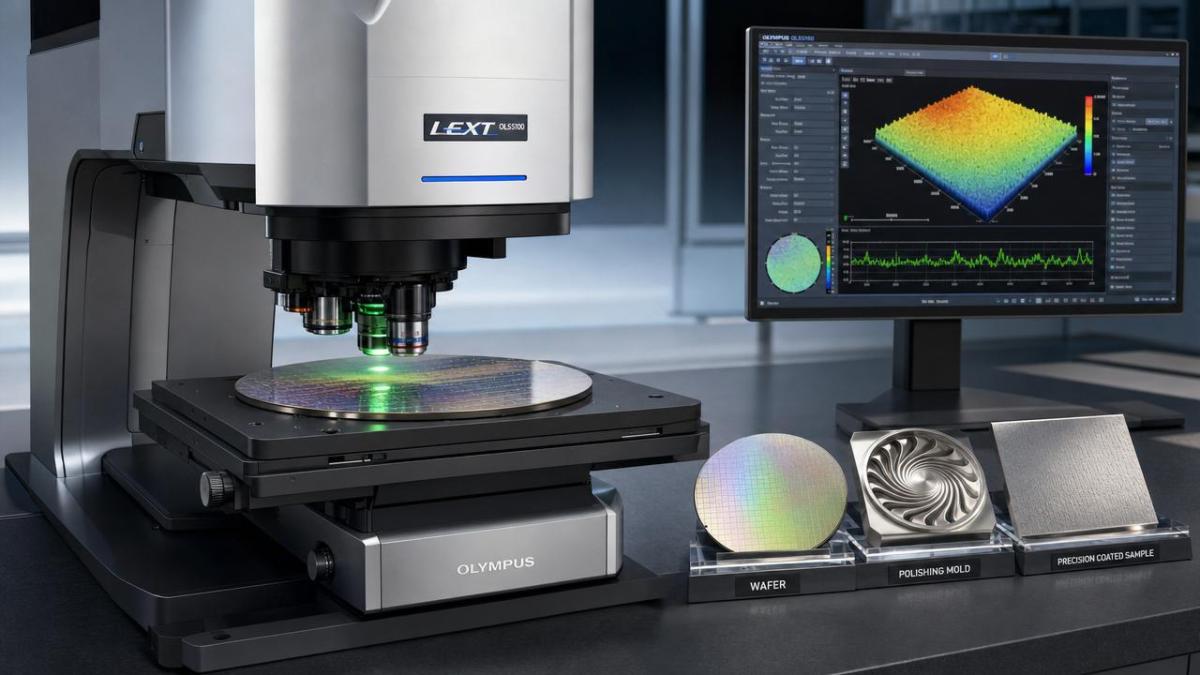
Unlike stylus probes, optical profilometry does not drag a tip across the surface.
That single difference changes measurement risk, speed, cleanliness, and usable applications.
In modern industry, surfaces are no longer simple machined planes.
They may be coated, porous, polished, soft, layered, micro-textured, or extremely expensive.
Optical profilometry supports this complexity by providing area-based data instead of only a narrow line trace.
That richer dataset improves defect detection, process validation, and digital twin accuracy.
It also fits the broader PIAS vision of linking physical micro-features with actionable industrial data.
When does optical profilometry clearly beat contact surface testing?
Optical profilometry is not always the answer, but several conditions strongly favor it.
The first is surface fragility.
Soft polymers, thin films, biomedical materials, and fresh coatings can deform under stylus force.
In these cases, contact methods may measure the damage they create.
The second is high-value part protection.
Aerospace blades, wafer surfaces, micro-optics, and precision molds often justify non-contact inspection.
The third is the need for area-based understanding.
A stylus usually follows one path.
Optical profilometry can scan a larger field and identify localized defects that a line scan may miss.
The fourth is contamination control.
Cleanroom operations, semiconductor processes, and medical component production often prefer no physical contact.
The fifth is speed in quality loops.
Fast optical profilometry supports quicker feedback during grinding, polishing, additive manufacturing, and wear analysis.
Typical conditions favoring optical profilometry
- Soft, elastic, or tacky surfaces
- Highly polished or micro-structured parts
- Coated surfaces vulnerable to scratching
- Need for 3D areal roughness parameters
- High-throughput inspection with less operator influence
- Clean environments where contact is undesirable
How does optical profilometry compare with contact surface testing?
The comparison should start with measurement intent, not technology preference.
Contact surface testing remains useful for many rugged surfaces and standardized roughness routines.
However, optical profilometry often delivers broader insight with less physical risk.
A key benefit of optical profilometry is traceable, repeatable digital output for connected manufacturing systems.
That supports SPC, predictive maintenance, and automated pass-fail logic.
Still, reflectivity, transparency, vibration, and steep slopes can affect results.
Good setup and method selection remain essential.
Which applications gain the most from optical profilometry?
Optical profilometry creates value wherever the surface itself carries functional meaning.
In semiconductor inspection, it helps quantify wafer topography, bump height, trench depth, and fine surface damage.
In additive manufacturing, optical profilometry tracks layer quality, powder-bed effects, and post-process roughness.
In medical devices, it supports validation of implant textures, stent features, and polished surgical surfaces.
In automotive and aerospace, it reveals tool wear, seal surface quality, fatigue-related surface change, and coating integrity.
In materials science, optical profilometry helps correlate wear scars, fracture edges, and surface treatment outcomes with mechanical performance.
High-value scenarios
- Polished molds and dies
- Battery foils and coated electrodes
- Optical lenses and mirrors
- MEMS and microelectronic packages
- Wear studies on tribology samples
- Composite and polymer surface validation
These examples show why optical profilometry matters beyond laboratory research.
It has become a practical inspection tool inside broader industrial intelligence systems.
What are the common mistakes when choosing optical profilometry?
One mistake is assuming every optical profilometry system fits every surface.
Different technologies handle transparent films, sharp steps, dark materials, and rough textures differently.
Another mistake is comparing only resolution numbers.
Real performance also depends on field of view, vibration resistance, software, fixturing, and parameter reporting.
A third mistake is copying contact-surface standards without checking areal measurement relevance.
Optical profilometry often enables better 3D descriptors than traditional line roughness alone.
Another risk is ignoring environment.
Shop-floor vibration, dust, thermal drift, and unstable lighting can reduce consistency if unmanaged.
Practical checks before adoption
- Define the surface features that actually affect product function.
- Match the optical method to material behavior and geometry.
- Test repeatability under real production conditions.
- Verify software outputs against reporting needs and standards.
- Plan integration with MES, SPC, or digital inspection records.
How should implementation, cost, and ROI be judged?
Optical profilometry can cost more upfront than basic contact instruments.
Yet the business case often extends far beyond purchase price.
Reduced scrap, fewer damaged parts, faster feedback loops, and better traceability can quickly outweigh initial cost.
The strongest ROI appears when surface variation drives yield loss, field failure, or expensive rework.
Cycle time also matters.
If optical profilometry removes multiple manual measurements and creates automated 3D reporting, inspection time can drop significantly.
Implementation should include calibration discipline, operator training, environmental controls, and data workflow planning.
Without those steps, even advanced optical profilometry may underperform.
When surface function, part value, and digital inspection quality are critical, optical profilometry often becomes the better long-term choice.
It is especially compelling where precision measurement must support Industry 4.0 and digital twin strategies.
In summary, optical profilometry beats contact surface testing when non-contact precision, 3D areal data, part protection, and faster insight create measurable operational value.
It is most effective when selected by surface behavior, application risk, and integration goals, not by trend alone.
A practical next step is to compare one critical surface using both methods under real production conditions.
That side-by-side trial usually reveals whether optical profilometry can improve accuracy, throughput, and confidence in daily inspection.
Related Intelligence
 Universal Testing MachinesSep 02, 2026How to Choose Programmable Extreme Environment Testing for Material QualificationProgrammable extreme environment testing: learn how to select reliable systems for material qualification, precise control, traceable data, and real-world failure analysis.
 Nanoindentation TestersSep 01, 2026Which ISO Standards Guide Polymer Crystal Analysis for Reliable Material Testing?ISO polymer crystal analysis: discover which ISO standards support reliable DSC testing, crystallinity evaluation, melting behavior, and material performance decisions.
 Wireless IIoT NodesAug 31, 2026What Data Does Industry 4.0 Need for Reliable Production Analytics?Industry 4.0 data needs analytics built on trustworthy process, condition, quality, and material data. Discover how traceable measurements power reliable production decisions.
 Wireless IIoT NodesAug 30, 2026Selecting Process Control Sensors for European Plants: Standards, Accuracy, and IIoT IntegrationProcess control sensors Europe: learn how to select compliant, accurate, IIoT-ready instruments for safer, more reliable plant operations.
 Commercial InsightsAug 29, 2026Pressure Measurement in Latin America: Growth Drivers and Demand by IndustryPressure measurement Latin America: explore growth drivers, industry demand, digitalization, and supplier insights for energy, mining, water, and process industries.
 Wireless IIoT NodesAug 28, 2026Industrial Sensing for Process Plants: A Practical Guide to Measurement PointsIndustrial sensing guide for process plants: learn how to select reliable flow, level, pressure, temperature, and condition-monitoring measurement points.
 Universal Testing MachinesAug 27, 2026How to Select Material Testing Equipment for Rubber Across Tensile and Fatigue TestsMaterial testing equipment for rubber: learn how to select tensile and fatigue systems with the right grips, sensors, controls, and environmental options for reliable results.
 Silicon Pressure TransmittersAug 26, 2026How to Select High Pressure Instrumentation for Corrosive and High-Temperature ServiceHigh pressure instrumentation selection for corrosive, high-temperature service: learn how to compare materials, seals, temperature limits, and installation risks for safer, longer-lasting performance.
 RTD/Thermocouple Sensors)Aug 25, 2026How to Choose High Precision Stainless Steel Sensors for Corrosive Industrial EnvironmentsHigh precision sensors stainless steel selection guide for corrosive industrial environments. Learn how to compare materials, seals, stability, and outputs for reliable long-term performance.
 Commercial InsightsAug 24, 2026How to Evaluate Industrial Measurement Equipment Suppliers in Latin America?Industrial measurement equipment Latin America buyers can learn how to compare suppliers by accuracy, certification, service, and logistics to reduce risk and source with confidence.
 Commercial InsightsAug 23, 2026How to Improve Process Plant Reliability in Extreme Environments?Extreme environment adaptability for process plants starts with reliable sensing, smart materials, and targeted inspection. Learn practical ways to reduce downtime and boost uptime.
 Universal Testing MachinesAug 22, 2026How to Select Material Testing Solutions for Composites in Aerospace and AutomotiveMaterial testing solutions for composites: learn how aerospace and automotive teams choose the right mix of mechanical, NDT, and durability tests to cut risk and speed approval.
 Wireless IIoT NodesAug 21, 2026How to Evaluate Wireless Pipeline Monitoring Systems for Remote Leak Detection?Wireless pipeline monitoring systems: learn how to evaluate leak detection accuracy, false alarms, wireless reliability, integration, and lifecycle fit before choosing a solution.