Industrial CT vs Traditional Inspection for Hidden Defects
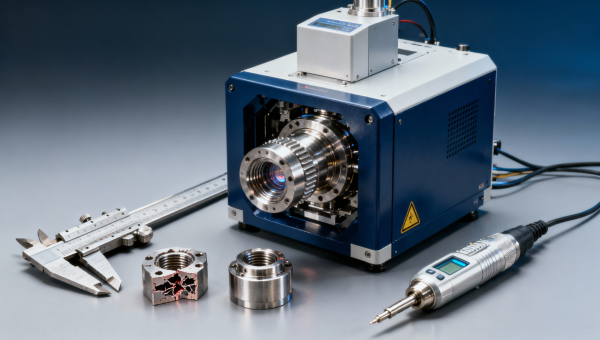
When hidden defects can determine product safety, lifecycle cost, and compliance risk, choosing the right inspection method becomes a strategic decision. Industrial CT gives technical evaluators a non-destructive way to visualize internal structures, quantify voids, cracks, and porosity, and compare results against traditional inspection methods that may miss subsurface issues. This article explores where each approach performs best and how to balance accuracy, speed, and investment.
For technical evaluation teams in manufacturing, energy, aerospace, electronics, automotive, and process industries, the inspection choice is rarely just a lab decision. It affects first-pass yield, warranty exposure, maintenance intervals, supplier qualification, and even digital traceability. In many cases, the real question is not whether industrial CT should replace traditional inspection, but where each method creates the highest value per test hour, per part, and per risk category.
Within advanced metrology and NDT environments such as those tracked by PIAS, inspection is increasingly tied to Industry 4.0 workflows, closed-loop quality control, and defect data analytics. As manufacturers move from sample-based checking to data-driven qualification, industrial CT has become a critical option for evaluating hidden defects that cannot be reliably confirmed by visual inspection, sectioning, or basic dimensional checks alone.
Why Hidden Defects Demand More Than Surface-Level Inspection
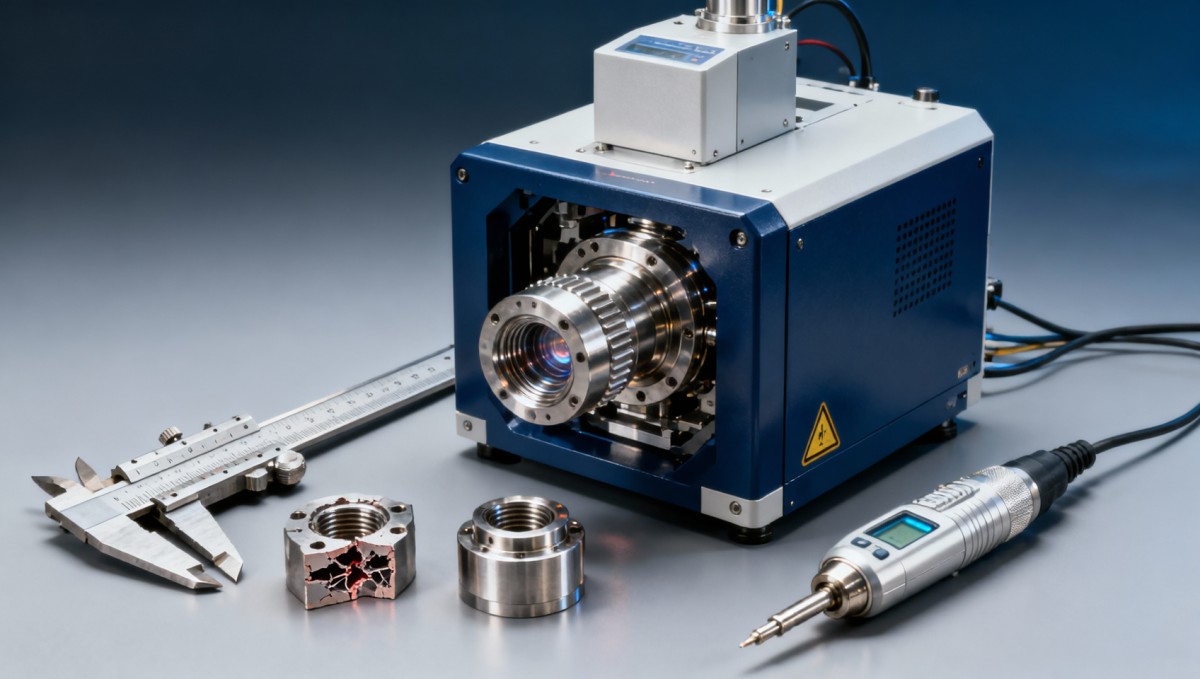
Traditional inspection methods still play an essential role in quality assurance. Visual examination, calipers, coordinate measurement, ultrasonic testing, dye penetrant, and destructive sectioning each solve specific problems at different cost and speed levels. However, hidden defects often form in 3 zones that are difficult to validate from the outside: internal voids, subsurface cracks, and enclosed assembly misalignment.
For technical evaluators, the challenge is that many high-consequence defects remain invisible until failure occurs. A casting may pass external dimensions but contain 0.5 mm to 2 mm shrinkage porosity. A battery module may appear mechanically sound while a weld region contains internal lack of fusion. A polymer or composite part may meet visual requirements but still contain delamination layers several hundred microns below the surface.
Where Traditional Inspection Remains Strong
Traditional methods are often preferred when inspection goals are narrow, cycle time is tight, and the defect mode is already well understood. For example, visual inspection can screen surface damage in less than 30 seconds per part. Ultrasonic testing can cover thick weld sections efficiently in field environments. Destructive sectioning may still be the most direct way to confirm bond line thickness or metallurgical features during early process validation.
- Low per-part screening cost for high-volume production
- Fast deployment with limited digital processing requirements
- Established acceptance criteria in many plants and standards-based workflows
- Suitable for field inspection where full CT infrastructure is unavailable
Where Industrial CT Changes the Decision
Industrial CT is different because it reconstructs the internal volume of a part into 2D slices and 3D datasets without cutting the sample. Depending on part size, material density, detector quality, and scan settings, voxel resolution may range from below 10 µm for very small components to above 100 µm for larger assemblies. That makes industrial CT especially valuable when a defect must be located, measured, and documented in relation to the complete geometry.
This capability matters in at least 4 high-risk situations: first article inspection, supplier change approval, failure analysis, and process drift investigation. In these cases, knowing that a defect exists is not enough. Evaluators need to understand defect volume, defect distribution, nearest-wall distance, and whether the flaw is isolated or systemic across multiple production lots.
A Practical Decision Lens
If the defect can be confirmed from the surface, traditional inspection is often sufficient. If the defect is hidden, geometry-dependent, or linked to internal process variation, industrial CT deserves serious consideration. In short, the more the decision depends on internal evidence rather than external appearance, the stronger the case for CT.
Industrial CT vs Traditional Inspection: Capability, Speed, and Cost
Technical evaluators usually compare methods across 5 purchasing dimensions: detection capability, measurement depth, throughput, data traceability, and total cost of ownership. The table below provides a practical comparison that can support internal justification and vendor discussions.
The key takeaway is that industrial CT delivers the richest internal evidence, but that does not automatically make it the default for every line. A 2-minute visual check may be better for 100% cosmetic screening, while a 20-minute to 90-minute CT scan may be justified for high-value components where one hidden defect could trigger scrap, rework, or field failure.
Speed Versus Information Density
One common objection to industrial CT is throughput. That concern is valid. Depending on sample size and target resolution, scan plus reconstruction may take anywhere from 10 minutes to 2 hours. Traditional inspection often wins on line speed. Yet CT frequently reduces total investigation time during root cause analysis because one scan can replace multiple steps such as sectioning, microscopy, repeated disassembly, and re-inspection.
For technical evaluators, the more useful metric is not scan time alone, but decision time. If CT shortens a defect investigation from 3 days to 6 hours by revealing the internal problem in one dataset, the apparent speed disadvantage can turn into an overall operational advantage.
Cost Should Be Viewed Across the Product Lifecycle
Industrial CT systems, shielding, software, and operator capability require meaningful investment. However, lifecycle economics can favor CT when parts are expensive, defects are hidden, and recalls or shutdowns carry major cost. This is especially true in aerospace, medical manufacturing support chains, energy components, precision castings, and electronics packaging.
In some projects, a hybrid route makes the most sense: use CT for first article validation, process setup, and periodic audits, then rely on faster traditional methods for routine volume screening. This approach often keeps inspection cost under control while preserving confidence in hidden-defect risk.
How Technical Evaluators Should Select the Right Inspection Strategy
A robust inspection strategy starts with the defect mechanism, not the instrument preference. Technical evaluators should define at least 4 factors before comparing vendors or methods: defect type, acceptable detection threshold, part material and thickness, and required reporting output. Without these inputs, method selection often becomes subjective and inconsistent across departments.
Four Questions to Ask Before Choosing Industrial CT
- Is the target defect internal, subsurface, or geometry-dependent?
- Do you need dimensional measurement and defect quantification in the same inspection cycle?
- Is destructive testing unacceptable because of cost, traceability, or limited sample availability?
- Will the inspection result be used for qualification, compliance evidence, or process optimization?
If the answer is yes to 3 or more of these questions, industrial CT is often a strong candidate. If only 1 applies, a traditional method may be more economical. In highly regulated or safety-critical environments, the threshold for selecting CT is usually lower because evidence quality matters as much as defect detection itself.
Key Technical Parameters to Review
For practical comparison, evaluators should request parameter ranges rather than marketing claims. Useful checkpoints include voxel size, X-ray energy range, maximum part envelope, scan time, reconstruction time, defect analysis software capability, and compatibility with CAD or metrology workflows. In some sourcing reviews, even a difference between 30 µm and 80 µm voxel size can determine whether a micro-void cluster is detectable or not.
At this stage, some organizations also explore information hubs, reference resources, or archived solution notes such as 无 to benchmark terminology and workflow options before formal procurement. The goal is not to chase the most advanced specification, but to align system capability with the most probable defect population.
The table below summarizes common selection factors for industrial CT and traditional inspection in hidden-defect programs.
This matrix helps avoid a common mistake: choosing only by equipment price. A lower-cost method can become more expensive if it misses internal failure drivers or forces repeated retesting. For hidden defects, confidence level and rework avoidance often outweigh initial inspection cost.
Implementation Risks, Common Misjudgments, and Best Practices
Even when industrial CT is the right method, implementation quality determines whether the data is useful. Technical evaluators should watch for 3 frequent errors: unrealistic resolution expectations, poor fixturing or scan planning, and acceptance criteria that are not linked to actual part function. These issues can reduce repeatability and create disputes between quality, engineering, and suppliers.
Common Misjudgments About Industrial CT
- Assuming higher power always means better defect detection
- Expecting one CT setup to fit both micro-components and dense large castings
- Treating 3D images as self-explanatory without defect acceptance rules
- Ignoring operator competence, reconstruction settings, and artifact control
For example, beam hardening, scatter, and geometric magnification effects can influence image quality. If these are not managed, an evaluator may overcall a harmless indication or miss a critical defect cluster. In practical programs, method validation often requires 3 to 5 representative parts, known defect references where available, and correlation with sectioning or another confirmatory technique during setup.
Best Practices for a Balanced Inspection Program
The most effective organizations rarely frame the decision as industrial CT versus traditional inspection in absolute terms. They build layered inspection architectures. CT is used where internal visibility, traceability, and defect analytics matter most. Traditional tools remain active for rapid screening, field use, and routine checks that do not justify advanced volumetric imaging.
- Use CT during process launch, PPAP-like qualification, or first article validation
- Define defect thresholds by function, not by image appearance alone
- Correlate CT findings with microscopy, ultrasonic data, or mechanical tests where needed
- Set reinspection intervals such as every 3 months, every lot change, or after tooling maintenance
- Archive 3D datasets for supplier comparison and trend analysis
In advanced data environments, CT findings can also support predictive quality models, digital twin updates, and supplier development discussions. This aligns closely with the broader PIAS perspective, where inspection data is not isolated paperwork but part of a larger industrial intelligence chain spanning metrology, NDT, optical analysis, and material behavior evaluation.
When to Escalate From Traditional Inspection to CT
A technical evaluator should consider escalation to industrial CT when 1 of 4 triggers appears: repeated unexplained failures, disagreement between destructive and non-destructive results, hidden-defect suspicion in safety-critical parts, or process changes that alter internal geometry. Escalation is also justified when customer or regulatory documentation requires stronger evidence than surface checks can provide.
For teams refining sourcing criteria, selective use of industrial CT can be far more strategic than blanket deployment. It helps prioritize the highest-risk components, reduce uncertainty in technical reviews, and create a more defensible quality record for audits and customer communication.
Final Guidance for Technical Evaluators
Industrial CT is not a universal replacement for traditional inspection, but it is often the most informative method for hidden defects that influence safety, durability, and compliance. Traditional approaches remain valuable for fast screening, field practicality, and cost-sensitive routine checks. The right decision depends on defect visibility, part value, evidence requirements, and the operational cost of uncertainty.
For technical evaluation teams, the strongest strategy is usually a risk-based mix: use industrial CT where internal structure truly matters, and keep conventional methods where they deliver faster and sufficient control. If your organization is assessing NDT capability, comparing inspection workflows, or planning a more data-driven quality program, now is the right time to review your hidden-defect strategy in detail.
To explore more solution paths in industrial metrology, NDT, and inspection intelligence, or to discuss a tailored evaluation framework for your application, contact us today, request a customized方案, or learn more about practical inspection options for your components and production risks.
Related Intelligence
![]() High-frequency Fatigue TestersJun 04, 2026Anti-Fatigue Lifespan Testing: What Load, Frequency, and Cycles Should You Validate?Anti-fatigue lifespan testing made practical: learn how to validate load, frequency, and cycles for reliable durability, faster qualification, and stronger compliance decisions.
High-frequency Fatigue TestersJun 04, 2026Anti-Fatigue Lifespan Testing: What Load, Frequency, and Cycles Should You Validate?Anti-fatigue lifespan testing made practical: learn how to validate load, frequency, and cycles for reliable durability, faster qualification, and stronger compliance decisions.![]() Silicon Pressure TransmittersJun 04, 2026How to Request a Pressure Transmitters Quotation: Specs, Certifications, and Cost DriversPressure transmitters quotation guide: learn what specs, certifications, and cost drivers to include in your RFQ to get accurate quotes, avoid risks, and compare suppliers with confidence.
Silicon Pressure TransmittersJun 04, 2026How to Request a Pressure Transmitters Quotation: Specs, Certifications, and Cost DriversPressure transmitters quotation guide: learn what specs, certifications, and cost drivers to include in your RFQ to get accurate quotes, avoid risks, and compare suppliers with confidence.![]() Digital Profile ProjectorsJun 04, 2026Precision Measurement Instruments: Key Specs to Compare Before Buying for QCPrecision measurement instruments for QC: compare repeatability, drift, environmental fit, and data integration before buying to reduce risk and improve inspection confidence.
Digital Profile ProjectorsJun 04, 2026Precision Measurement Instruments: Key Specs to Compare Before Buying for QCPrecision measurement instruments for QC: compare repeatability, drift, environmental fit, and data integration before buying to reduce risk and improve inspection confidence.![]() Commercial InsightsJun 04, 2026Polymer Analysis Methods Explained: Which Tests Matter for Material Selection?Polymer analysis methods explained for smarter material selection. Learn which tests matter most for thermal, mechanical, chemical, and long-term performance decisions.
Commercial InsightsJun 04, 2026Polymer Analysis Methods Explained: Which Tests Matter for Material Selection?Polymer analysis methods explained for smarter material selection. Learn which tests matter most for thermal, mechanical, chemical, and long-term performance decisions.![]() Wireless IIoT NodesJun 04, 2026How to Choose Extreme Environment Sensors for High Heat, Pressure, and Corrosive SitesExtreme environment sensors selection guide for high heat, pressure, and corrosive sites. Learn how to compare materials, sealing, drift, and lifecycle risk for safer, smarter decisions.
Wireless IIoT NodesJun 04, 2026How to Choose Extreme Environment Sensors for High Heat, Pressure, and Corrosive SitesExtreme environment sensors selection guide for high heat, pressure, and corrosive sites. Learn how to compare materials, sealing, drift, and lifecycle risk for safer, smarter decisions. Phased Array Ultrasonics - PAUTJun 03, 2026Phased Array Ultrasonics for Weld Testing: Parameters That MatterPhased array ultrasonics improves weld testing accuracy when key parameters are controlled. Learn essential setup tips to boost flaw detection and reduce false calls.
 Industrial X-ray/CTJun 03, 2026Weld Porosity Inspection: X-ray, PAUT, or CT—Which Method Fits?Weld porosity inspection made clear: compare X-ray, PAUT, and CT by accuracy, access, cost, and compliance to choose the safest method for your welds.
 Evolutionary TrendsJun 03, 2026Digital Twins Instrumentation: Data, Sensors, and Integration NeedsDigital Twins instrumentation starts with trustworthy sensors, data quality, and integration. Learn how to build reliable twins for predictive maintenance and smarter decisions.
 Magnetic/Ultrasonic MetersJun 03, 2026How to Choose a Flow Meters Exporter for Industrial ProjectsChoose a reliable flow meters exporter for industrial projects with tips on accuracy, compliance, calibration, delivery, integration, and lifecycle support.
 Silicon Pressure TransmittersJun 03, 2026Pressure Transmitters Quotation: What Specs Drive the Final Price?Pressure transmitters quotation guide: learn which specs drive final price, from accuracy and materials to approvals, calibration, and lifecycle value.
 Wireless IIoT NodesJun 02, 2026Process Control Instrumentation: How to Choose Devices for Stable AutomationProcess control instrumentation guide for choosing reliable flow, level, pressure, temperature and smart devices to reduce risks, improve automation stability, and support digital integration.
 Coriolis Mass FlowmetersJun 02, 2026Material Yield Verification in Production: Methods, Data, and Common ErrorsMaterial yield verification made practical: explore proven test methods, critical production data, and common errors to improve quality decisions and reduce risk.
 RTD/Thermocouple Sensors)Jun 02, 2026Temperature Transmitters Selection Guide: Sensor Input, Range, and OutputTemperature transmitters selection guide covering RTD, thermocouple, range, output signals, approvals, and lifecycle factors to help buyers choose reliable industrial solutions.