Can extreme environment adaptability cut downtime?
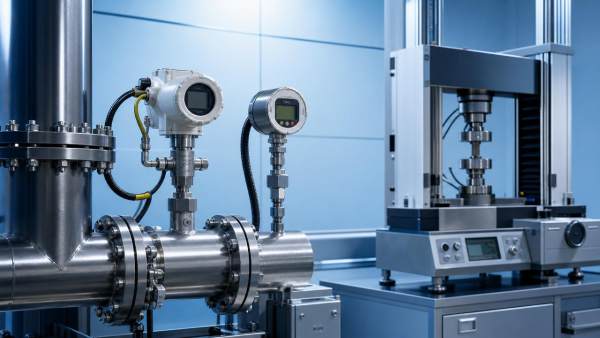
Can Extreme Environment Adaptability Cut Downtime?
Can extreme environment adaptability cut downtime where heat, pressure, corrosion, vibration, dust, and electromagnetic noise push instruments beyond nominal specifications?
The answer depends on verified sensing stability, drift resistance, diagnostic intelligence, and data continuity under real operating stress.
Adaptable flow meters, transmitters, NDT systems, microscopes, and testing platforms can strengthen predictive maintenance and reduce unplanned shutdown risk.
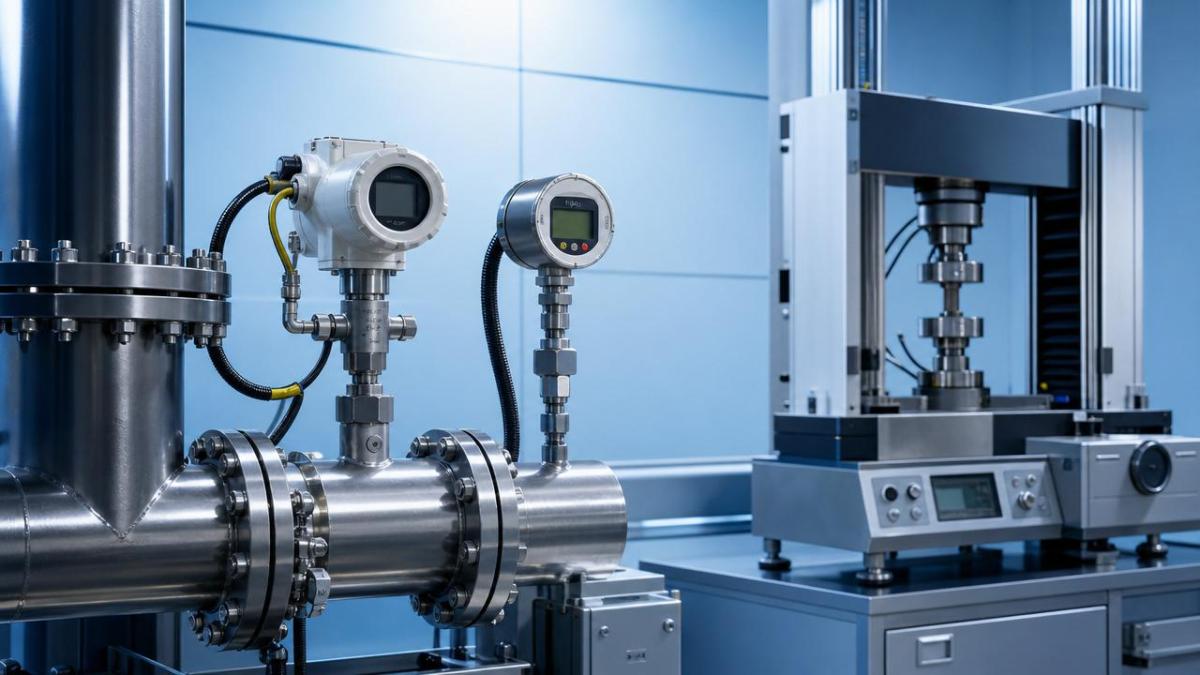
Why a Checklist Matters for Extreme Environment Adaptability
Downtime rarely starts with a dramatic failure.
It often begins with small measurement errors, unstable signals, hidden corrosion, loose connectors, or diagnostics that arrive too late.
A checklist turns extreme environment adaptability from a marketing claim into a verifiable engineering decision.
It links application stress, instrument design, maintenance data, and operational consequences.
This is critical in process plants, aerospace inspection, semiconductor metrology, hydrogen systems, mining, power generation, and materials research.
When instruments survive harsh conditions while maintaining accuracy, the maintenance plan becomes more predictable.
When adaptability is poorly validated, spare parts, inspections, and shutdown windows become reactive.
Core Checklist for Extreme Environment Adaptability
Use this checklist before approving instruments for harsh duty cycles, remote assets, safety loops, or predictive maintenance programs.
- Map every stress source, including temperature swings, pressure peaks, corrosive media, vibration bands, dust loading, humidity, and electromagnetic interference.
- Demand accuracy data across the full operating envelope, not only at reference laboratory conditions or short qualification intervals.
- Verify drift behavior after thermal cycling, pressure shocks, long vibration exposure, cleaning chemicals, and repeated start-stop operation.
- Check sensor materials against process chemistry, especially wetted parts, seals, coatings, cable glands, lenses, probes, and acoustic couplants.
- Require diagnostics that identify coating buildup, blocked impulse lines, weak echo signals, connector moisture, calibration drift, and sensor saturation.
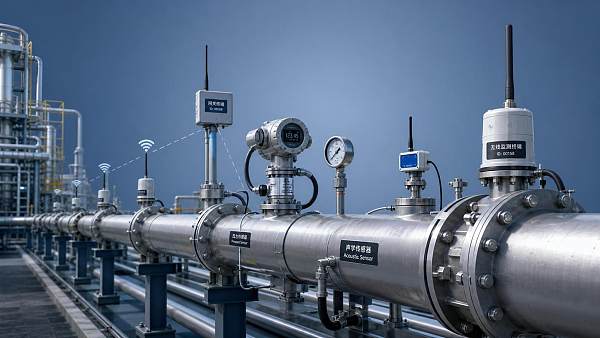
- Confirm that extreme environment adaptability includes stable communication through 4-20mA, HART, fieldbus, Industrial Ethernet, or wireless protocols.
- Test installation sensitivity, because poor mounting, pipe strain, probe alignment, and optical vibration can erase rugged hardware advantages.
- Compare failure modes with shutdown consequences, then prioritize instruments protecting quality, custody transfer, safety, or critical throughput.
- Review calibration strategy, including in-situ verification, reference standards, automated self-checks, and traceability under harsh field conditions.
- Integrate instrument health data into predictive maintenance systems, so adaptability becomes visible in trends, alerts, and asset risk scores.
Flow and Level Measurement: Protecting Process Continuity
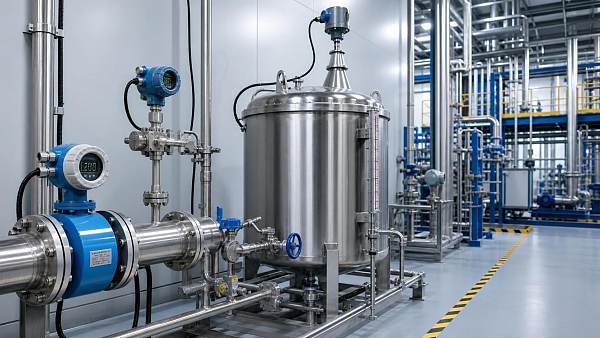
Flow and level instruments often sit at the financial center of process operations.
A small error in custody transfer, batch charging, or inventory control can cascade into quality loss and operational disputes.
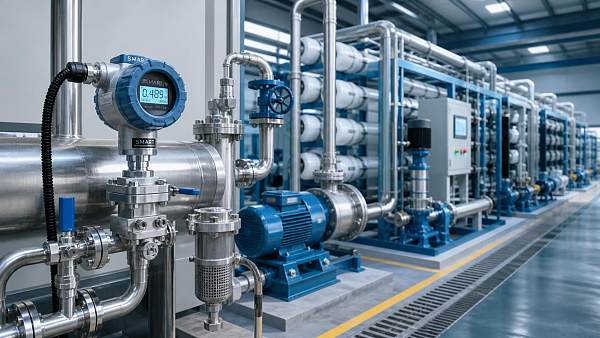
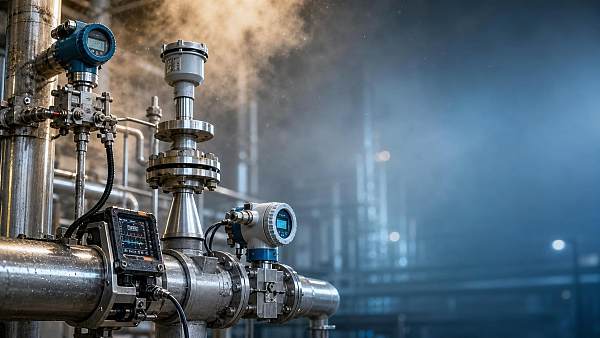
Extreme environment adaptability is essential when Coriolis meters face vibration, two-phase flow, cryogenic media, or aggressive chemicals.
Radar level meters need stable echoes through dust, foam, vapor, internal obstructions, and high-temperature nozzles.
For downtime reduction, focus on diagnostics that distinguish real process change from sensor degradation.
Examples include drive gain trends, signal-to-noise ratios, coating alarms, density plausibility, and echo curve analysis.
Checklist for Flow and Level Instruments
- Validate measurement performance during abnormal states, including pump trips, gas entrainment, tank filling turbulence, and rapid temperature transitions.
- Select wetted materials and antenna structures that resist corrosion, abrasion, coating, crystallization, and clean-in-place chemistry.
- Use instrument verification reports to schedule maintenance before measurement uncertainty threatens production, billing, or safety margins.
Temperature and Pressure Transmitters: Stabilizing Control Loops
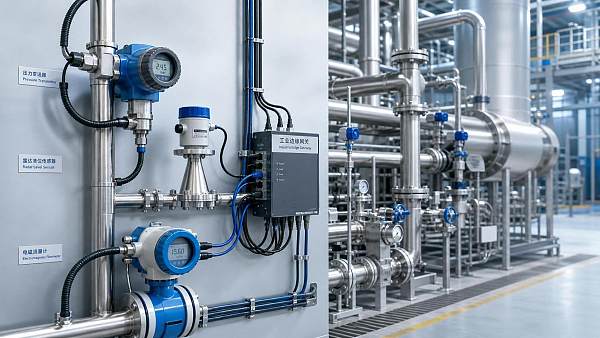
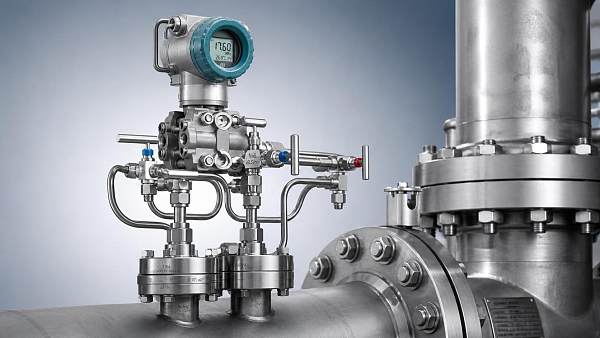
Temperature and pressure transmitters act like pain receptors for industrial equipment.
Their extreme environment adaptability affects control loop stability, alarm reliability, and safety interlock confidence.
A transmitter may meet its datasheet yet fail in real service because impulse lines plug or electronics drift under heat.
Remote seals, capillaries, isolation diaphragms, MEMS chips, and monocrystalline silicon sensors must be evaluated as a full measurement chain.
Downtime reduction improves when transmitters provide early evidence of abnormal pressure pulsation, thermal overload, or process connection blockage.
The strongest designs combine mechanical robustness with digital diagnostics and stable signal conversion.
Checklist for Transmitter Reliability
- Specify overpressure limits, burst ratings, thermal compensation range, and long-term stability under realistic process and ambient conditions.
- Inspect impulse piping, diaphragm seals, mounting brackets, and cable entries as part of the adaptability assessment.
- Trend zero shift, sensor temperature, loop current, communication errors, and diagnostic flags before scheduled shutdown decisions.
NDT Systems: Finding Damage Before Assets Stop
Non-Destructive Testing turns hidden defects into maintenance decisions.
In aerospace, energy, rail, shipbuilding, and heavy equipment, downtime risk often hides inside welds, castings, composites, and rotating components.
Extreme environment adaptability matters because inspections may occur in hot workshops, confined structures, dusty sites, offshore platforms, or radiation-controlled zones.
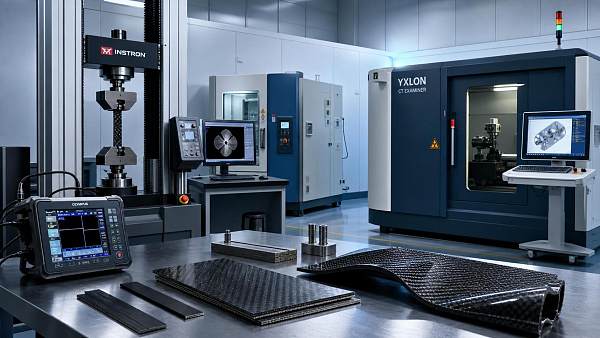
Phased array ultrasonic testing, eddy current arrays, acoustic emission, and industrial CT depend on stable probes, repeatable scans, and trustworthy algorithms.
If coupling, calibration blocks, probe wear, or scanner movement is unstable, defect sizing becomes uncertain.
Reliable NDT equipment supports condition-based maintenance by confirming whether assets can continue operating safely.
Checklist for NDT Adaptability
- Control inspection variables, including surface temperature, couplant behavior, probe pressure, scanner alignment, access constraints, and operator repeatability.
- Use calibration routines that reflect real geometry, material attenuation, grain structure, weld profile, and expected defect orientation.
- Archive raw data and processed indications, allowing future comparison after load changes, repairs, or harsh service exposure.
Optical Metrology: Keeping Micron-Level Decisions Stable
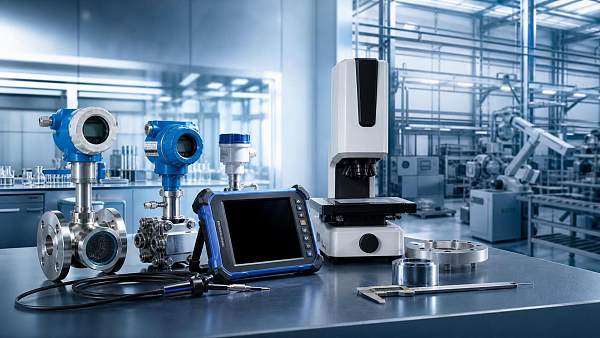
Optical microscopes, projectors, and 3D profilers support decisions that can affect yield, research quality, and component acceptance.
Their extreme environment adaptability is different from that of process instruments.
The challenge is not always corrosion or pressure.
It is often vibration, thermal expansion, dust contamination, illumination instability, lens drift, and software compensation limits.
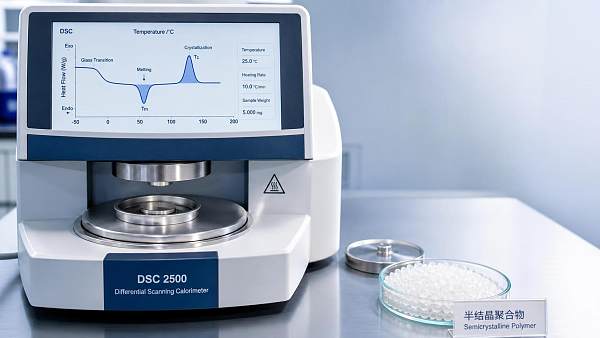
In semiconductor inspection, polymer analysis, medical device measurement, and micro-machined parts, small environmental changes can distort results.
Downtime appears as repeated measurements, rejected batches, delayed root-cause analysis, or instrument recalibration.
Checklist for Optical Systems
- Stabilize temperature, vibration, lighting, air quality, and sample fixturing before judging microscope repeatability or projector accuracy.
- Confirm calibration artifacts, pixel scaling, lens correction, stage motion, and focus algorithms across expected inspection ranges.
- Protect optics with appropriate enclosures, filters, cleaning methods, and contamination controls suited to the operating environment.
Material Testing Platforms: Simulating Failure Before It Happens
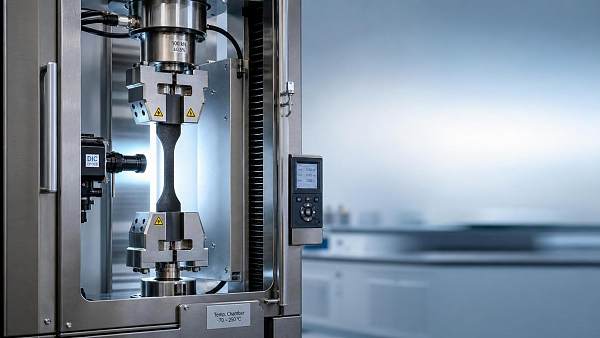
Material mechanics testing machines help determine how products survive stress before field failure occurs.
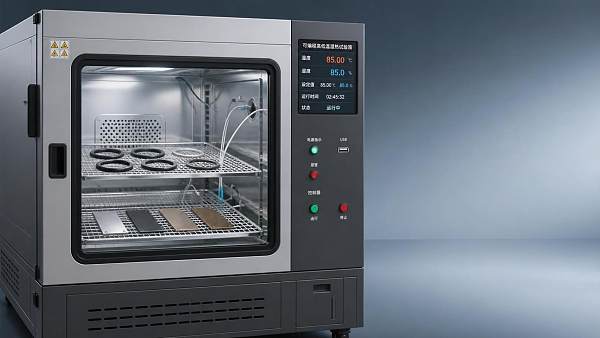
Extreme environment adaptability becomes vital when tests include thermal chambers, humidity, cryogenic conditions, corrosion, fatigue, or high-frequency vibration.
A weak test setup can produce optimistic fatigue life or inaccurate yield data.
Load cells, grips, extensometers, chambers, fixtures, and control software must remain stable during long cycles.
This supports downtime reduction indirectly.
Better material data improves design margins, maintenance intervals, and qualification confidence for harsh service applications.
Checklist for Testing Reliability
- Match test conditions to real service loads, including strain rate, temperature gradient, chemical exposure, dwell time, and vibration profile.
- Verify alignment, grip slippage, load cell stability, extensometer performance, and chamber uniformity before collecting qualification data.
- Monitor long tests for control drift, data gaps, actuator heating, fixture wear, and specimen boundary condition changes.
Commonly Ignored Risks That Increase Downtime
Environmental ratings are often treated as enough.
They are not enough when extreme environment adaptability must protect uptime, data integrity, and safety decisions.
Ignoring Combined Stress
Heat alone may be manageable.
Heat with vibration, moisture, and chemical vapor can accelerate seal failure, circuit aging, connector corrosion, and calibration drift.
Trusting Nameplate Accuracy Only
Nameplate accuracy usually reflects controlled test conditions.
Downtime risk depends on repeatability, diagnostics, drift, installation effects, and signal stability under operating stress.
Separating Instruments from Data Systems
A rugged sensor loses value if its health data never reaches maintenance analytics.
Extreme environment adaptability should include communication resilience, timestamp quality, cybersecurity compatibility, and alarm context.
Underestimating Human Access
Harsh areas are often difficult to inspect.
Design for remote verification, safe access, clear diagnostics, and maintainable installation layouts.
Practical Execution Steps for Reducing Shutdown Risk
Start with the assets where one failed measurement can stop production, compromise safety, or invalidate quality decisions.
Then build an evidence-based instrument adaptability plan.
- Rank critical measurement points by downtime impact, safety relevance, product quality influence, replacement difficulty, and historical nuisance alarms.
- Collect operating stress profiles from historians, inspection records, maintenance notes, environmental monitors, and failure analysis reports.
- Compare actual stress against instrument limits, diagnostic coverage, calibration history, communication stability, and spare part availability.
- Run targeted field trials where extreme environment adaptability is uncertain, using temporary reference instruments when practical.
- Convert instrument health indicators into maintenance rules, including alert thresholds, verification intervals, and escalation actions.
- Review results after shutdowns, severe weather, production changes, process upsets, and major equipment modifications.
The goal is not simply buying rugged equipment.
The goal is proving that each measurement remains dependable when operations become unstable.
Conclusion and Action Guide
Extreme environment adaptability can cut downtime when it is engineered, verified, and connected to maintenance decisions.
It reduces blind spots in flow measurement, pressure monitoring, NDT inspection, optical metrology, and material testing.
The strongest results come from combining robust hardware, realistic qualification, intelligent diagnostics, and continuous data integration.
Begin with a critical asset review.
Identify the instruments most exposed to heat, pressure, corrosion, vibration, dust, moisture, and electromagnetic noise.
Then validate whether their extreme environment adaptability is proven by field data, not only datasheet language.
For Industry 4.0 and Digital Twin programs, this evidence becomes more than maintenance support.
It becomes the foundation of trustworthy industrial intelligence, safer operations, and measurable uptime improvement.
Related Intelligence
 Universal Testing MachinesSep 02, 2026How to Choose Programmable Extreme Environment Testing for Material QualificationProgrammable extreme environment testing: learn how to select reliable systems for material qualification, precise control, traceable data, and real-world failure analysis.
 Nanoindentation TestersSep 01, 2026Which ISO Standards Guide Polymer Crystal Analysis for Reliable Material Testing?ISO polymer crystal analysis: discover which ISO standards support reliable DSC testing, crystallinity evaluation, melting behavior, and material performance decisions.
 Wireless IIoT NodesAug 31, 2026What Data Does Industry 4.0 Need for Reliable Production Analytics?Industry 4.0 data needs analytics built on trustworthy process, condition, quality, and material data. Discover how traceable measurements power reliable production decisions.
 Wireless IIoT NodesAug 30, 2026Selecting Process Control Sensors for European Plants: Standards, Accuracy, and IIoT IntegrationProcess control sensors Europe: learn how to select compliant, accurate, IIoT-ready instruments for safer, more reliable plant operations.
 Commercial InsightsAug 29, 2026Pressure Measurement in Latin America: Growth Drivers and Demand by IndustryPressure measurement Latin America: explore growth drivers, industry demand, digitalization, and supplier insights for energy, mining, water, and process industries.
 Wireless IIoT NodesAug 28, 2026Industrial Sensing for Process Plants: A Practical Guide to Measurement PointsIndustrial sensing guide for process plants: learn how to select reliable flow, level, pressure, temperature, and condition-monitoring measurement points.
 Universal Testing MachinesAug 27, 2026How to Select Material Testing Equipment for Rubber Across Tensile and Fatigue TestsMaterial testing equipment for rubber: learn how to select tensile and fatigue systems with the right grips, sensors, controls, and environmental options for reliable results.
 Silicon Pressure TransmittersAug 26, 2026How to Select High Pressure Instrumentation for Corrosive and High-Temperature ServiceHigh pressure instrumentation selection for corrosive, high-temperature service: learn how to compare materials, seals, temperature limits, and installation risks for safer, longer-lasting performance.
 RTD/Thermocouple Sensors)Aug 25, 2026How to Choose High Precision Stainless Steel Sensors for Corrosive Industrial EnvironmentsHigh precision sensors stainless steel selection guide for corrosive industrial environments. Learn how to compare materials, seals, stability, and outputs for reliable long-term performance.
 Commercial InsightsAug 24, 2026How to Evaluate Industrial Measurement Equipment Suppliers in Latin America?Industrial measurement equipment Latin America buyers can learn how to compare suppliers by accuracy, certification, service, and logistics to reduce risk and source with confidence.
 Commercial InsightsAug 23, 2026How to Improve Process Plant Reliability in Extreme Environments?Extreme environment adaptability for process plants starts with reliable sensing, smart materials, and targeted inspection. Learn practical ways to reduce downtime and boost uptime.
 Universal Testing MachinesAug 22, 2026How to Select Material Testing Solutions for Composites in Aerospace and AutomotiveMaterial testing solutions for composites: learn how aerospace and automotive teams choose the right mix of mechanical, NDT, and durability tests to cut risk and speed approval.
 Wireless IIoT NodesAug 21, 2026How to Evaluate Wireless Pipeline Monitoring Systems for Remote Leak Detection?Wireless pipeline monitoring systems: learn how to evaluate leak detection accuracy, false alarms, wireless reliability, integration, and lifecycle fit before choosing a solution.