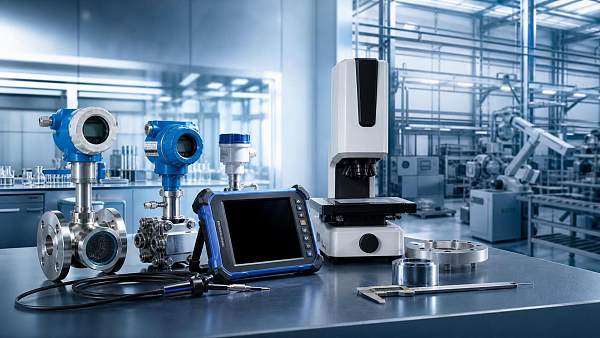
In quality control, speed and automation matter, but operators still need trustworthy visual evidence before accepting or rejecting a part.
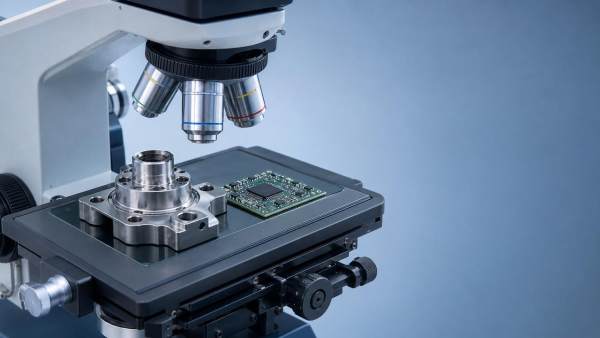
Precision optical microscopes help teams verify defects, dimensions, contamination, coatings, and material changes directly at the workstation.
Even in smart factories, a clear optical view connects measurement data with real material conditions and supports confident decisions.
What operators really need from a QC microscope
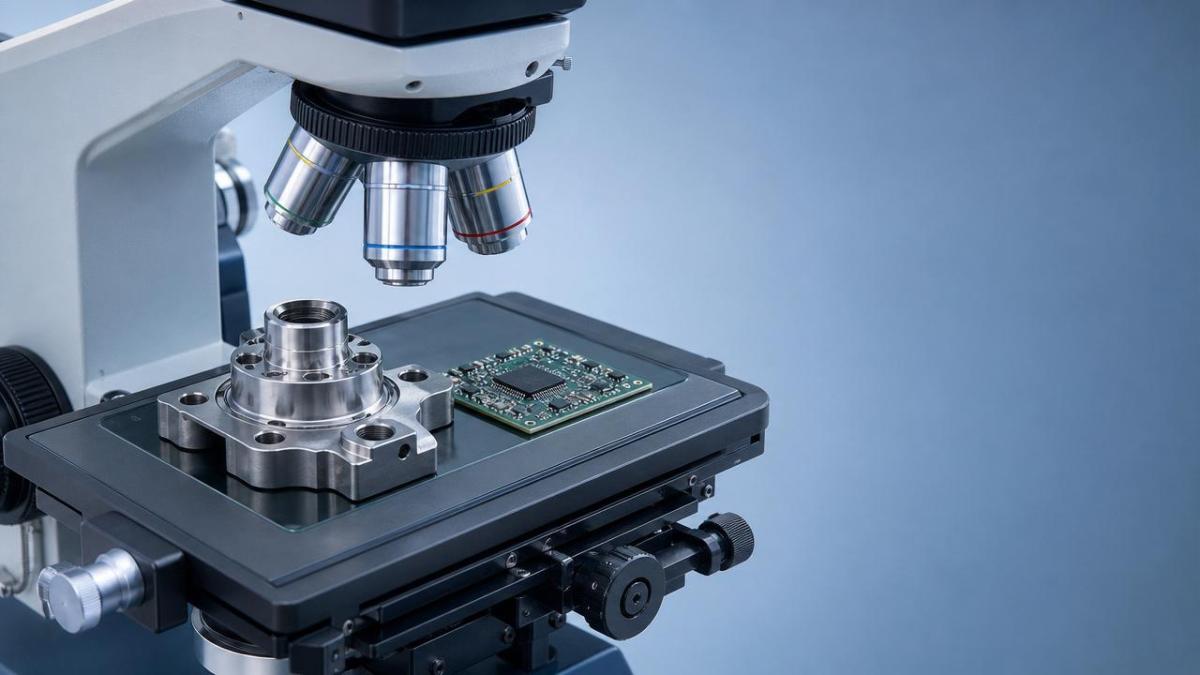
Most operators are not looking for laboratory complexity. They need repeatable inspection, comfortable handling, clear images, and decisions they can defend.
A precision microscope matters when the defect is small, the tolerance is tight, or the production consequence is expensive.
In daily QC, the question is practical: can the instrument reveal the problem quickly enough, clearly enough, and consistently enough?
This is why precision optical microscopes remain relevant beside automated vision systems, sensors, and statistical process control dashboards.
They provide direct confirmation when alarms appear, when customer claims arrive, or when a borderline part requires human judgment.
Seeing the defect is different from receiving a signal
Automated inspection can detect patterns at high speed, but it often reports a result before explaining the physical cause.
An optical microscope lets operators examine scratches, pits, burrs, inclusions, stains, cracks, fibers, residues, and coating irregularities directly.
That visual evidence helps distinguish real defects from dust, lighting artifacts, fixture marks, handling damage, or software classification errors.
For operators, this distinction is not academic. It affects scrap decisions, rework instructions, line stoppages, and supplier discussions.
When a production team can see the evidence, communication becomes easier between QC, engineering, maintenance, and manufacturing supervisors.
Where precision optical microscopes add the most value
The strongest use cases are usually surface-related, dimension-related, or process-related, especially when defects are visible but not obvious.
In metal parts, microscopes help verify burr height, tool marks, corrosion spots, grinding burns, microcracks, and edge conditions.
In electronics, operators use them for solder joints, connector pins, PCB contamination, wire bonding, pads, and component placement.
In plastics and polymers, they reveal flow lines, inclusions, weld lines, surface haze, crystallization features, and molding defects.
In coatings, they support checks for thickness uniformity, pinholes, delamination, orange peel, scratches, and incomplete coverage.
In precision machining, optical measurement supports quick checks of grooves, holes, chamfers, slots, radii, angles, and fine edges.
Why optical inspection still supports dimensional confidence
Not every measurement belongs on a coordinate measuring machine. Some features are faster and clearer under optical magnification.
Operators can measure feature width, spacing, angle, radius, particle size, crack length, and edge geometry using calibrated microscope software.
The advantage is context. The operator sees both the measured number and the surface condition around that feature.
This context matters when a feature is damaged, reflective, contaminated, or poorly defined under contact measurement methods.
Precision optical microscopes also reduce the risk of deforming soft, thin, delicate, or coated samples during inspection.
Operator-friendly QC depends on repeatability
A microscope is only useful in production if different operators can reach similar conclusions under the same inspection conditions.
Repeatability begins with stable illumination, clean optics, suitable magnification, calibrated scales, controlled focus, and documented inspection positions.
Operators should avoid changing lighting angles casually, because shadows can exaggerate or hide scratches, particles, and surface texture.
Magnification should be selected according to the defect size, not simply increased until the image looks impressive.
Too much magnification can reduce field of view, slow inspection, and make operators lose the broader process context.
A simple work instruction should define the magnification, lighting mode, acceptance criteria, sample orientation, and image capture requirements.
How microscopes improve defect classification
Many QC disputes happen because teams use the same word for different defects or different words for the same defect.
Clear microscopic images help standardize defect libraries, making training faster and improving consistency across shifts and production sites.
Operators can compare current findings with approved examples of acceptable texture, rejectable damage, and process-specific variation.
This is especially valuable when suppliers, customers, and internal teams need a shared visual language for quality issues.
Instead of saying a surface “looks wrong,” the report can identify pitting, embedded particles, coating voids, or machining chatter.
Why human visual judgment still has a place
AI inspection is powerful, but it depends on training data, lighting control, algorithm tuning, and stable production conditions.
When a new defect appears, operators often investigate it first with optical microscopy before automation rules are updated.
The microscope becomes a bridge between unknown observations and structured defect categories that automated systems can later recognize.
Human judgment is also useful when a part is borderline, unusual, or affected by multiple overlapping defect mechanisms.
In these cases, the operator can rotate the sample, change illumination, adjust focus, and interpret the feature physically.
Practical workflow for reliable microscope inspection
A strong QC workflow starts before the sample reaches the microscope. Handling, cleaning, and labeling must prevent new contamination.
The operator should confirm the inspection plan, including target areas, acceptance limits, magnification, illumination, and required image records.
Before measurement, calibration should be checked using a traceable standard, especially when results support release or rejection decisions.
During inspection, operators should capture representative images, not only the worst-looking area, unless the procedure specifically requires it.
After inspection, findings should be linked to lot number, machine number, operator, time, process step, and corrective action status.
This creates useful data for trend analysis, root cause investigation, supplier review, and future automation improvement.
Common mistakes that reduce microscope value
One common mistake is treating the microscope as a simple viewing tool rather than a controlled measurement instrument.
If calibration, lighting, focus, and sample positioning are uncontrolled, the resulting images may look convincing but remain unreliable.
Another mistake is using one magnification level for every defect, regardless of the feature size or inspection purpose.
Operators also need to avoid judging shiny surfaces under poor lighting, because reflections can imitate cracks or mask contamination.
Dirty lenses, fingerprints, loose fixtures, vibration, and unstable workbenches can introduce errors that appear to come from the part.
Good housekeeping is therefore a quality control requirement, not just a matter of instrument care.
Choosing the right microscope for QC operations
The right system depends on the parts, tolerances, defect types, throughput, operator skill level, and documentation requirements.
For routine surface checks, a stereo microscope may provide comfortable depth perception, fast handling, and sufficient visual detail.
For dimensional checks, a measuring microscope with calibrated software, stable stage movement, and suitable optics may be better.
For fine surface evaluation, metallurgical or digital microscopes can provide reflected illumination, image capture, and higher magnification options.
Operators should also consider ergonomics, because long inspection sessions can cause fatigue, eye strain, and inconsistent judgment.
A microscope that is technically advanced but uncomfortable or slow may fail in real production use.
Digital features make optical microscopes more useful
Modern precision optical microscopes often include cameras, measurement software, autofocus, extended depth of field, and digital reporting tools.
These features help operators document findings clearly and share evidence without relying only on handwritten notes.
Image stitching can show larger areas, while focus stacking helps reveal uneven surfaces that cannot stay sharp in one plane.
Measurement overlays, annotations, and pass-fail templates support faster decisions and reduce interpretation differences between operators.
When images are stored with metadata, microscopy becomes part of the plant’s quality intelligence rather than an isolated workstation.
How microscopy supports root cause analysis
Microscopes are especially useful when QC needs to move from defect detection to process understanding.
A scratch may indicate handling damage, abrasive contamination, fixture wear, packaging problems, or tooling contact during assembly.
A coating void may point to surface preparation, viscosity, curing, spray parameters, or contamination before coating application.
A burr pattern can reveal cutting tool wear, incorrect feed rate, material variation, or poor deburring process control.
By linking microscopic appearance with process data, operators and engineers can identify corrective actions faster and more confidently.
When optical microscopes are not enough
Optical microscopy is powerful, but it cannot solve every QC problem, especially when defects are internal or chemically ambiguous.
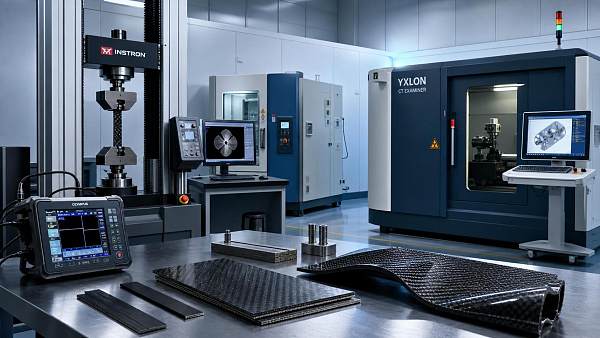
Subsurface cracks, hidden porosity, and internal bonding issues may require ultrasonic testing, industrial CT, X-ray, or other NDT methods.
Material composition questions may require spectroscopy, chemical analysis, or electron microscopy, depending on the required detail.
Surface height measurements beyond optical capability may require profilometry, interferometry, or atomic force microscopy in specialized cases.
The best QC strategy uses optical microscopy where it is strong and integrates other methods when physical evidence demands it.
What operators should look for in daily use
Operators should begin each shift by checking cleanliness, illumination stability, camera function, calibration status, and stage movement.
They should confirm that acceptance criteria are visible at the chosen magnification and not dependent on personal preference.
Images should include scale bars when used for reports, training, supplier feedback, or customer communication.
When a defect is unusual, operators should capture multiple views under different lighting conditions to support accurate interpretation.
Any recurring defect should be recorded consistently, because trend information is often more valuable than a single inspection result.
The real reason these instruments still matter
The lasting value of precision optical microscopes is not nostalgia. It is their ability to make quality visible.
They help operators verify what automated systems flag, understand what process data suggests, and document what customers need to see.
They also support faster learning, because operators can connect surface appearance with machine behavior and process changes.
In high-quality manufacturing, the best decisions often combine numerical measurement, automated detection, and direct visual confirmation.
That combination is exactly where optical microscopy continues to earn its place in modern QC environments.
Conclusion: clear evidence still protects quality
Precision optical microscopes remain essential because operators need more than data points; they need visible, traceable evidence.
Used correctly, they improve defect verification, dimensional confidence, process understanding, training consistency, and communication across quality teams.
They are not a replacement for automation, NDT, or advanced analytics, but they make those systems more understandable.
For practical QC, the microscope is still one of the most direct ways to connect inspection results with real material conditions.