Non-Contact Measurement vs Contact Gauging: Which Fits Delicate Parts Better?
Why the Choice Matters for Delicate Parts
When a part is thin, polished, soft, or easily bent, the measuring method is not just a tooling decision. It affects scrap rate, traceability, rework, and even operator safety.
That is why the debate around contact gauging and non-contact measurement keeps showing up in industrial metrology, NDT workflows, optical inspection, and digital manufacturing programs.
At PIAS, this topic sits right at the intersection of tactile sensing, optical intelligence, and Industry 4.0 data quality. A fragile part can fail inspection long before it fails in service.
So the practical question is simple: which method protects delicate parts while still delivering reliable numbers? In many cases, non-contact measurement has a clear edge, but not always.
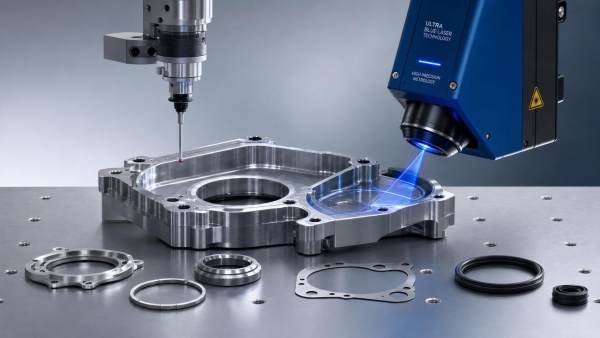
[Image 01: Comparison of contact probe and optical non-contact measurement on thin-wall precision parts]
Before choosing, it helps to look at force, surface condition, material behavior, cycle time, and data integration together rather than one by one.
A Straight Comparison Before Selection
Contact gauging works by touching the part. That sounds simple, and often it is. Calipers, probes, air gauges with fixtures, and touch-trigger CMMs still do excellent work.
But every touch adds force. On rigid machined blocks, that may not matter. On thin foils, soft elastomers, mirror-finished surfaces, or micro-features, it absolutely can.
Non-contact measurement uses light, laser, vision, X-ray, or other energy forms to capture dimensions or profiles without physically loading the part.
That makes it especially useful where deformation, marking, contamination, or access limits could distort the result before the measurement is even recorded.
What Usually Points to Non-Contact Measurement
If the part can change shape under light pressure, that is the first warning sign. Thin-wall metal tubes, plastic films, soft seals, and coated components often fall into this category.
The same applies when the surface itself is valuable. Decorative finishes, precision optics, polished medical components, and semiconductor-related parts do not tolerate unnecessary touch well.
- Choose non-contact measurement first when probe force can bend, compress, or dent the part, because even tiny distortion can create false acceptance or false rejection.
- Use optical or laser methods for polished, coated, or ultra-clean surfaces where contact marks, residue, or friction can damage appearance or downstream performance.
- Prioritize scanning-based non-contact measurement when geometry includes small radii, slots, edges, or hidden profile changes that are slow to verify with manual touch tools.
- Adopt automated non-contact systems when fast trend monitoring matters, especially for inline quality loops tied to digital twins, SPC dashboards, or predictive maintenance data.
- Check material behavior before method selection, because elastomers, thin composites, foils, and low-stiffness plastics often look dimensionally stable until they are actually touched.
When Contact Gauging Still Makes Sense
Contact gauging should not be dismissed. For many controlled dimensions, it remains cost-effective, repeatable, and easy to audit against established standards and shop-floor procedures.
If a part is rigid, accessible, and not surface-sensitive, contact tools may be the most practical choice. They also work well where optical noise or reflective materials complicate vision systems.
The key is not whether contact is old or new. The key is whether touch changes the part, the reading, or the risk profile of the inspection process.
A useful rule of thumb
If repeatability drops when fixture pressure changes, when operator technique changes, or when measuring points shift slightly, the part may already be telling you contact is too intrusive.
Common shop-floor situations that change the answer
Thin-wall machined parts
Thin rings, housings, and lightweight aerospace features can move under probe pressure. Even careful contact gauging may overstate wall thickness or roundness stability.
Non-contact measurement is often better here, especially with optical profilers or vision systems that capture shape without fixturing the part too aggressively.
Reflective and transparent surfaces
This is where the decision gets less obvious. A glossy or transparent surface may challenge some optical systems, even though touch is undesirable.
In those cases, setup quality matters more than theory. Lighting angle, lens choice, filtering, and calibration artifacts can make or break non-contact measurement performance.
Soft materials and elastomers
Soft seals and molded parts are classic examples of bad contact results. Slight force compression can change readings enough to create unnecessary sorting problems.
Here, a non-contact approach usually improves consistency, but it should be paired with stable positioning and clear edge-definition rules to avoid software-driven variation.
Safety-critical components
For turbine parts, pressure components, battery assemblies, or medical surfaces, preserving integrity is part of inspection itself. A valid number is not enough if the method adds risk.
This is where PIAS-related disciplines come together. Optical metrology, NDT imaging, and materials knowledge help verify dimensions without compromising service behavior or traceable evidence.
Practical checks before locking the method
- Run a force sensitivity trial by measuring the same part under different contact pressures; if results drift, switch quickly toward non-contact measurement validation.
- Review the real inspection target, because diameter, flatness, edge break, coating thickness, and micro-profile may each favor a different measuring principle.
- Audit fixture influence, since many measurement errors come from clamping, support points, and orientation rather than from the sensor technology itself.
- Confirm calibration traceability for the actual material and finish range, not just for ideal lab artifacts that look nothing like production parts.
- Check data output needs early, especially when measurement results must feed SPC, MES, digital twin models, or cross-site compliance reporting.
Risks that are often missed
One common mistake is assuming no visible scratch means no measurement damage. Delicate parts can suffer micro-deformation, coating disturbance, or stress concentration without obvious marks.
Another issue is overtrusting optical results without checking environmental sensitivity. Vibration, dust, glare, temperature shift, and poor contrast can quietly reduce confidence in non-contact measurement.
That is why method capability should be proven under production conditions, not only in a clean demonstration cell. Lab success does not always survive a live line.
A balanced decision works best
For some programs, the strongest solution is hybrid. Use contact gauging for robust reference dimensions and non-contact measurement for fragile surfaces, profiles, or high-density inspection zones.
That kind of mixed strategy is increasingly common in smart manufacturing, where inspection is expected to be both physically gentle and digitally rich.
How to decide with confidence
Start with the part, not the instrument. Ask what can deform, what can be marked, what must be seen, and what must be traced back to standards.
If touch changes the result or raises risk, non-contact measurement is usually the better fit for delicate parts. If the part is stable and access is simple, contact gauging may still be the smarter choice.
The best next step is a short capability study using real parts, real fixtures, and real environment conditions. That single comparison often reveals more than hours of theoretical debate.
In precision industries shaped by metrology, NDT, optical observation, and material testing, better inspection starts with better method matching. That is where reliable quality data begins.
Related Intelligence
 Commercial InsightsJun 15, 2026Extreme Environment Testing: Key Standards, Failure Risks, and Test Setup BasicsExtreme environment testing explained: key standards, common failure risks, and test setup basics to improve reliability, reduce field failures, and support smarter validation decisions.
 Digital Profile ProjectorsJun 15, 2026Precision Measurement Instruments Supplier Checklist: Accuracy, Calibration, and SupportPrecision measurement instruments supplier checklist covering accuracy, calibration traceability, application fit, and after-sales support to help you choose with confidence.
 80GHz Radar Level TransmittersJun 15, 2026How to Evaluate a Level Meters Manufacturer for Tank and Process ApplicationsLevel meters manufacturer selection affects accuracy, safety, and lifecycle cost. Learn how to compare technology, compliance, engineering support, and service for tank and process applications.
 Universal Testing MachinesJun 15, 2026Industrial Testing Equipment Selection Guide: Key Specs for Reliable Lab ResultsIndustrial testing equipment selection starts with the right specs. Learn how accuracy, traceability, and data integration improve lab reliability and support smarter buying decisions.
 Phased Array Ultrasonics - PAUTJun 15, 2026How Ultrasonic Testing Works and When It Outperforms Other NDT MethodsUltrasonic testing explained: learn how it detects hidden flaws, when it outperforms other NDT methods, and why it is a smart choice for faster, safer industrial inspection.
 Wireless IIoT NodesJun 14, 2026Industry 4.0 Sensors Selection Guide: Protocols, Accuracy, and IIoT IntegrationIndustry 4.0 sensors selection guide covering protocols, accuracy, durability, and IIoT integration. Learn how to choose scalable sensors that improve uptime, data quality, and ROI.
 80GHz Radar Level TransmittersJun 14, 2026How to Request a Level Meters Quotation: Specs That Affect Price and Lead TimeLevel meters quotation tips: learn which specs affect price, lead time, and fit. Discover the RFQ details that help you get faster, clearer, and more competitive supplier offers.
 Latest Sector NewsJun 14, 2026Extreme Environment Testing: Key Methods for Heat, Vibration, Salt Spray, and IP ProtectionExtreme environment testing explained: learn how heat, vibration, salt spray, and IP protection reveal hidden failure risks, improve reliability, and support smarter industrial equipment decisions.
 Commercial InsightsJun 14, 2026What Is Industrial Sensing Technology and Where Is It Used in Smart Manufacturing?Industrial sensing technology powers smart manufacturing with real-time data for quality, predictive maintenance, and process control. Discover where it’s used and why it matters.
 Industrial X-ray/CTJun 14, 2026Industrial CT for Sale: How to Compare Resolution, Throughput, and Total CostIndustrial CT for sale: compare resolution, throughput, and total cost before you buy. Learn what affects defect detection, workflow efficiency, and long-term ROI.
 Commercial InsightsJun 13, 2026International Measurement Standards: How to Verify Compliance Before Equipment PurchaseInternational measurement standards are the key to safer equipment buying. Learn how to verify traceability, calibration, and compliance evidence before purchase.
 Universal Testing MachinesJun 13, 2026Stress-Strain Analysis Explained: Key Parameters for Material Testing and Failure ReviewStress-strain analysis explained clearly: learn key testing parameters, curve reading, and failure review tips to improve material quality, reduce risk, and make smarter engineering decisions.
 Wireless IIoT NodesJun 13, 2026Thermodynamic Changes Monitoring in Production Lines: Methods, Sensors, and LimitsThermodynamic changes monitoring helps production teams detect thermal drift early with the right methods, sensors, and alarm limits to reduce downtime, energy loss, and quality risks.