Electromagnetic Signals Detection Explained: Methods, Noise Sources, and Accuracy Limits
Electromagnetic Signals Detection Explained: Why It Matters in Modern Measurement
Electromagnetic signals detection sits behind many systems that modern industry relies on every day.
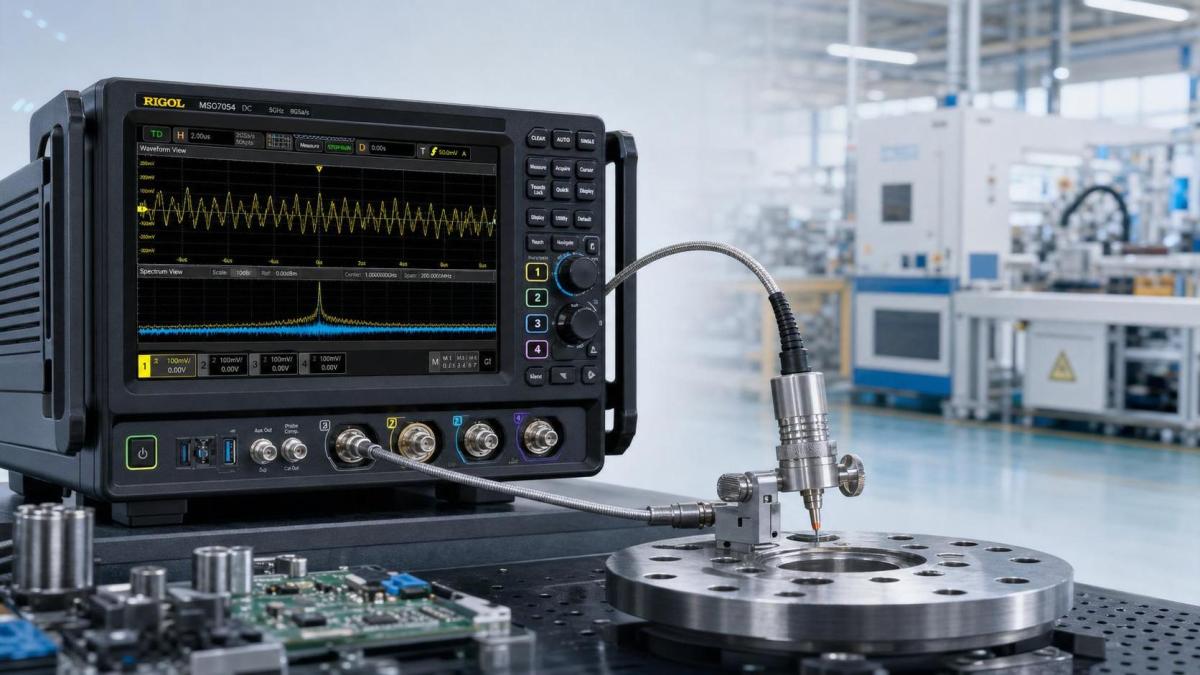
It turns tiny field changes into usable data for inspection, control, diagnostics, and safety.
In practice, that includes radar level sensing, wireless condition monitoring, eddy current testing, shielding evaluation, and signal integrity checks.
The challenge is simple to describe but difficult to solve.
Useful signals are often weak, buried in noise, distorted by the environment, or altered by the measurement chain itself.
That is why electromagnetic signals detection is never just about finding a signal.
It is about deciding whether the detected response is real, repeatable, and accurate enough for action.
For industrial metrology and advanced sensing, that difference directly affects uptime, product quality, and inspection confidence.
A clear view of methods, noise sources, and accuracy limits helps teams avoid false alarms and weak decisions.
Core Methods Used in Electromagnetic Signals Detection
Different applications use different detection strategies, but most methods follow the same path.
A source interacts with a target or environment, a sensor receives a response, and electronics extract meaningful features.
Amplitude Detection
This is one of the most familiar forms of electromagnetic signals detection.
The system measures signal strength and compares it with a threshold or baseline.
It works well when changes in field intensity are large enough to separate from background variations.
Simple proximity sensors and some leakage monitoring devices use this approach.
Frequency and Spectral Detection
Some signals are easier to identify by frequency than by raw amplitude.
Spectral analysis isolates tones, harmonics, sidebands, and modulation signatures that reveal equipment states or material features.
This is common in EMI analysis, rotating equipment diagnostics, and communication channel monitoring.
Phase and Time-Based Detection
When distance, delay, or material properties matter, timing becomes critical.
Radar, time-domain reflectometry, and pulse-based NDT often depend on phase shifts or return time.
These methods support precise ranging, defect localization, and interface detection.
Coherent and Lock-In Detection
For very weak targets, coherent techniques offer a major advantage.
They compare the received response with a known reference in frequency and phase.
This can pull a small signal out of strong broadband noise.
In real measurement systems, this approach is valuable when the environment is noisy but the excitation is controlled.
Main Noise Sources That Distort Detection Results
To understand electromagnetic signals detection, it helps to understand what fights against it.
Noise is not one single problem.
It comes from physics, electronics, installation choices, and surrounding processes.
Thermal Noise
All resistive elements generate thermal noise.
It sets a basic sensitivity floor, especially in wideband systems.
As temperature rises, the noise floor tends to rise with it.
Electromagnetic Interference
Industrial sites are full of interference sources.
Motors, inverters, switching supplies, radio equipment, and high-current cables can inject unwanted energy into the receiving path.
This can look like a real event unless filtering and shielding are well designed.
Multipath and Reflection Effects
In enclosed spaces or metallic environments, reflections create extra paths.
Those delayed copies can reinforce, cancel, or blur the main response.
This matters a lot in radar sensing, wireless monitoring, and cavity-like structures.
Sensor and Front-End Imperfections
No sensor is ideal.
Gain drift, nonlinear response, offset error, limited bandwidth, and analog-to-digital quantization all shape the final reading.
Sometimes the detector sees the electronics more clearly than the target.
Process and Environmental Variability
Humidity, dust, vibration, temperature swings, and material composition can all shift the signal path.
In practical terms, electromagnetic signals detection often fails when calibration conditions and field conditions no longer match.
What Actually Limits Accuracy
Accuracy is often discussed as if it were a single number.
For electromagnetic signals detection, it is better viewed as a stack of limits.
Signal-to-Noise Ratio
If the signal-to-noise ratio is poor, confidence drops quickly.
Even advanced algorithms cannot fully recover information that was never clearly captured.
Bandwidth and Sampling Choices
Too little bandwidth hides important details.
Too much bandwidth can admit unnecessary noise.
Likewise, poor sampling settings create aliasing, timing uncertainty, or lost transient content.
Model Assumptions
Detection software often depends on assumptions about geometry, propagation, material behavior, or background conditions.
When those assumptions break, calculated accuracy can look far better than real accuracy.
Calibration Traceability
A detector can be stable and still be wrong.
Without traceable calibration, offset and scale errors may remain hidden for long periods.
This is especially important in compliance-driven industries and high-value process control.
How to Improve Electromagnetic Signals Detection in Real Settings
From a practical standpoint, better detection usually comes from better system thinking, not one isolated upgrade.
- Match the sensor and frequency range to the physical target, not just to catalog specifications.
- Reduce interference at the source through grounding, cable routing, shielding, and power isolation.
- Use filtering carefully, because aggressive filtering may remove weak but relevant features.
- Validate with controlled reference targets before trusting live process data.
- Track drift over time, especially in high-temperature, corrosive, or vibration-heavy environments.
- Combine signal features such as amplitude, phase, and timing for more reliable classification.
This also explains why many advanced platforms pair sensing hardware with analytics and historical context.
A single snapshot can mislead, but a structured trend often reveals what the signal truly means.
Practical Reference Table for Faster Evaluation
Where Better Detection Creates More Value
The value of electromagnetic signals detection becomes clearer when the measurement consequence is expensive.
In process industries, it helps stabilize level, flow, and asset condition decisions.
In NDT, it supports earlier defect recognition and fewer unnecessary interventions.
In precision instrumentation, it improves trust in the link between invisible phenomena and digital records.
That matters even more as smart manufacturing depends on denser sensing, remote interpretation, and digital twin workflows.
Better electromagnetic signals detection does not simply produce cleaner graphs.
It creates stronger evidence for maintenance timing, inspection confidence, and process optimization.
Final Takeaway
Electromagnetic signals detection works best when method selection, noise control, and accuracy analysis are treated as one connected task.
That means looking beyond raw sensitivity and asking a harder question.
Can the system keep delivering trustworthy results under real operating conditions?
When the answer is yes, electromagnetic signals detection becomes a dependable foundation for safer inspections, smarter automation, and better industrial decisions.
A practical next step is to review one live detection chain, identify its biggest noise source, and verify whether its current accuracy claim still matches field reality.
Related Intelligence
 Silicon Pressure TransmittersSep 27, 2026Selecting Pressure Transmitters for Middle East Heat, Dust, and Hazardous ZonesPressure transmitters Middle East guide: select reliable instruments for extreme heat, dust, corrosion, and hazardous zones with practical installation insights.
 Commercial InsightsSep 26, 2026How to Select a Benchtop Environmental Test Chamber for Thermal Cycling TestsBenchtop environmental testing chambers: learn how to select the right model for thermal cycling, airflow, ramp rates, payloads, and reliable test data.
 RTD/Thermocouple Sensors)Sep 25, 2026Selecting High-Temperature Sensors for Extreme Environments: Limits That MatterExtreme environment sensors high temperature: learn how to select reliable systems for harsh heat, corrosion, vibration, and thermal cycling.
 Commercial InsightsSep 24, 2026What Drives NDT Solutions Cost in Industrial Inspection Projects?NDT solutions cost explained: compare methods, automation, labor, compliance, and lifecycle factors to choose reliable industrial inspection solutions with stronger ROI.
 High-frequency Fatigue TestersSep 23, 2026Accelerated Extreme Environment Testing for Materials Exposed to Heat and VibrationAccelerated extreme environment testing reveals how materials withstand combined heat and vibration, helping teams validate durability, prevent failures, and qualify designs with confidence.
 Silicon Pressure TransmittersSep 22, 2026How to Specify High-Pressure Measurement Sensors for Pulsation and Thermal LoadsHigh pressure measurement sensors for pulsation and thermal loads: learn how to specify range, materials, response, and installation for reliable performance.
 Confocal Laser MicroscopesSep 21, 2026Biological Optical Microscopy: Choosing Contrast Methods for Live-Cell ImagingBiological optical microscopy guide for live-cell imaging: compare phase contrast, DIC, fluorescence, and label-free methods to select reliable, low-stress contrast.
 3D Optical ProfilersSep 20, 2026Non-Contact Measurement Resolution: What Limits Accuracy in Optical Inspection?Non-contact measurement resolution: discover how optics, lighting, calibration, motion, and contrast affect inspection accuracy—and learn practical ways to improve reliable results.
 Commercial InsightsSep 18, 2026Selecting Industrial Inspection Solutions in Europe for Multi-Site Quality ControlIndustrial inspection solutions Europe-wide: learn how to standardise data, compliance, automation, and supplier support for reliable multi-site quality control.
 Universal Testing MachinesSep 17, 2026How to Verify ISO Compliance When Selecting Material Testing SolutionsMaterial testing solutions ISO compliant: learn how to verify standards, calibration, software controls, and supplier evidence before purchasing with confidence.
 Silicon Pressure TransmittersSep 16, 2026How to Specify Flush Diaphragm Pressure Sensors for Viscous and Hygienic ProcessesIndustrial pressure sensors with flush diaphragm designs help ensure accurate, hygienic measurement in viscous processes. Explore key selection factors for materials, cleaning, temperature, and reliability.
 Commercial InsightsSep 15, 2026How to Evaluate an Industrial Quality Inspection Systems Manufacturer for Traceability and UptimeChoose an industrial quality inspection systems manufacturer with confidence. Learn how to assess traceability, validation, data credibility, lifecycle cost, and uptime support.
 Wireless IIoT NodesSep 14, 2026Wireless Industrial Sensing for Remote Monitoring: How to Design a Reliable Asset Coverage PlanWireless industrial sensing for remote monitoring: learn how to build a reliable asset coverage plan that improves visibility, predictive maintenance, safety, and scalable operations.