When ultrasonic defect detection misses critical flaws
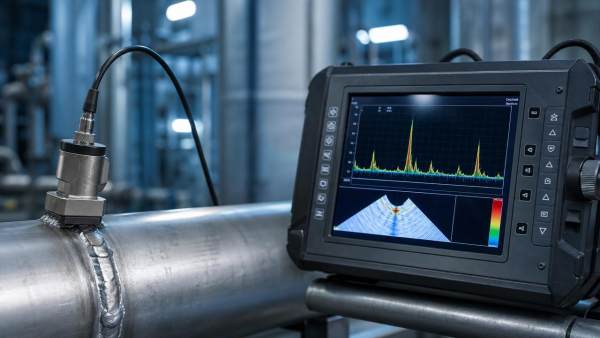
When ultrasonic defect detection misses critical flaws, the consequences reach far beyond a single inspection report. Hidden cracks, lack of fusion, porosity clusters, and near-surface discontinuities can remain active risks inside assets that appear acceptable.
Across modern industry, inspection expectations are changing quickly. Equipment operates harder, materials grow more complex, and compliance demands more traceable evidence. That shift makes ultrasonic defect detection both more valuable and more vulnerable to error.
For technical assessment work, the key question is no longer whether ultrasonic testing is useful. The real question is why ultrasonic defect detection sometimes misses critical flaws, and how detection reliability can be strengthened before failure costs escalate.
Why missed indications are becoming a bigger industrial risk
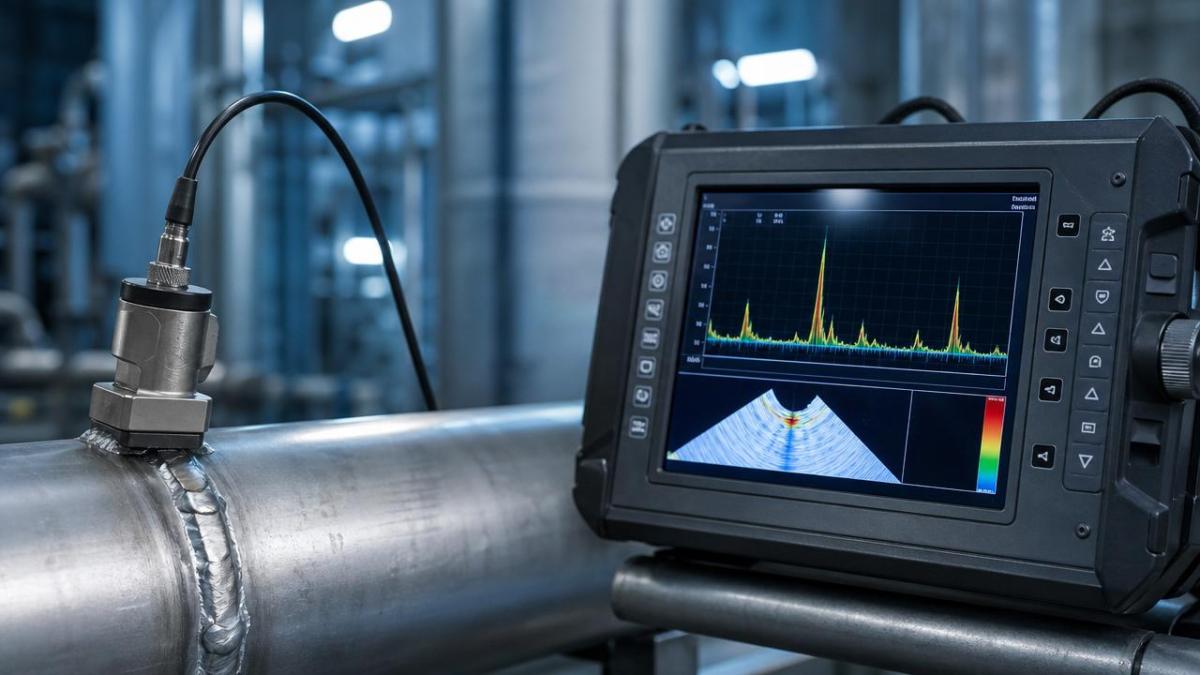
Industrial systems are evolving toward higher pressure, thinner tolerances, mixed materials, and longer service intervals. These trends compress inspection margins. A flaw once considered minor can now trigger fatigue growth, leakage, distortion, or sudden shutdowns.
At the same time, ultrasonic defect detection is being applied in more demanding scenarios. These include additive parts, dissimilar welds, coarse-grain forgings, composites, complex geometries, and high-temperature service components.
The result is a clear trend signal. Missed flaws are less often caused by one obvious mistake. They usually emerge from stacked limitations involving procedure design, calibration quality, access conditions, and signal interpretation under production pressure.
The main forces driving ultrasonic defect detection misses
Several technical and operational factors explain why ultrasonic defect detection can overlook serious discontinuities. The pattern is especially visible where inspection programs have not kept pace with material and digital manufacturing changes.
This trend matters because ultrasonic defect detection success depends on flaw orientation, acoustic path, and signal quality. If any one element is poorly controlled, the inspection may appear complete while still missing a dangerous defect.
Where ultrasonic defect detection is most likely to fail
Not all missed indications occur in the same way. The highest-risk situations tend to share specific acoustic and geometric challenges. Recognizing these patterns helps improve both planning and review.
Near-surface and dead-zone flaws
Conventional probes may struggle close to the entry surface. Initial pulse effects, ringing, and limited resolution can hide shallow cracking, corrosion initiation, or toe defects in weld regions.
Planar defects with unfavorable orientation
Ultrasonic defect detection is highly angle dependent. If a crack face does not reflect energy back toward the probe, the echo may be too weak to classify, even when the flaw is structurally severe.
Coarse-grain and attenuative materials
Austenitic welds, cast structures, and some forgings produce scattering and beam distortion. In these materials, false structure noise can overwhelm defect signals and reduce sizing confidence.
Complex geometry and limited access
Nozzles, curved sections, thick-to-thin transitions, and obstructed weld caps complicate beam path control. In such cases, ultrasonic defect detection often depends on advanced modeling or multiple probe strategies.
How missed flaws affect industrial decisions beyond inspection
A missed flaw does not remain an isolated NDT problem. It reshapes maintenance decisions, operating confidence, audit readiness, and root-cause investigations. The business effect often appears later, when correction becomes more expensive.
- Maintenance intervals may be extended on incorrect condition evidence.
- Repair strategies may target the wrong damage mechanism.
- Regulatory documentation may fail traceability expectations.
- Production planning may absorb unplanned shutdown risk.
- Failure analysis may be delayed by weak baseline inspection records.
In sectors tied to pressure systems, aerospace structures, energy assets, transport components, and advanced manufacturing, ultrasonic defect detection reliability has become a strategic quality issue, not just a technical task.
What deserves closer attention in current ultrasonic defect detection practice
Several focus areas now separate robust inspection programs from vulnerable ones. These points matter because they address the conditions most associated with missed critical flaws.
- Match probe frequency and beam angle to material structure, thickness, and expected defect morphology.
- Review whether calibration blocks represent actual geometry and acoustic behavior.
- Validate scan plans against flaw orientation, not only drawing access.
- Check encoded coverage data when phased array or mechanized systems are used.
- Use cross-method confirmation where ultrasonic defect detection uncertainty remains high.
- Reassess acceptance thresholds for high-consequence service conditions.
- Strengthen analyst review for low-amplitude or irregular indications.
- Retain digital records that support later trend comparison and audit defense.
These priorities align with broader industrial metrology trends. Data quality, traceable sensing, and defect characterization are increasingly linked with predictive maintenance, digital twins, and lifecycle risk models.
Why advanced methods are reshaping expectations
The market is moving beyond simple pass or fail inspection. Phased array ultrasonics, TOFD, full matrix capture, TFM, and AI-assisted review are raising expectations for coverage visualization and defect discrimination.
However, advanced tools do not automatically eliminate misses. Poor setup, weak data governance, and overconfidence in software can still reduce ultrasonic defect detection performance. Technology only helps when procedures, skills, and evidence workflows mature together.
Practical judgment steps to reduce missed critical flaws
A stronger response starts with judgment, not equipment alone. Before accepting a clean result, review whether the inspection conditions truly supported reliable flaw detection.
- Define the most dangerous defect types expected from service history, fabrication route, and failure mode.
- Confirm that ultrasonic defect detection parameters were built around those defects, not generic procedures.
- Evaluate material soundness, surface condition, and geometry before scan execution.
- Check calibration validity throughout the job, not only at the start.
- Require second-level review where indications are weak, inconsistent, or structurally plausible.
- Use complementary NDT methods when risk remains high or acoustic behavior is unstable.
This approach turns ultrasonic defect detection from a routine checkbox into a decision-quality process. That shift is increasingly necessary in industries where measurement credibility directly influences safety and uptime.
The next move: build defect detection confidence before failure reveals the gap
Missed flaws rarely announce themselves during inspection. They appear later through leaks, fractures, costly repairs, or disputed records. That is why ultrasonic defect detection should be reviewed as part of a broader precision sensing strategy.
A useful next step is to compare current UT procedures against actual material behavior, coverage evidence, digital traceability, and cross-method verification needs. In many cases, small procedural upgrades reveal large hidden reliability gains.
Within advanced industrial metrology, the real advantage comes from connecting ultrasonic defect detection data with smarter interpretation, stronger validation, and better lifecycle decisions. That is how critical flaws become visible before they become expensive.
Related Intelligence
 Silicon Pressure TransmittersSep 03, 2026How to Design Hydraulic Pressure Monitoring for Early Leak and Overload DetectionHydraulic pressure monitoring guide for early leak and overload detection—optimize sensor placement, alarm logic, and data analysis to reduce downtime.
 Universal Testing MachinesSep 02, 2026How to Choose Programmable Extreme Environment Testing for Material QualificationProgrammable extreme environment testing: learn how to select reliable systems for material qualification, precise control, traceable data, and real-world failure analysis.
 Nanoindentation TestersSep 01, 2026Which ISO Standards Guide Polymer Crystal Analysis for Reliable Material Testing?ISO polymer crystal analysis: discover which ISO standards support reliable DSC testing, crystallinity evaluation, melting behavior, and material performance decisions.
 Wireless IIoT NodesAug 31, 2026What Data Does Industry 4.0 Need for Reliable Production Analytics?Industry 4.0 data needs analytics built on trustworthy process, condition, quality, and material data. Discover how traceable measurements power reliable production decisions.
 Wireless IIoT NodesAug 30, 2026Selecting Process Control Sensors for European Plants: Standards, Accuracy, and IIoT IntegrationProcess control sensors Europe: learn how to select compliant, accurate, IIoT-ready instruments for safer, more reliable plant operations.
 Commercial InsightsAug 29, 2026Pressure Measurement in Latin America: Growth Drivers and Demand by IndustryPressure measurement Latin America: explore growth drivers, industry demand, digitalization, and supplier insights for energy, mining, water, and process industries.
 Wireless IIoT NodesAug 28, 2026Industrial Sensing for Process Plants: A Practical Guide to Measurement PointsIndustrial sensing guide for process plants: learn how to select reliable flow, level, pressure, temperature, and condition-monitoring measurement points.
 Universal Testing MachinesAug 27, 2026How to Select Material Testing Equipment for Rubber Across Tensile and Fatigue TestsMaterial testing equipment for rubber: learn how to select tensile and fatigue systems with the right grips, sensors, controls, and environmental options for reliable results.
 Silicon Pressure TransmittersAug 26, 2026How to Select High Pressure Instrumentation for Corrosive and High-Temperature ServiceHigh pressure instrumentation selection for corrosive, high-temperature service: learn how to compare materials, seals, temperature limits, and installation risks for safer, longer-lasting performance.
 RTD/Thermocouple Sensors)Aug 25, 2026How to Choose High Precision Stainless Steel Sensors for Corrosive Industrial EnvironmentsHigh precision sensors stainless steel selection guide for corrosive industrial environments. Learn how to compare materials, seals, stability, and outputs for reliable long-term performance.
 Commercial InsightsAug 24, 2026How to Evaluate Industrial Measurement Equipment Suppliers in Latin America?Industrial measurement equipment Latin America buyers can learn how to compare suppliers by accuracy, certification, service, and logistics to reduce risk and source with confidence.
 Commercial InsightsAug 23, 2026How to Improve Process Plant Reliability in Extreme Environments?Extreme environment adaptability for process plants starts with reliable sensing, smart materials, and targeted inspection. Learn practical ways to reduce downtime and boost uptime.
 Universal Testing MachinesAug 22, 2026How to Select Material Testing Solutions for Composites in Aerospace and AutomotiveMaterial testing solutions for composites: learn how aerospace and automotive teams choose the right mix of mechanical, NDT, and durability tests to cut risk and speed approval.