Choosing the right ultrasonic testing equipment in 2026 is no longer just a technical comparison—it is a procurement decision tied to inspection reliability, lifecycle cost, data integration, and compliance readiness.
As NDT moves deeper into smart manufacturing, buyers must evaluate phased array capability, AI-assisted defect recognition, connectivity, service support, and suitability for harsh industrial environments.
This guide helps procurement teams identify the key factors that separate dependable ultrasonic testing systems from costly mismatches.
Start With the Inspection Risk, Not the Instrument Brochure
The best ultrasonic testing equipment is not necessarily the most advanced model. It is the system that reliably detects your highest-risk defects.
Procurement teams should begin by mapping inspection tasks, materials, geometries, defect types, production volume, and regulatory obligations before comparing brands or specifications.
Aerospace turbine components, pressure vessel welds, rail axles, composite panels, and pipeline girth welds each demand different ultrasonic performance priorities.
If the main risk is weld lack of fusion, phased array coverage and encoded scanning may matter more than raw frequency range.
If the application involves corrosion mapping, buyers should prioritize thickness accuracy, C-scan reporting, data storage, and repeatable grid-based inspection workflows.
For procurement, this early definition prevents two common failures: overbuying features operators will not use, or underbuying capability that later blocks compliance.
Define the Required Ultrasonic Method Before Selecting a Platform
Conventional ultrasonic flaw detectors remain practical for thickness measurement, basic weld inspection, and field maintenance where portability and simplicity are critical.
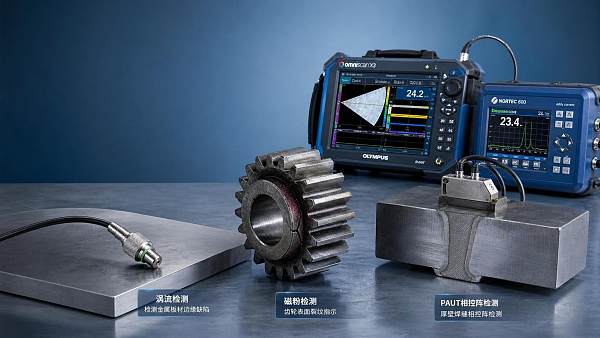
Phased array ultrasonic testing, or PAUT, provides electronic beam steering, sector scans, better visualization, and higher probability of detection for complex components.
Time-of-flight diffraction, known as TOFD, is valuable for weld integrity assessment because it sizes through-wall defects with strong repeatability.
Full matrix capture and total focusing method are becoming more accessible, especially where complex geometries make traditional beam paths difficult to interpret.
In 2026, many buyers should consider modular platforms that support conventional UT, PAUT, TOFD, and advanced imaging through software-enabled expansion.
This approach protects capital budgets because the equipment can evolve as inspection contracts, standards, and customer requirements become more demanding.
Evaluate Detection Performance With Application-Based Evidence
Technical datasheets are useful, but procurement decisions should rely on demonstrated performance against realistic samples, not idealized laboratory claims.
Ask suppliers to test reference blocks or representative components matching your materials, thicknesses, surface conditions, weld profiles, and expected defect morphology.
Important indicators include signal-to-noise ratio, near-surface resolution, sizing accuracy, repeatability, probe stability, and inspection speed under normal operator conditions.
For thick steel, attenuation and penetration may be decisive. For thin components, dead zone, frequency selection, and coupling consistency become more important.
For composites or additive-manufactured parts, buyers should verify whether the system handles anisotropic materials, scattering, and irregular internal structures effectively.
A procurement team should request written application notes, trial reports, or third-party validation rather than accepting generic “suitable for all industries” statements.
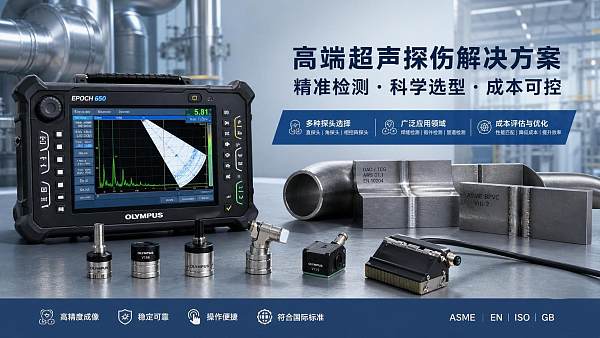
Look Closely at Probes, Wedges, Scanners, and Accessories
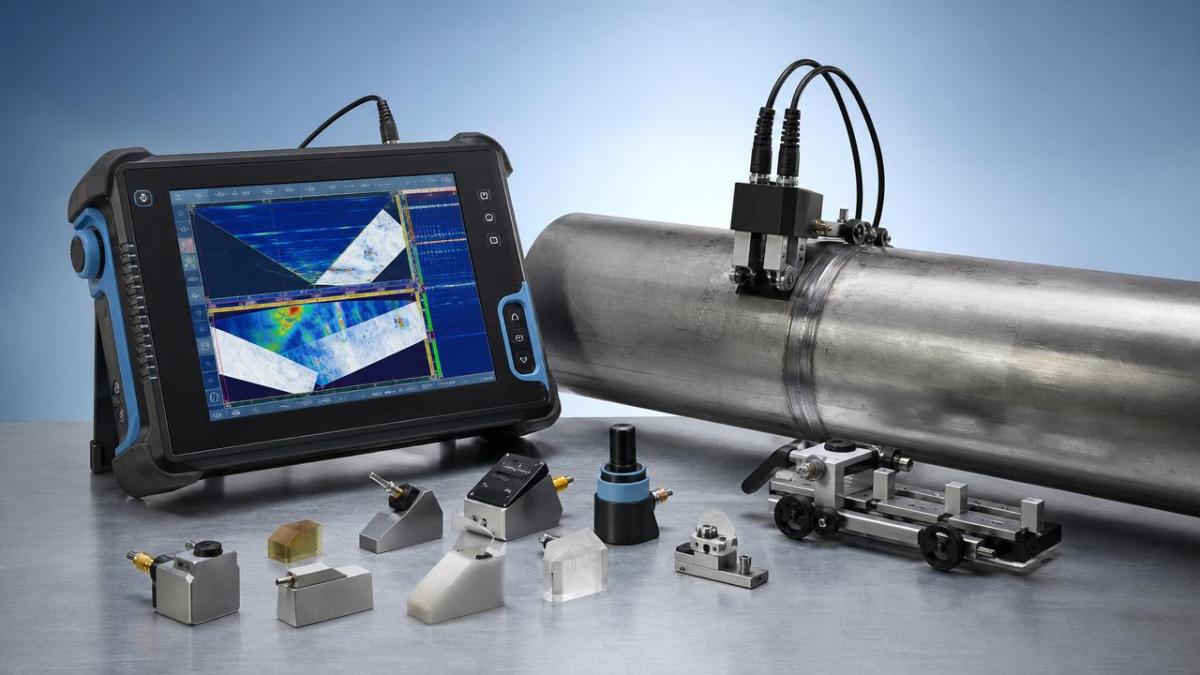
Many purchasing mistakes happen because buyers focus on the main unit while underestimating the importance of probes, wedges, scanners, cables, and encoders.
A high-end flaw detector cannot compensate for poorly matched probes or unstable mechanical scanning in demanding industrial environments.
Procurement specifications should include frequency, element count, aperture, wedge material, temperature tolerance, wear resistance, encoder compatibility, and cable durability.
For automated or semi-automated weld inspection, scanner rigidity, magnetic wheel performance, water management, and repeatable probe positioning directly affect data quality.
For high-temperature inspection, standard wedges and couplants may fail quickly, increasing downtime and compromising measurement reliability.
Buyers should also evaluate accessory availability, lead times, replacement cost, and whether customized probes can be supplied for unusual inspection geometries.
Prioritize Data Integrity, Connectivity, and Digital Workflow
In 2026, ultrasonic testing equipment must do more than display echoes. It should create traceable data that supports audits, maintenance planning, and digital operations.
Procurement teams should examine file formats, report automation, user permission controls, calibration records, cloud or server export, and integration with asset management systems.
For manufacturers building Industry 4.0 or digital twin programs, inspection data must be searchable, comparable, and linked to component history.
Connectivity options such as Ethernet, Wi-Fi, USB-C, OPC UA, or API access may influence long-term usefulness more than minor hardware differences.
Cybersecurity should also be discussed, especially when equipment connects to plant networks, customer databases, or regulated infrastructure inspection systems.
The goal is not simply digital storage. The goal is defensible, structured inspection evidence that reduces rework, disputes, and compliance uncertainty.
Assess AI Features Carefully and Avoid Marketing Traps
AI-assisted defect recognition is becoming a major selling point, but buyers should treat it as decision support rather than a replacement for qualified inspectors.
Useful AI functions include automated indication classification, assisted sizing, noise reduction, weld tracking, pattern comparison, and prioritization of suspicious scan areas.
However, procurement teams must ask how the model was trained, which materials it covers, and whether results are explainable and auditable.
An AI tool trained mainly on carbon steel welds may perform poorly on composites, dissimilar metals, castings, or unusual geometries.
Buyers should require validation datasets, false positive rates, false negative rates, update policies, and clear responsibility when AI recommendations conflict with human judgment.
The most valuable AI capability is not a flashy dashboard. It is consistent support that improves productivity without weakening compliance defensibility.
Check Compliance With Standards and Customer Requirements
Ultrasonic testing equipment must support the inspection codes and acceptance criteria relevant to your market, otherwise technical capability may not translate into usable results.
Common references may include ASME, ISO, ASTM, EN, API, AWS, aerospace specifications, railway standards, or internal customer procedures.
Procurement teams should confirm whether the equipment supports required scan plans, calibration methods, data recording, reporting formats, and procedure qualification needs.
For regulated sectors, audit trails, locked settings, calibration certificates, software version control, and traceable reporting can be as important as flaw detection itself.
When purchasing for multiple sites, standardization matters. Different models, software versions, and reporting templates can create training burdens and inconsistent inspection records.
Before signing, request a compliance matrix showing how the proposed system supports each relevant standard, procedure, and customer documentation requirement.
Calculate Total Cost of Ownership, Not Only Purchase Price
The lowest quote can become expensive if it increases inspection time, causes frequent downtime, or requires costly accessories and software upgrades.
Total cost of ownership includes the main unit, probes, wedges, scanners, software licenses, calibration, training, service contracts, batteries, repairs, and spare parts.
Buyers should estimate cost per inspection, not merely capital expenditure. Faster setup, better reporting, and fewer rescans often justify a higher initial price.
Software licensing deserves special attention. Some suppliers charge separately for PAUT, TOFD, analysis modules, export tools, cloud access, or advanced imaging.
Ask whether licenses are perpetual, subscription-based, transferable between devices, or locked to specific operators and workstations.
A strong procurement comparison should include a three-to-five-year cost model, expected utilization, downtime risk, and resale or upgrade value.
Verify Usability for Real Operators and Field Conditions
Even powerful ultrasonic testing equipment can fail commercially if inspectors find it slow, fragile, confusing, or difficult to use with gloves.
Procurement teams should involve Level II and Level III personnel in trials, because their feedback reveals problems that purchasing documents often miss.
Important usability factors include screen visibility outdoors, battery life, boot time, menu logic, weight, ruggedness, waterproof rating, and probe connection layout.
For confined spaces, rope access, offshore platforms, or high-temperature plants, portability and ergonomic design can directly affect safety and productivity.
For factories, repeatable workflows, barcode scanning, automatic report generation, and fixture compatibility may matter more than handheld convenience.
A practical trial should simulate actual inspection pressure, including noise, limited access, imperfect surfaces, schedule constraints, and normal operator fatigue.
Review Supplier Support, Training, and Service Capability
Ultrasonic testing equipment is not a one-time product purchase. It is a technical capability that depends heavily on supplier support.
Procurement teams should assess local service centers, response time, spare part availability, calibration support, remote troubleshooting, and application engineering expertise.
Training is especially important for phased array, TOFD, FMC, TFM, and AI-supported analysis, where improper setup can undermine inspection reliability.
Ask whether the supplier provides procedure development assistance, scan plan optimization, customized training, and support during customer audits or qualification projects.
Global companies should confirm whether support quality is consistent across regions, not limited to the supplier’s headquarters market.
A slightly higher equipment price may be justified when the vendor reduces implementation risk and keeps inspection operations running reliably.
Use a Structured Procurement Checklist
A structured checklist helps procurement compare different ultrasonic testing equipment proposals fairly and prevents decisions from being driven only by brand reputation.
Start with inspection scope: materials, thickness range, defect types, codes, environment, throughput, operator skill level, and reporting requirements.
Next, define mandatory technical capabilities, including UT method, channel count, supported probes, imaging modes, encoder support, and data export options.
Then evaluate commercial factors: delivery time, warranty, service contract, training package, software licensing, upgrade path, and three-year ownership cost.
Finally, require a live demonstration or pilot inspection using representative samples, with acceptance criteria agreed before the test begins.
This process transforms procurement from a price negotiation into a risk-controlled technical selection aligned with business performance.
Conclusion: Choose for Reliability, Scalability, and Evidence
In 2026, the right ultrasonic testing equipment should deliver dependable detection, efficient workflow, traceable data, and adaptability to future inspection demands.
Procurement teams should avoid choosing solely by price, brochure specifications, or isolated hardware features without considering real inspection conditions.
The strongest purchasing decisions connect technical performance with compliance readiness, operator usability, supplier support, and lifecycle cost.
If a system can prove its value on your components, integrate with your data environment, and scale with future needs, it is a sound investment.
For buyers, the core question is simple: will this equipment reduce inspection uncertainty while supporting safe, efficient, and auditable industrial operations?