Is industrial CT for sale worth the investment?
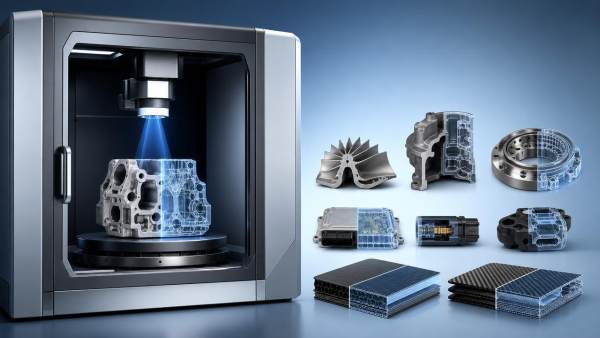
Evaluating industrial CT for sale is now a strategic question about inspection confidence, production risk, and digital manufacturing readiness.
Across aerospace, automotive, electronics, and advanced materials, internal defects can no longer wait for destructive validation or slow sampling routines.
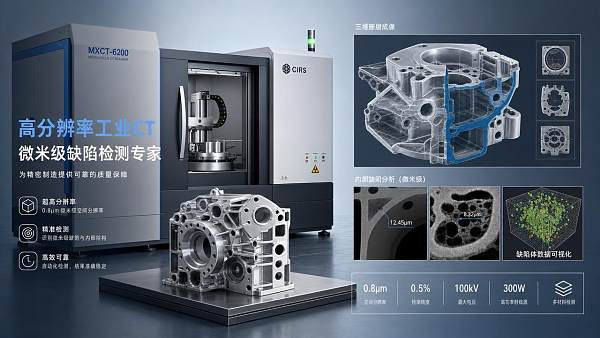
Industrial computed tomography reveals cracks, porosity, assembly errors, and material inconsistencies while preserving valuable parts and generating traceable inspection data.
The investment case depends on precision, throughput, software intelligence, operator readiness, and long-term data value.
Why industrial CT for sale is moving from niche inspection to strategic infrastructure
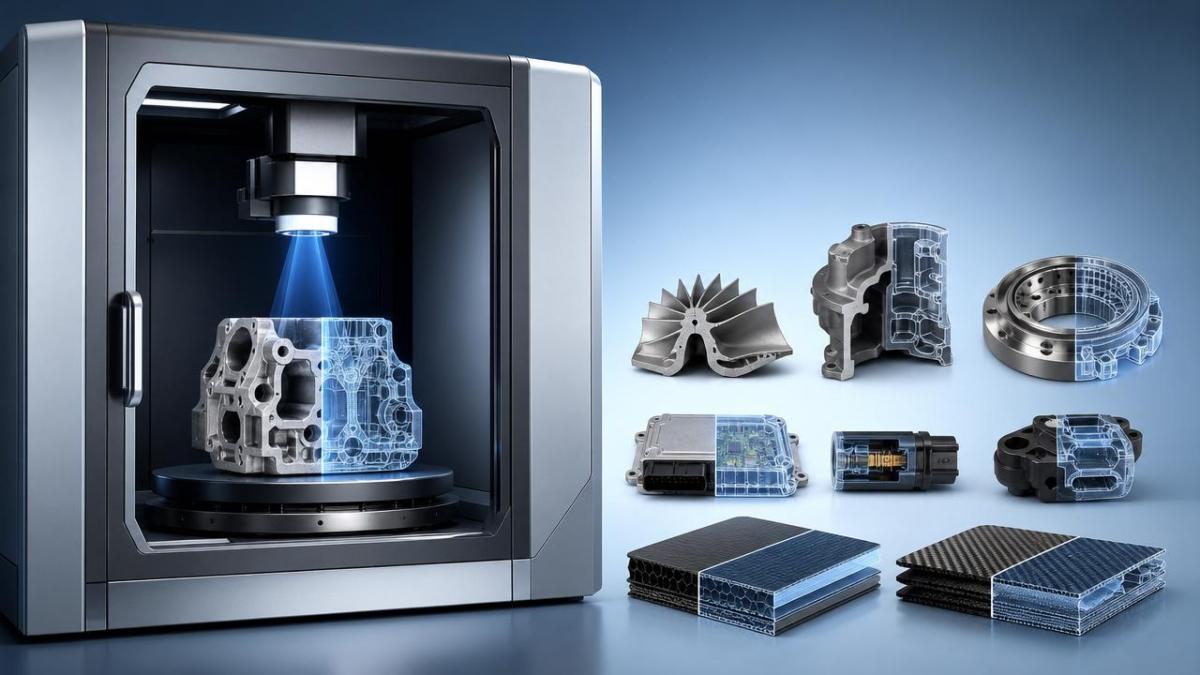
The market for industrial CT for sale is changing because inspection expectations are becoming more three-dimensional, data-driven, and risk-sensitive.
Traditional NDT methods remain essential, but complex parts increasingly demand volumetric evidence instead of surface-level assumptions.
Additive manufacturing, lightweight castings, battery modules, microelectronics, and composite structures all contain hidden geometries that are difficult to verify externally.
This shift explains why industrial CT for sale is being evaluated beyond laboratories and failure-analysis rooms.
It is increasingly connected to production qualification, supplier validation, process tuning, and digital twin verification.
For PIAS, this reflects a wider industrial trend: physical sensing is becoming inseparable from high-integrity manufacturing data.
The strongest trend signals behind the investment question
Several signals show why industrial CT for sale is gaining attention across general industry, not only high-end aerospace programs.
- Parts are becoming smaller, lighter, denser, and harder to inspect with single-angle methods.
- Regulated sectors need more defensible evidence for internal quality and process stability.
- AI-assisted defect recognition is reducing review time and improving inspection consistency.
- Digital twins require measured internal geometry, not only nominal CAD assumptions.
- Supply chains are demanding stronger incoming inspection for critical components.
These signals make industrial CT for sale relevant to quality strategy, not merely equipment expansion.
The question is shifting from “Can CT find defects?” to “Can CT protect process decisions at scale?”
What is driving demand for industrial CT for sale?
The investment logic becomes clearer when the forces behind adoption are separated into technical, operational, and data-related drivers.
These factors explain why industrial CT for sale can deliver value even before full production automation is achieved.
Where industrial CT for sale creates measurable business impact
The return from industrial CT for sale rarely comes from a single inspection task.
Value usually appears across multiple stages of product development, manufacturing, and quality governance.
Product development and validation
During design validation, industrial CT for sale helps compare real internal geometry against CAD models.
This is valuable for injection-molded parts, die castings, 3D-printed components, connectors, and miniaturized assemblies.
Faster feedback allows design teams to adjust wall thickness, cooling channels, joining methods, and tolerance strategies earlier.
Production quality and process control
In manufacturing, industrial CT for sale supports defect trend monitoring, tool wear investigation, and process window optimization.
Instead of only rejecting defective parts, teams can understand why defects appear and whether they are spreading.
This turns CT from a diagnostic tool into a process improvement instrument.
Supplier quality and risk control
For critical purchased components, industrial CT for sale enables stronger incoming verification without destroying samples.
It can reveal casting porosity, solder voids, incomplete filling, fiber misalignment, and hidden assembly deviations.
The resulting inspection evidence strengthens supplier discussions and supports more objective acceptance criteria.
When the investment is easier to justify
Industrial CT for sale is most compelling when hidden defects are expensive, safety-critical, or difficult to detect otherwise.
The decision becomes stronger when inspection data can support several departments or business processes.
- High-value parts are regularly scrapped during destructive testing.
- Internal defects cause uncertain failures, returns, or production interruptions.
- Inspection bottlenecks delay engineering release or supplier approval.
- Complex assemblies require non-destructive verification before shipment.
- Regulatory or customer audits demand traceable volumetric evidence.
- Process optimization needs statistical insight into internal defect formation.
If several of these conditions exist, industrial CT for sale is no longer a luxury purchase.
It becomes part of a broader risk-reduction and measurement intelligence strategy.
Cost factors that can change the payback calculation
The price of industrial CT for sale is only one part of the total investment picture.
System performance, facility needs, maintenance, software, and operator capability all affect long-term value.
- Source power: Higher power supports denser materials but may raise shielding and safety requirements.
- Detector quality: Better detectors improve image clarity, measurement reliability, and small-defect visibility.
- Voxel resolution: Resolution must match defect size, part geometry, and tolerance expectations.
- Software workflow: Reconstruction, segmentation, CAD comparison, and reporting determine daily productivity.
- Automation readiness: Robotic loading and batch scanning can change throughput economics.
- Data management: CT files are large and need structured storage, review, and access control.
A low initial price may disappoint if reconstruction is slow or software cannot support repeatable reporting.
A higher-spec system may be justified if it removes repeated outsourcing, delays, and uncertainty.
How industrial CT for sale affects different business functions
The impact of industrial CT for sale is cross-functional because inspection data influences design, production, purchasing, and compliance.
This broad influence is why industrial CT for sale should be evaluated as a shared measurement platform.
The strongest returns appear when scan results are integrated into decisions, not stored as isolated images.
Key evaluation points before choosing industrial CT for sale
A practical evaluation should begin with inspection requirements, not equipment brochures.
The best system is the one that matches material density, defect size, part volume, and reporting expectations.
- Define the smallest defect that must be detected reliably.
- Clarify whether dimensional metrology, defect detection, or both are required.
- Test representative parts, including difficult materials and worst-case geometries.
- Compare scan time, reconstruction speed, and reporting workflow.
- Check measurement traceability, calibration methods, and relevant standards.
- Assess training, service support, spare parts, and software upgrade paths.
Industrial CT for sale should also be judged by how easily it fits existing quality systems.
Connectivity with PLM, MES, SPC, and digital inspection archives can increase its strategic value.
Recommended decision path for a resilient investment
A phased approach reduces investment risk and avoids selecting industrial CT for sale based only on headline specifications.
This path makes industrial CT for sale easier to compare across vendors, configurations, and deployment models.
It also prevents overbuying resolution that does not improve actual decisions.
Final judgment: is industrial CT for sale worth the investment?
Industrial CT for sale is worth serious consideration when internal quality directly affects safety, yield, reliability, or customer trust.
Its value is strongest when scanning replaces uncertainty with traceable, three-dimensional evidence.
The investment is less convincing if parts are simple, defects are visible externally, or inspection volume remains very low.
However, the strategic direction is clear: manufacturing quality is moving toward richer data and non-destructive internal verification.
PIAS views industrial CT for sale as part of the wider evolution of precision sensing and NDT intelligence.
Before committing capital, define the inspection problems, test real parts, quantify avoidable losses, and validate software workflows.
When those elements align, industrial CT for sale becomes more than equipment.
It becomes a foundation for smarter quality assurance, stronger risk control, and more reliable digital manufacturing decisions.
Related Intelligence
 Commercial InsightsJun 15, 2026Extreme Environment Testing: Key Standards, Failure Risks, and Test Setup BasicsExtreme environment testing explained: key standards, common failure risks, and test setup basics to improve reliability, reduce field failures, and support smarter validation decisions.
 Digital Profile ProjectorsJun 15, 2026Precision Measurement Instruments Supplier Checklist: Accuracy, Calibration, and SupportPrecision measurement instruments supplier checklist covering accuracy, calibration traceability, application fit, and after-sales support to help you choose with confidence.
 80GHz Radar Level TransmittersJun 15, 2026How to Evaluate a Level Meters Manufacturer for Tank and Process ApplicationsLevel meters manufacturer selection affects accuracy, safety, and lifecycle cost. Learn how to compare technology, compliance, engineering support, and service for tank and process applications.
 Universal Testing MachinesJun 15, 2026Industrial Testing Equipment Selection Guide: Key Specs for Reliable Lab ResultsIndustrial testing equipment selection starts with the right specs. Learn how accuracy, traceability, and data integration improve lab reliability and support smarter buying decisions.
 Phased Array Ultrasonics - PAUTJun 15, 2026How Ultrasonic Testing Works and When It Outperforms Other NDT MethodsUltrasonic testing explained: learn how it detects hidden flaws, when it outperforms other NDT methods, and why it is a smart choice for faster, safer industrial inspection.
 Wireless IIoT NodesJun 14, 2026Industry 4.0 Sensors Selection Guide: Protocols, Accuracy, and IIoT IntegrationIndustry 4.0 sensors selection guide covering protocols, accuracy, durability, and IIoT integration. Learn how to choose scalable sensors that improve uptime, data quality, and ROI.
 80GHz Radar Level TransmittersJun 14, 2026How to Request a Level Meters Quotation: Specs That Affect Price and Lead TimeLevel meters quotation tips: learn which specs affect price, lead time, and fit. Discover the RFQ details that help you get faster, clearer, and more competitive supplier offers.
 Latest Sector NewsJun 14, 2026Extreme Environment Testing: Key Methods for Heat, Vibration, Salt Spray, and IP ProtectionExtreme environment testing explained: learn how heat, vibration, salt spray, and IP protection reveal hidden failure risks, improve reliability, and support smarter industrial equipment decisions.
 Commercial InsightsJun 14, 2026What Is Industrial Sensing Technology and Where Is It Used in Smart Manufacturing?Industrial sensing technology powers smart manufacturing with real-time data for quality, predictive maintenance, and process control. Discover where it’s used and why it matters.
 Industrial X-ray/CTJun 14, 2026Industrial CT for Sale: How to Compare Resolution, Throughput, and Total CostIndustrial CT for sale: compare resolution, throughput, and total cost before you buy. Learn what affects defect detection, workflow efficiency, and long-term ROI.
 Commercial InsightsJun 13, 2026International Measurement Standards: How to Verify Compliance Before Equipment PurchaseInternational measurement standards are the key to safer equipment buying. Learn how to verify traceability, calibration, and compliance evidence before purchase.
 Universal Testing MachinesJun 13, 2026Stress-Strain Analysis Explained: Key Parameters for Material Testing and Failure ReviewStress-strain analysis explained clearly: learn key testing parameters, curve reading, and failure review tips to improve material quality, reduce risk, and make smarter engineering decisions.
 Wireless IIoT NodesJun 13, 2026Thermodynamic Changes Monitoring in Production Lines: Methods, Sensors, and LimitsThermodynamic changes monitoring helps production teams detect thermal drift early with the right methods, sensors, and alarm limits to reduce downtime, energy loss, and quality risks.