How smart manufacturing sensors improve uptime and traceability
For modern industry, smart manufacturing sensors have become a practical foundation for uptime, traceability, and faster operational response.
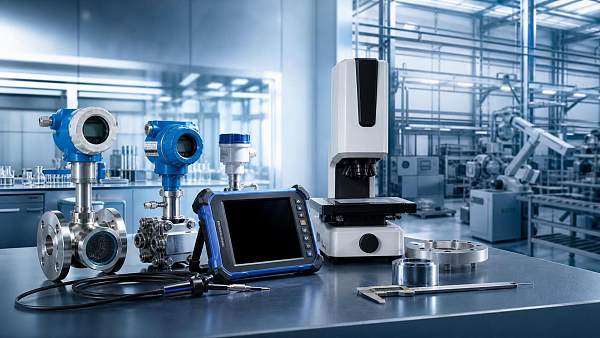
They convert pressure, flow, temperature, vibration, acoustic, and optical signals into usable intelligence across production, inspection, and maintenance.
As factories move toward Industry 4.0 and digital twins, sensor data now shapes quality control, compliance, and asset reliability.
This shift is especially visible in metrology, NDT, optical inspection, and material testing, where physical truth must be captured precisely.
In that environment, smart manufacturing sensors do more than monitor conditions. They strengthen decision-making across the full production lifecycle.
Why smart manufacturing sensors are becoming a resilience requirement
The manufacturing environment is changing fast. Downtime costs are rising, quality expectations are tightening, and traceability demands are expanding.
At the same time, production assets face harsher conditions, shorter changeover cycles, and greater pressure to deliver verified data.
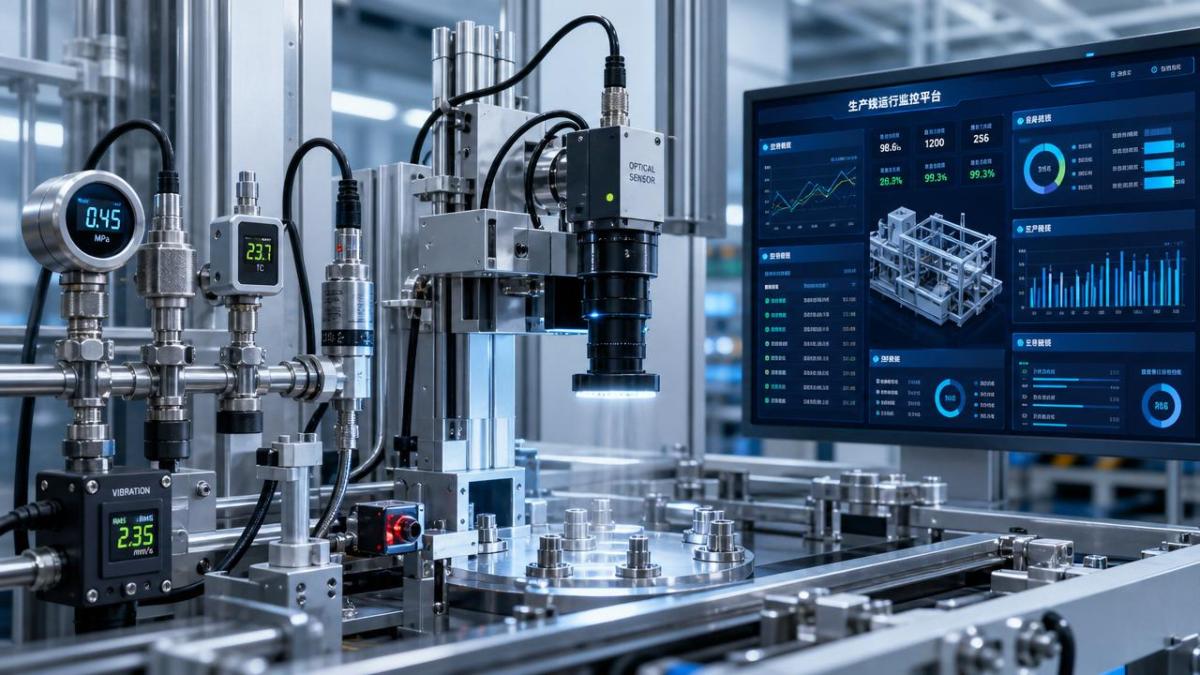
Smart manufacturing sensors address this pressure by creating continuous visibility into equipment behavior and process stability.
Instead of relying on periodic checks alone, operations gain live readings that reveal drift, wear, blockage, overheating, and structural anomalies early.
This matters across broad industrial settings, from process plants and precision machining to aerospace inspection and advanced materials validation.
The clearest trend signals point to uptime and traceability convergence
A major trend is the merging of maintenance intelligence with quality evidence.
Historically, uptime and traceability were treated as separate goals. Today, they increasingly depend on the same sensor infrastructure.
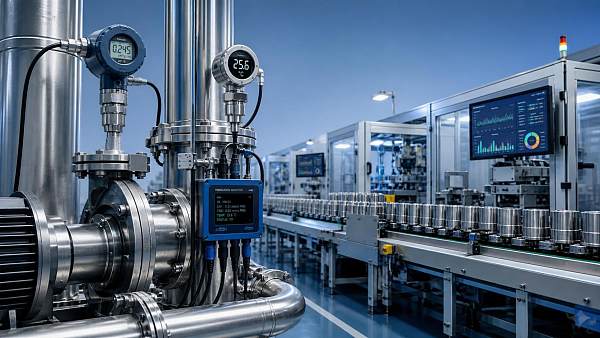
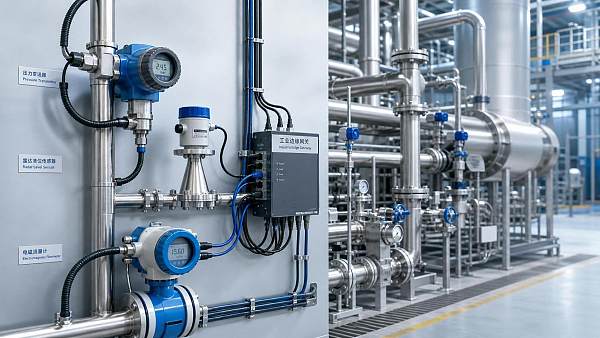
A pressure transmitter may prevent pump damage while also recording a process condition tied to product compliance.
An optical inspection sensor may catch dimensional drift while also feeding a historical record for root cause analysis.
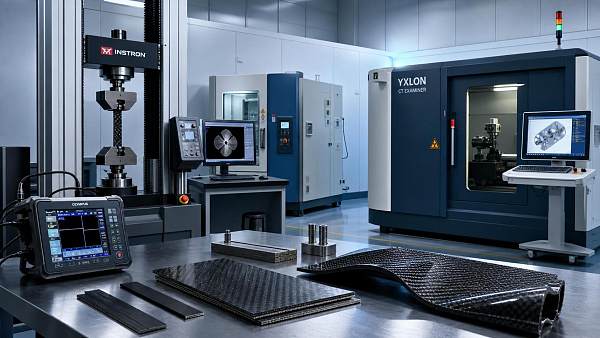
NDT systems and industrial CT tools add another layer, linking internal defect detection with digital proof of structural integrity.
This convergence is why smart manufacturing sensors are now central to plant resilience, not just automation upgrades.
What is driving wider adoption of smart manufacturing sensors
Several forces are accelerating investment in smart manufacturing sensors across the comprehensive industrial landscape.
These drivers are reinforced by improvements in MEMS devices, monocrystalline silicon sensing, industrial Ethernet, and AI-supported analytics.
As a result, smart manufacturing sensors now fit more applications with better reliability in corrosive, high-pressure, dusty, and high-vibration environments.
How sensor intelligence improves uptime across critical operations
Uptime improves when hidden physical changes are detected before they become expensive disruptions.
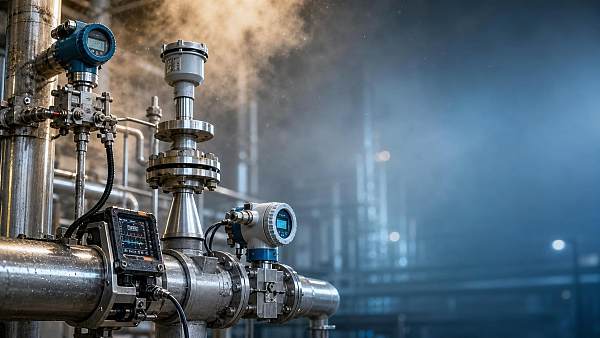
Flow and level meters reveal clogging, leakage, unstable feed rates, and inventory imbalance in process systems.
Temperature and pressure transmitters expose overload conditions, thermal drift, cavitation risks, and unsafe operating windows.
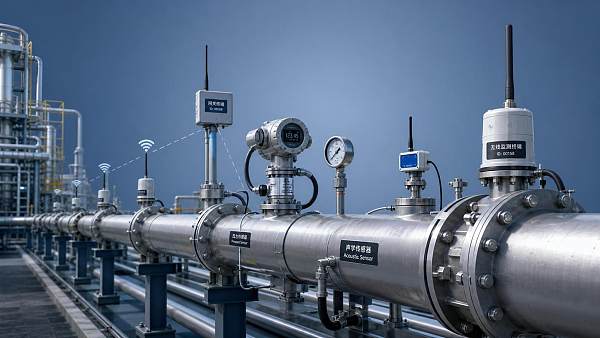
Vibration and acoustic sensing identify bearing wear, misalignment, resonance, and early mechanical fatigue.
In high-value equipment, NDT tools can detect subsurface cracks before visible failure appears, reducing catastrophic shutdown risk.
Optical microscopic observation supports uptime differently. It catches tool wear patterns, surface defects, and contamination linked to downstream rejects.
When these signals feed a unified monitoring layer, response times become faster and maintenance scheduling becomes more precise.
Typical uptime gains come from earlier intervention
- Detecting process deviation before scrap rates climb
- Triggering maintenance based on condition instead of calendar intervals
- Reducing troubleshooting time through timestamped sensor history
- Lowering false alarms with better signal resolution and context
Why traceability is now inseparable from smart manufacturing sensors
Traceability has expanded far beyond lot codes and final inspection reports.
Today, many operations need a timestamped chain of process evidence showing how each product condition was created and verified.
Smart manufacturing sensors make that possible by recording measurable physical states throughout production and testing.
For example, radar level data can confirm material availability, while Coriolis flow data verifies dosing accuracy for critical formulations.
Pressure and temperature histories can validate whether process windows remained inside acceptable limits during each batch or cycle.
Optical systems capture dimensional and surface evidence. NDT platforms add internal integrity records that cannot be seen externally.
Material testing machines contribute mechanical proof, linking stress-strain behavior to qualification, durability, and safety decisions.
Together, these records support root cause analysis, warranty defense, certification, and continuous process improvement.
The operational impact reaches multiple business and technical layers
The value of smart manufacturing sensors appears across interconnected stages, not in one isolated dashboard.
This broad impact explains why sensor strategy now influences competitiveness, not just instrumentation choices.
The most important points to evaluate before expanding sensor deployment
- Measurement accuracy under real operating conditions, not only laboratory specifications
- Environmental durability in heat, corrosion, dust, pressure, and vibration
- Data integration with SCADA, MES, historians, and digital twin platforms
- Calibration stability and verification discipline over time
- Cybersecurity and signal reliability for wired and wireless architectures
- Use of AI analytics only where signal quality and labeling are strong enough
In precision domains, weak sensor governance can create false confidence, which is often more dangerous than missing data.
A practical response framework for the next stage of adoption
The next step is not to add sensors everywhere. It is to align sensing investment with failure risk and traceability value.
- Map the highest-cost downtime points and the weakest traceability links.
- Prioritize assets where physical changes appear before visible failure.
- Select smart manufacturing sensors suited to the exact medium and environment.
- Standardize timestamping, calibration records, and data ownership rules.
- Connect sensor outputs to maintenance, quality, and engineering review loops.
- Measure outcomes through downtime reduction, defect escape decline, and audit readiness.
This staged approach creates clearer returns and avoids fragmented instrumentation that never supports larger operational intelligence.
Where industrial intelligence is heading next
The future of smart manufacturing sensors will be shaped by stronger edge processing, better interoperability, and more context-aware analytics.
Expect tighter links between flow measurement, pressure sensing, NDT imaging, optical metrology, and material testing datasets.
That fusion will improve digital twins, accelerate defect diagnosis, and support more adaptive maintenance planning.
For organizations tracking industrial instrumentation, this is the moment to treat sensing data as strategic infrastructure.
Smart manufacturing sensors are no longer peripheral devices. They are the evidence layer behind uptime, traceability, and trusted industrial decisions.
A focused evaluation of sensing gaps, data quality, and integration priorities can turn scattered signals into measurable operational advantage.
Related Intelligence
 Universal Testing MachinesSep 02, 2026How to Choose Programmable Extreme Environment Testing for Material QualificationProgrammable extreme environment testing: learn how to select reliable systems for material qualification, precise control, traceable data, and real-world failure analysis.
 Nanoindentation TestersSep 01, 2026Which ISO Standards Guide Polymer Crystal Analysis for Reliable Material Testing?ISO polymer crystal analysis: discover which ISO standards support reliable DSC testing, crystallinity evaluation, melting behavior, and material performance decisions.
 Wireless IIoT NodesAug 31, 2026What Data Does Industry 4.0 Need for Reliable Production Analytics?Industry 4.0 data needs analytics built on trustworthy process, condition, quality, and material data. Discover how traceable measurements power reliable production decisions.
 Wireless IIoT NodesAug 30, 2026Selecting Process Control Sensors for European Plants: Standards, Accuracy, and IIoT IntegrationProcess control sensors Europe: learn how to select compliant, accurate, IIoT-ready instruments for safer, more reliable plant operations.
 Commercial InsightsAug 29, 2026Pressure Measurement in Latin America: Growth Drivers and Demand by IndustryPressure measurement Latin America: explore growth drivers, industry demand, digitalization, and supplier insights for energy, mining, water, and process industries.
 Wireless IIoT NodesAug 28, 2026Industrial Sensing for Process Plants: A Practical Guide to Measurement PointsIndustrial sensing guide for process plants: learn how to select reliable flow, level, pressure, temperature, and condition-monitoring measurement points.
 Universal Testing MachinesAug 27, 2026How to Select Material Testing Equipment for Rubber Across Tensile and Fatigue TestsMaterial testing equipment for rubber: learn how to select tensile and fatigue systems with the right grips, sensors, controls, and environmental options for reliable results.
 Silicon Pressure TransmittersAug 26, 2026How to Select High Pressure Instrumentation for Corrosive and High-Temperature ServiceHigh pressure instrumentation selection for corrosive, high-temperature service: learn how to compare materials, seals, temperature limits, and installation risks for safer, longer-lasting performance.
 RTD/Thermocouple Sensors)Aug 25, 2026How to Choose High Precision Stainless Steel Sensors for Corrosive Industrial EnvironmentsHigh precision sensors stainless steel selection guide for corrosive industrial environments. Learn how to compare materials, seals, stability, and outputs for reliable long-term performance.
 Commercial InsightsAug 24, 2026How to Evaluate Industrial Measurement Equipment Suppliers in Latin America?Industrial measurement equipment Latin America buyers can learn how to compare suppliers by accuracy, certification, service, and logistics to reduce risk and source with confidence.
 Commercial InsightsAug 23, 2026How to Improve Process Plant Reliability in Extreme Environments?Extreme environment adaptability for process plants starts with reliable sensing, smart materials, and targeted inspection. Learn practical ways to reduce downtime and boost uptime.
 Universal Testing MachinesAug 22, 2026How to Select Material Testing Solutions for Composites in Aerospace and AutomotiveMaterial testing solutions for composites: learn how aerospace and automotive teams choose the right mix of mechanical, NDT, and durability tests to cut risk and speed approval.
 Wireless IIoT NodesAug 21, 2026How to Evaluate Wireless Pipeline Monitoring Systems for Remote Leak Detection?Wireless pipeline monitoring systems: learn how to evaluate leak detection accuracy, false alarms, wireless reliability, integration, and lifecycle fit before choosing a solution.