Why process plant safety gaps still cause shutdowns
Process plant safety gaps rarely begin as dramatic failures; they often hide in drifting transmitters, unverified flow measurements, overlooked corrosion, or inspection data that never reaches the right decision-maker.
For industrial operations, these blind spots can become forced shutdowns, regulatory exposure, asset damage, and avoidable production losses.
This article explains why process plant safety remains vulnerable despite automation, and how smarter sensing, NDT, metrology, and predictive maintenance improve risk visibility.
Why do process plant safety gaps still appear in automated facilities?
Automation reduces manual error, but it does not remove uncertainty from process plant safety decisions.
A plant may have advanced control systems, yet still depend on instruments that drift, age, foul, or lose calibration integrity.
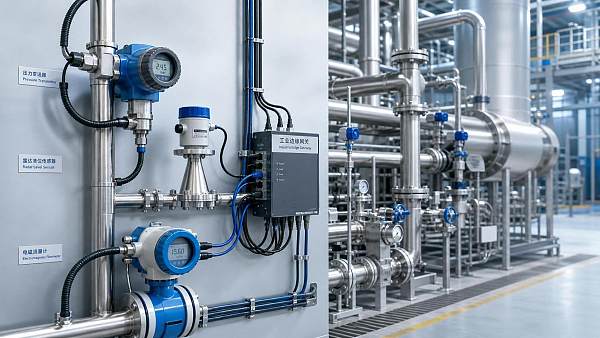
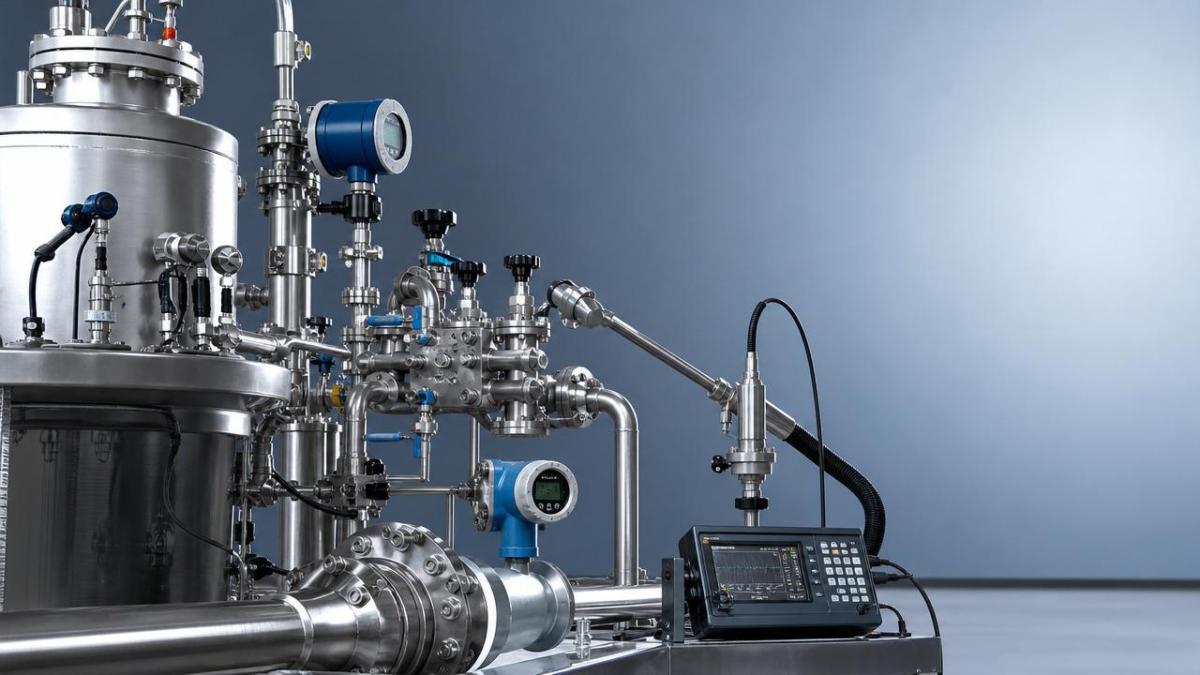
Flow meters, level transmitters, pressure sensors, temperature loops, and analyzers create the operating picture.
If that picture is distorted, process plant safety teams may act late or act on incomplete evidence.
Many incidents begin with weak signals rather than alarms.
- A radar level meter loses echo confidence in foam or dust.
- A Coriolis meter reports unstable density under two-phase flow.
- A pressure transmitter drifts after thermal cycling.
- A corrosion map stays inside an inspection report.
The technical problem becomes organizational when signals are not connected to shutdown logic, inspection planning, or maintenance priority.
Modern process plant safety therefore depends on data confidence, not only hardware availability.
What are the most common hidden causes of shutdowns?
Shutdowns often come from combinations of small failures, not a single dramatic breakdown.
One weak measurement may be tolerated until it aligns with fouling, vibration, corrosion, or a procedure gap.
Instrument drift and false confidence
Transmitters can remain online while slowly losing accuracy.
This is dangerous because the control room still sees numbers that look normal.
Process plant safety weakens when calibration intervals ignore actual service severity.
Unverified flow and level measurement
Flow and level errors can affect inventory, reaction balance, custody transfer, and overfill protection.
Coriolis, ultrasonic, differential pressure, and radar technologies each have application limits.
A correct device in the wrong installation can still damage process plant safety performance.
Inspection data trapped outside operations
NDT often reveals early wall thinning, weld defects, cracks, delamination, or creep damage.
The risk remains when inspection findings are not converted into operating limits or repair windows.
Process plant safety improves when phased array ultrasonic, radiographic, and acoustic data support real decisions.
How can teams recognize whether a safety gap is becoming critical?
A critical gap usually shows patterns before it causes a trip.
These patterns may appear as unstable loops, repeated alarm suppression, maintenance deferrals, or conflicting instrument readings.
Process plant safety improves when weak indicators are reviewed together instead of separately.
The important question is not whether one reading is abnormal.
The better question is whether several weak signals point toward the same failure mechanism.
That shift turns process plant safety from reactive response into evidence-based prevention.
Where do sensing, NDT, and metrology add the most value?
Sensing and metrology add value where the process is severe, fast-changing, or costly to interrupt.
Examples include petrochemicals, hydrogen, refining, power generation, pharmaceuticals, specialty chemicals, and high-value materials processing.
In these environments, process plant safety depends on seeing physical change before it becomes operational loss.
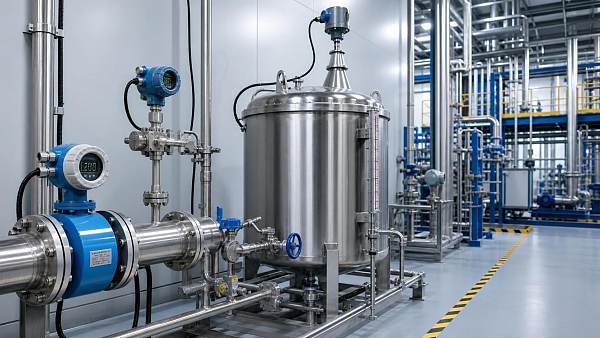
Industrial flow and level meters
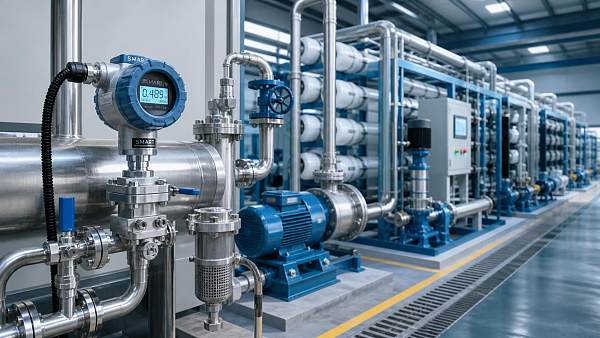
Accurate flow and level measurement protect mass balance, reactor feeding, tank integrity, and custody transfer.
High-frequency radar, Coriolis, ultrasonic, and magnetic meters help detect abnormal density, interface, or flow behavior.
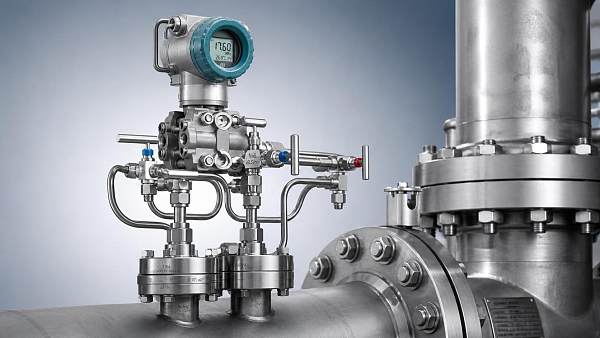
Temperature and pressure transmitters
Temperature and pressure signals act like early pain receptors for industrial equipment.
MEMS and monocrystalline silicon technologies improve stability when heat, vibration, and pressure pulses challenge process plant safety.
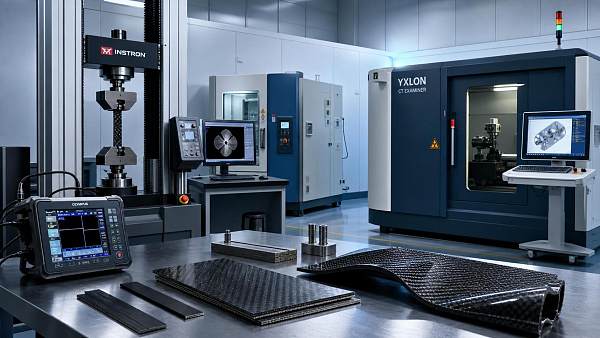
NDT and inspection intelligence
Phased array ultrasonics, industrial CT, radiography, and acoustic emission testing expose hidden defects.
They are especially valuable for welds, pressure vessels, rotating assets, composite structures, and critical pipework.
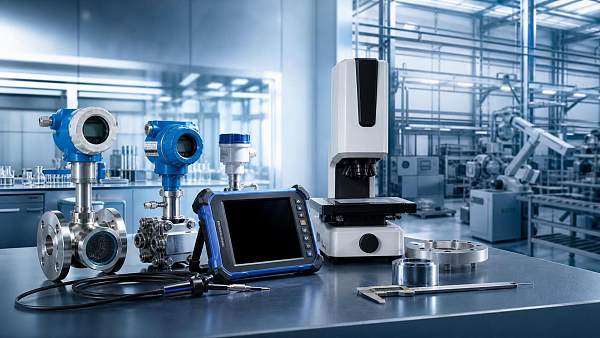
Optical and material testing methods
Optical microscopy and material testing reveal surface defects, fatigue behavior, fracture risk, and material inconsistency.
These methods support process plant safety by confirming whether materials can survive actual operating stress.
How should process plant safety data be connected to decisions?
Data only protects a facility when it changes timing, priority, or operating limits.
A dashboard with no decision pathway is still a safety gap.
The strongest process plant safety programs connect measurement reliability, asset condition, and production context.
- Define critical variables for each hazardous scenario.
- Assign confidence levels to each instrument and inspection source.
- Link abnormal trends to predefined escalation rules.
- Review shutdown triggers against real operating history.
- Use predictive maintenance to schedule action before forced outage.
Digital twins can strengthen this process when they use validated field data.
A digital model built on uncertain measurements may create false assurance.
For that reason, process plant safety analytics should include calibration status, inspection confidence, and environmental exposure.
What mistakes make process plant safety programs less effective?
The first mistake is treating compliance as the finish line.
Standards, audits, and procedures are essential, but they cannot replace live understanding of asset condition.
The second mistake is buying more sensors without improving interpretation.
More data can increase noise unless diagnostics, thresholds, and responsibility are clearly defined.
The third mistake is separating instrumentation, inspection, maintenance, and production planning.
Process plant safety requires shared context because failure mechanisms cross departmental boundaries.
Another mistake is ignoring extreme conditions during technology selection.
High pressure, corrosive fluids, dust, foam, vibration, electromagnetic interference, and thermal shock affect measurement quality.
A practical evaluation should ask whether the instrument remains reliable during abnormal operation, not only normal production.
FAQ: practical questions about process plant safety gaps
These answers show why process plant safety is not a single technology choice.
It is a chain of reliable measurement, validated inspection, disciplined interpretation, and timely action.
How can facilities reduce shutdown risk next?
Start by ranking the measurements and inspection points that support the most severe shutdown scenarios.
Then verify whether each point has the right technology, calibration method, diagnostic visibility, and escalation rule.
For process plant safety, priority should go to hidden degradation, high-energy systems, toxic materials, and unstable reactions.
Next, connect NDT results with live operating data.
A wall-thinning report becomes more useful when paired with pressure cycles, temperature history, and corrosion chemistry.
Finally, measure the quality of the safety system itself.
Track false alarms, missed detections, calibration failures, overdue inspections, and shutdown causes.
PIAS focuses on the intelligence layer behind these improvements.
Its coverage of sensing, NDT, optical metrology, and material testing helps connect physical signals with industrial decisions.
Process plant safety improves when invisible changes become visible early enough for planned action.
The next practical step is a gap review of critical instruments, inspection workflows, and predictive maintenance data paths.
When those links are strengthened, shutdowns become less surprising, decisions become faster, and operations gain measurable resilience.
Related Intelligence
 Silicon Pressure TransmittersSep 03, 2026How to Design Hydraulic Pressure Monitoring for Early Leak and Overload DetectionHydraulic pressure monitoring guide for early leak and overload detection—optimize sensor placement, alarm logic, and data analysis to reduce downtime.
 Universal Testing MachinesSep 02, 2026How to Choose Programmable Extreme Environment Testing for Material QualificationProgrammable extreme environment testing: learn how to select reliable systems for material qualification, precise control, traceable data, and real-world failure analysis.
 Nanoindentation TestersSep 01, 2026Which ISO Standards Guide Polymer Crystal Analysis for Reliable Material Testing?ISO polymer crystal analysis: discover which ISO standards support reliable DSC testing, crystallinity evaluation, melting behavior, and material performance decisions.
 Wireless IIoT NodesAug 31, 2026What Data Does Industry 4.0 Need for Reliable Production Analytics?Industry 4.0 data needs analytics built on trustworthy process, condition, quality, and material data. Discover how traceable measurements power reliable production decisions.
 Wireless IIoT NodesAug 30, 2026Selecting Process Control Sensors for European Plants: Standards, Accuracy, and IIoT IntegrationProcess control sensors Europe: learn how to select compliant, accurate, IIoT-ready instruments for safer, more reliable plant operations.
 Commercial InsightsAug 29, 2026Pressure Measurement in Latin America: Growth Drivers and Demand by IndustryPressure measurement Latin America: explore growth drivers, industry demand, digitalization, and supplier insights for energy, mining, water, and process industries.
 Wireless IIoT NodesAug 28, 2026Industrial Sensing for Process Plants: A Practical Guide to Measurement PointsIndustrial sensing guide for process plants: learn how to select reliable flow, level, pressure, temperature, and condition-monitoring measurement points.
 Universal Testing MachinesAug 27, 2026How to Select Material Testing Equipment for Rubber Across Tensile and Fatigue TestsMaterial testing equipment for rubber: learn how to select tensile and fatigue systems with the right grips, sensors, controls, and environmental options for reliable results.
 Silicon Pressure TransmittersAug 26, 2026How to Select High Pressure Instrumentation for Corrosive and High-Temperature ServiceHigh pressure instrumentation selection for corrosive, high-temperature service: learn how to compare materials, seals, temperature limits, and installation risks for safer, longer-lasting performance.
 RTD/Thermocouple Sensors)Aug 25, 2026How to Choose High Precision Stainless Steel Sensors for Corrosive Industrial EnvironmentsHigh precision sensors stainless steel selection guide for corrosive industrial environments. Learn how to compare materials, seals, stability, and outputs for reliable long-term performance.
 Commercial InsightsAug 24, 2026How to Evaluate Industrial Measurement Equipment Suppliers in Latin America?Industrial measurement equipment Latin America buyers can learn how to compare suppliers by accuracy, certification, service, and logistics to reduce risk and source with confidence.
 Commercial InsightsAug 23, 2026How to Improve Process Plant Reliability in Extreme Environments?Extreme environment adaptability for process plants starts with reliable sensing, smart materials, and targeted inspection. Learn practical ways to reduce downtime and boost uptime.
 Universal Testing MachinesAug 22, 2026How to Select Material Testing Solutions for Composites in Aerospace and AutomotiveMaterial testing solutions for composites: learn how aerospace and automotive teams choose the right mix of mechanical, NDT, and durability tests to cut risk and speed approval.