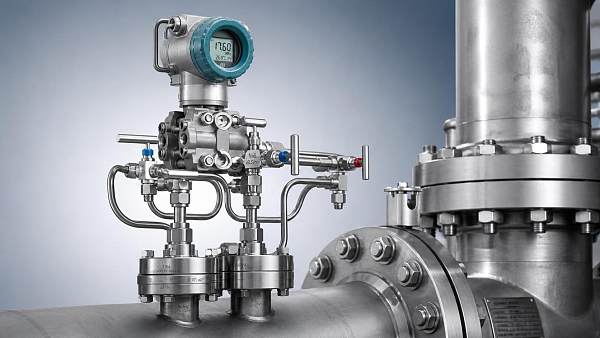
What metrology regulations mean for audit readiness

For quality and safety teams, metrology regulations are more than compliance checkboxes—they directly shape audit readiness, traceability, and operational confidence. As standards tighten across manufacturing environments, understanding how metrology regulations affect calibration, documentation, and measurement integrity is essential for reducing nonconformities and proving control during inspections.
Metrology regulations are becoming a frontline audit issue
Across industrial sectors, audits are changing from document reviews into evidence-based evaluations of measurement control.

That shift makes metrology regulations central to compliance, product quality, and risk reduction.
Inspectors increasingly ask how results were generated, verified, stored, and linked to traceable references.
This matters in pressure sensing, flow measurement, NDT, optical inspection, and material testing alike.
In each case, metrology regulations define whether data is defensible during certification, customer review, or internal audit.
For complex operations, weak measurement governance can create hidden exposure long before any inspection starts.
A missed calibration interval, unclear uncertainty statement, or broken asset history can trigger broad audit findings.
That is why metrology regulations now influence readiness strategies, not just laboratory procedures.
The regulatory signal is clear: traceability must be provable
Several trend signals explain why metrology regulations receive greater attention in modern audits.
First, digital manufacturing produces more measurement points, more devices, and more connected data streams.
Second, safety-critical industries require stronger proof that instruments perform reliably under harsh conditions.
Third, global supply chains demand comparable measurement results across sites, contractors, and testing partners.
Fourth, regulators and customers increasingly expect documented uncertainty, traceability, and change control.
These signals push metrology regulations beyond the lab and into enterprise governance.
Why the pressure is increasing
How metrology regulations reshape daily control points
The practical impact of metrology regulations appears in ordinary routines, not only during formal inspections.
Calibration scheduling is one example.
Intervals must reflect instrument drift, process criticality, and actual usage conditions.
A fixed annual plan may no longer satisfy audit expectations if operating risk is uneven.
Documentation is another pressure point.
Metrology regulations often require clear links between asset identity, calibration method, reference standards, results, and approvals.
When records sit in separate systems, audit readiness weakens.
Measurement uncertainty also matters more than before.
Audits increasingly test whether acceptance decisions considered uncertainty, not only nominal readings.
This is especially relevant for high-value flow meters, pressure transmitters, microscopes, NDT systems, and testing machines.
Software and firmware changes create another compliance layer.
If algorithms affect defect detection, compensation, or signal conversion, change history must be controlled.
Common audit-sensitive control points
- Calibration intervals not justified by risk or performance history
- Reference standards lacking current traceability evidence
- Out-of-tolerance events without impact assessment
- Measurement software changes without validation records
- Environmental conditions not recorded for sensitive tests
- Operator competence records missing or outdated
Different business functions feel the impact in different ways
Metrology regulations affect more than quality documentation.
They influence production continuity, technical credibility, and customer confidence across the operation.
Where the pressure lands
- Production: Unverified instruments can delay release decisions and disrupt line stability.
- Laboratories: Greater emphasis falls on uncertainty, method validation, and reference hierarchy.
- Maintenance: Sensor replacement and field calibration require stronger configuration control.
- Engineering: Measurement capability must match tighter tolerances and evolving materials.
- Compliance: Audit preparation becomes a live system review, not a last-minute exercise.
For intelligence platforms such as PIAS, this shift also changes information priorities.
Tracking metrology regulations now requires connecting policy updates with instrument performance, software evolution, and industrial risk.
That is especially valuable in sectors using radar flow meters, MEMS transmitters, industrial CT, optical metrology, and universal testing systems.
What deserves immediate attention before the next audit cycle
The most effective response to metrology regulations is structured visibility.
Teams should know which measurements are critical, which assets support them, and which records prove control.
Priority checkpoints
- Map critical measurements to products, processes, and compliance obligations
- Rank instruments by safety, quality, and revenue impact
- Verify traceability chains for all reference standards and calibrators
- Review out-of-tolerance handling and retrospective product impact logic
- Confirm software, firmware, and algorithm changes are documented
- Align training evidence with the complexity of measurement tasks
- Check whether environmental controls are monitored and retained
These checkpoints turn metrology regulations into a manageable readiness framework.
They also help reduce recurring findings that often appear small but indicate weak system discipline.
A practical response starts with evidence architecture
Audit readiness improves when measurement evidence is organized around decisions, not around isolated files.
That means every result should connect to a method, an instrument, a standard, a competent operator, and a release criterion.
This approach supports both compliance and operational learning.
It reveals where metrology regulations intersect with automation, data reliability, and lifecycle management.
Metrology regulations will keep expanding with digital industry
The long-term direction is clear.
As Industry 4.0 systems grow, metrology regulations will increasingly cover data integrity, remote diagnostics, and software-governed measurement logic.
That expands the meaning of traceability.
It is no longer only about calibration certificates.
It is about proving the trustworthiness of the full measurement chain.
Organizations that monitor metrology regulations early can adapt faster and avoid reactive compliance costs.
The most resilient strategy is to treat audit readiness as a byproduct of disciplined measurement governance.
For operations relying on precision sensing, NDT, optical inspection, or materials testing, that discipline becomes a competitive advantage.
Use the next review cycle to test whether metrology regulations are fully reflected in records, methods, systems, and decisions.
That single step can turn audit preparation from a stressful scramble into a stable, evidence-driven process.
Related Intelligence
 Universal Testing MachinesSep 02, 2026How to Choose Programmable Extreme Environment Testing for Material QualificationProgrammable extreme environment testing: learn how to select reliable systems for material qualification, precise control, traceable data, and real-world failure analysis.
 Nanoindentation TestersSep 01, 2026Which ISO Standards Guide Polymer Crystal Analysis for Reliable Material Testing?ISO polymer crystal analysis: discover which ISO standards support reliable DSC testing, crystallinity evaluation, melting behavior, and material performance decisions.
 Wireless IIoT NodesAug 31, 2026What Data Does Industry 4.0 Need for Reliable Production Analytics?Industry 4.0 data needs analytics built on trustworthy process, condition, quality, and material data. Discover how traceable measurements power reliable production decisions.
 Wireless IIoT NodesAug 30, 2026Selecting Process Control Sensors for European Plants: Standards, Accuracy, and IIoT IntegrationProcess control sensors Europe: learn how to select compliant, accurate, IIoT-ready instruments for safer, more reliable plant operations.
 Commercial InsightsAug 29, 2026Pressure Measurement in Latin America: Growth Drivers and Demand by IndustryPressure measurement Latin America: explore growth drivers, industry demand, digitalization, and supplier insights for energy, mining, water, and process industries.
 Wireless IIoT NodesAug 28, 2026Industrial Sensing for Process Plants: A Practical Guide to Measurement PointsIndustrial sensing guide for process plants: learn how to select reliable flow, level, pressure, temperature, and condition-monitoring measurement points.
 Universal Testing MachinesAug 27, 2026How to Select Material Testing Equipment for Rubber Across Tensile and Fatigue TestsMaterial testing equipment for rubber: learn how to select tensile and fatigue systems with the right grips, sensors, controls, and environmental options for reliable results.
 Silicon Pressure TransmittersAug 26, 2026How to Select High Pressure Instrumentation for Corrosive and High-Temperature ServiceHigh pressure instrumentation selection for corrosive, high-temperature service: learn how to compare materials, seals, temperature limits, and installation risks for safer, longer-lasting performance.
 RTD/Thermocouple Sensors)Aug 25, 2026How to Choose High Precision Stainless Steel Sensors for Corrosive Industrial EnvironmentsHigh precision sensors stainless steel selection guide for corrosive industrial environments. Learn how to compare materials, seals, stability, and outputs for reliable long-term performance.
 Commercial InsightsAug 24, 2026How to Evaluate Industrial Measurement Equipment Suppliers in Latin America?Industrial measurement equipment Latin America buyers can learn how to compare suppliers by accuracy, certification, service, and logistics to reduce risk and source with confidence.
 Commercial InsightsAug 23, 2026How to Improve Process Plant Reliability in Extreme Environments?Extreme environment adaptability for process plants starts with reliable sensing, smart materials, and targeted inspection. Learn practical ways to reduce downtime and boost uptime.
 Universal Testing MachinesAug 22, 2026How to Select Material Testing Solutions for Composites in Aerospace and AutomotiveMaterial testing solutions for composites: learn how aerospace and automotive teams choose the right mix of mechanical, NDT, and durability tests to cut risk and speed approval.
 Wireless IIoT NodesAug 21, 2026How to Evaluate Wireless Pipeline Monitoring Systems for Remote Leak Detection?Wireless pipeline monitoring systems: learn how to evaluate leak detection accuracy, false alarms, wireless reliability, integration, and lifecycle fit before choosing a solution.