Process Instrumentation Basics: What It Measures and How It Improves Plant Control

Why does process instrumentation matter so much in plant control?
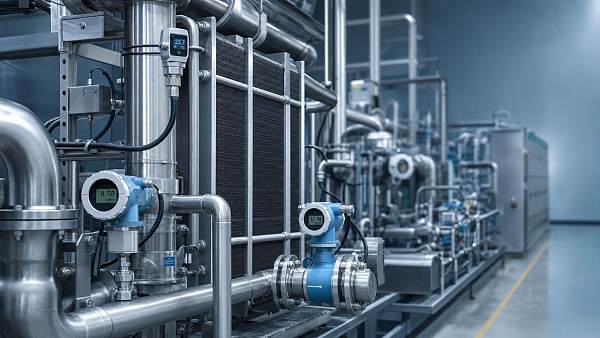
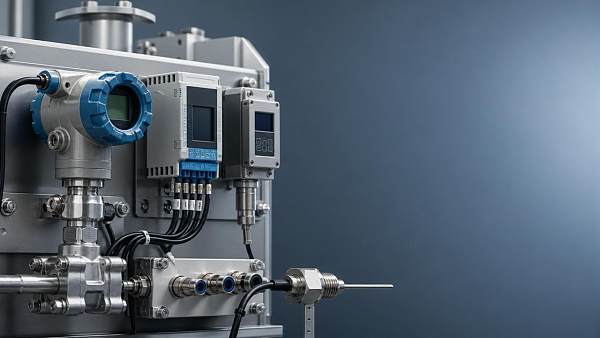
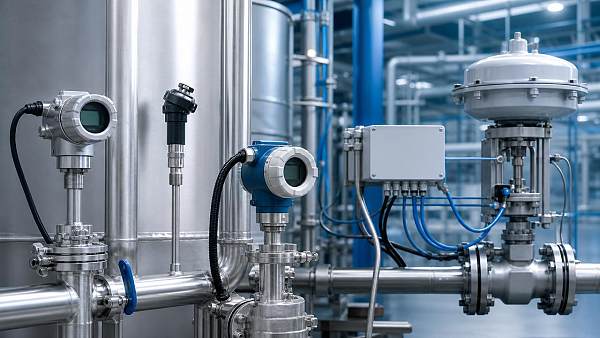
Process instrumentation is where plant visibility begins. It converts pressure, flow, level, and temperature into signals that operators, controllers, and software can actually use.
That sounds basic, but the impact is not. Better measurement usually means fewer process upsets, tighter quality bands, lower waste, and safer response during abnormal conditions.
In practical terms, process instrumentation gives a plant its working senses. Without it, control logic reacts late, maintenance becomes guesswork, and compliance records lose credibility.
This is one reason industrial intelligence platforms such as PIAS keep close attention on metrology, sensing, and signal reliability. The real value is not only in the sensor body, but in the trustworthiness of the measurement chain.
As manufacturing moves toward Industry 4.0 and digital twins, process instrumentation also becomes a data foundation. Poor raw measurements create poor analytics, no matter how advanced the software looks.
What exactly does process instrumentation measure?
Most searches start with a simple question: what does process instrumentation actually cover? The short answer is the variables that determine whether a process stays stable, safe, and profitable.
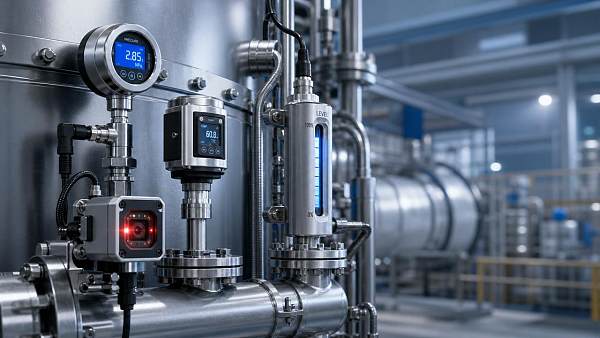
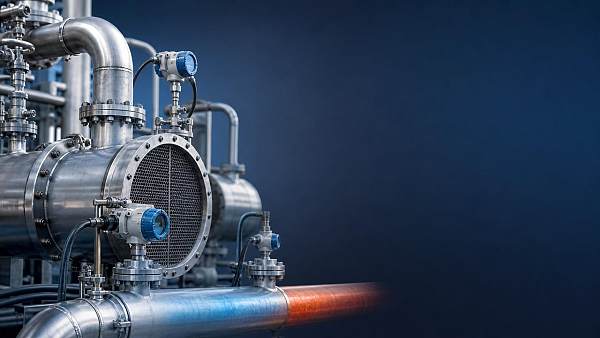
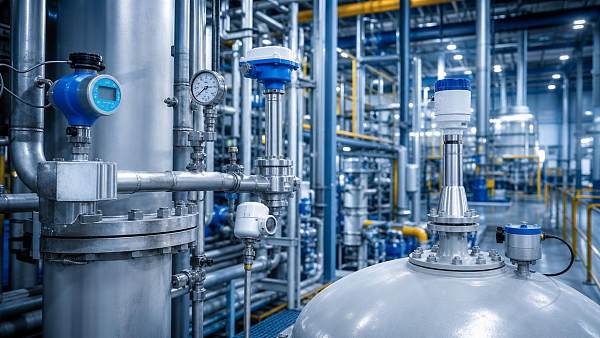
The four most familiar measurements are flow, pressure, temperature, and level. These appear across chemical processing, energy, water treatment, food production, and advanced manufacturing lines.
Each variable tells a different story:
- Flow shows how much liquid, gas, or steam is moving through a line.
- Pressure reveals load, restriction, pumping behavior, and process safety margins.
- Temperature affects reaction speed, product consistency, and equipment stress.
- Level confirms inventory, residence time, and overflow or dry-run risk.
Some systems also monitor density, viscosity, pH, conductivity, moisture, vibration, and valve position. These are often added when tighter control or stricter verification is needed.
In many sectors, flow and level meters are not only operational tools. They are also financial measurement points, especially when expensive fluids, energy media, or regulated materials are involved.
Likewise, temperature and pressure transmitters often act like early warning receptors. A fast, accurate signal can prevent corrosion events, overpressure incidents, off-spec batches, or thermal damage.
How does process instrumentation improve control instead of just displaying numbers?
This is where process instrumentation moves from passive monitoring to active control. A measured value becomes useful only when it supports a decision, an alarm, or an automatic adjustment.
For example, a flowmeter does more than report throughput. Its signal may feed a control loop that adjusts pump speed, valve position, or dosing rate in real time.
A pressure transmitter can trigger interlocks, prevent cavitation, or show that a filter is clogging. A level instrument can stabilize tank operations and avoid both overflow and starvation downstream.
The usual control benefits are easy to recognize:
In advanced plants, the role expands further. Process instrumentation supports historical trending, anomaly detection, predictive maintenance, and digital twin modeling.
That broader view matters because a single instrument reading often becomes part of a much larger industrial data picture. PIAS regularly tracks this link between field sensing and high-value decision systems.
Where do selection mistakes usually happen?
A common misunderstanding is assuming process instrumentation is mostly about range and price. In reality, selection problems usually begin with the application details, not the catalog page.
More often than not, the wrong instrument was technically functional, but mismatched to process conditions. That includes media behavior, mounting limits, and maintenance realities.
Watch for these decision traps:
- Ignoring fluid properties such as viscosity, entrained gas, foam, or solids.
- Choosing accuracy without checking repeatability and long-term stability.
- Overlooking harsh conditions like corrosion, vibration, dust, or temperature cycling.
- Focusing on the sensor alone, while neglecting calibration and signal integration.
- Assuming all digital outputs bring equal diagnostic value.
For instance, radar level instruments may perform well in difficult tanks, but application geometry still matters. Coriolis meters deliver strong mass flow accuracy, yet pressure drop and installation conditions still need review.
The same logic applies to pressure and temperature transmitters. Sensor technology, diaphragm material, sealing method, and response time can change whether the reading remains dependable in the field.
A useful selection habit is to compare expected process behavior with failure modes. When those two lists align, the right process instrumentation choice becomes much clearer.
Is process instrumentation only for large continuous plants?
Not at all. Large refineries and chemical complexes rely heavily on process instrumentation, but the same principles apply in smaller batch systems and mixed manufacturing environments.
Water treatment skids, food mixing lines, coating systems, hydrogen pilots, clean utilities, and thermal systems all depend on measured variables to maintain control.
The difference is usually in complexity, not relevance. A compact system may use fewer instruments, yet each one can still be critical to uptime and traceability.
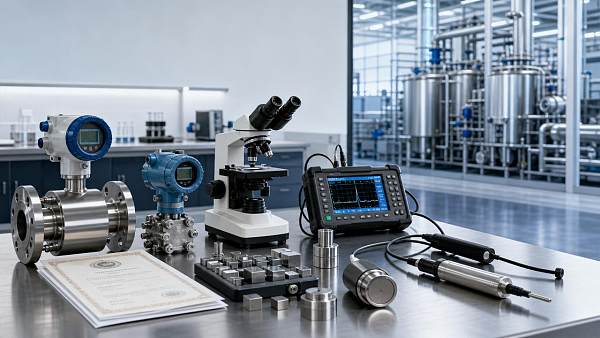
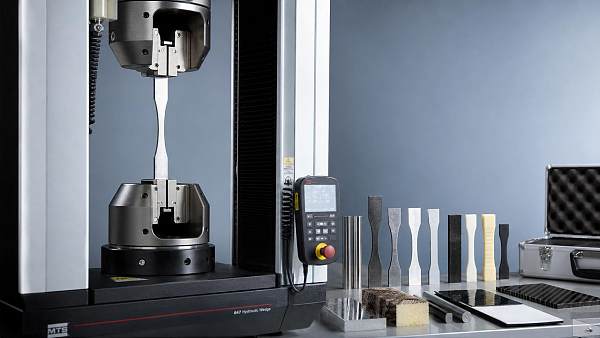
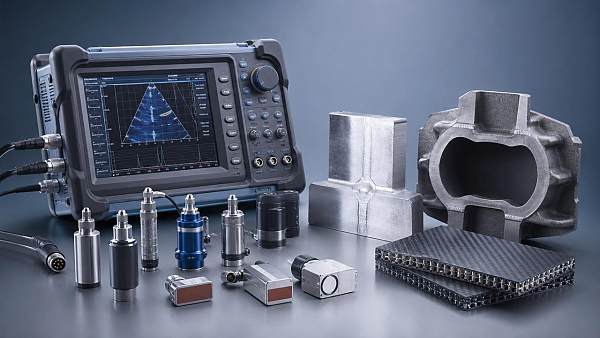
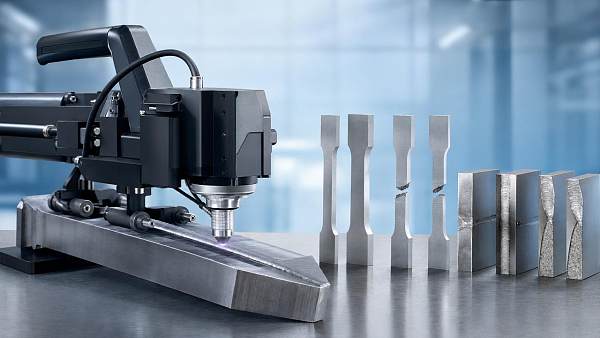
There is also a growing overlap between process instrumentation and adjacent measurement domains. NDT, optical inspection, and material testing do not replace process measurements, but they strengthen overall quality assurance.
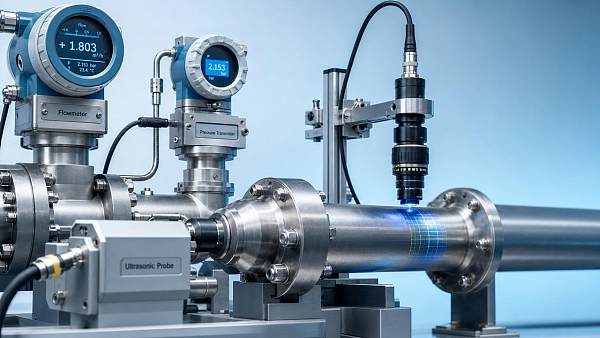
That broader measurement ecosystem is central to how PIAS frames industrial sensing. Flowmeters and transmitters handle live process variables, while NDT and optical tools verify structural, microscopic, or material conditions that affect reliability.
When these data streams are stitched together, plant teams gain more than control. They gain context, which is often the missing factor behind recurring production problems.
What should be checked before implementation or upgrade?
If the goal is better plant control, implementation should begin with a few grounded questions rather than a long equipment list.
Start by identifying which variables truly drive quality, safety, or energy use. Some plants collect many readings, yet only a few measurements actually influence stable operation.
Then review the basics in one place:
It also helps to separate measurement needs into two groups: control-critical points and insight-critical points. The first group protects operations now. The second group improves analysis later.
Where possible, review signal quality before adding analytics layers. Smarter dashboards cannot fix unstable sensing, drifting transmitters, or badly located instruments.
That is why current industrial research increasingly values instrument diagnostics, wireless monitoring, and extreme-environment adaptability. The conversation is shifting from basic installation to sustained measurement confidence.
So what is the practical takeaway from process instrumentation basics?
The key point is simple: process instrumentation is not just hardware placed on a pipe or tank. It is the measurement backbone behind control, traceability, and operational judgment.
Understanding what it measures is only the first step. The larger question is whether those measurements are accurate enough, stable enough, and connected well enough to improve real plant decisions.
For the next step, it makes sense to map the most important process variables, compare current instrument limits, and note where unstable readings create recurring control issues.
After that, evaluate fit by application rather than by specification sheet alone. Pay close attention to media conditions, integration method, maintenance burden, and data credibility over time.
For ongoing research, sources that connect instrumentation, metrology, NDT, optical inspection, and industrial data trends can be especially useful. They help place process instrumentation inside the wider reality of precision-driven manufacturing.
That wider perspective often leads to better decisions, because stronger control rarely comes from a single device. It comes from better measurement logic across the whole plant.
Related Intelligence
 Commercial InsightsJun 13, 2026International Measurement Standards: How to Verify Compliance Before Equipment PurchaseInternational measurement standards are the key to safer equipment buying. Learn how to verify traceability, calibration, and compliance evidence before purchase.
 Universal Testing MachinesJun 13, 2026Stress-Strain Analysis Explained: Key Parameters for Material Testing and Failure ReviewStress-strain analysis explained clearly: learn key testing parameters, curve reading, and failure review tips to improve material quality, reduce risk, and make smarter engineering decisions.
 Wireless IIoT NodesJun 13, 2026Thermodynamic Changes Monitoring in Production Lines: Methods, Sensors, and LimitsThermodynamic changes monitoring helps production teams detect thermal drift early with the right methods, sensors, and alarm limits to reduce downtime, energy loss, and quality risks.
 Commercial InsightsJun 13, 2026What Precision Sensing Means in Industrial Measurement and Where It Matters MostPrecision sensing drives reliable industrial measurement across flow, pressure, NDT, optics, and material testing. Discover where it matters most and how to evaluate true performance.
 Wireless IIoT NodesJun 13, 2026How to Choose Non-Contact Sensors for Moving Parts and Delicate SurfacesNon-contact sensors guide: learn how to choose the right solution for moving parts and delicate surfaces, improve accuracy, protect materials, and boost industrial inspection performance.
 Commercial InsightsJun 12, 2026Acoustic Signals Measurement Explained: Key Methods, Noise Sources, and Accuracy LimitsAcoustic signals measurement explained clearly: learn key methods, major noise sources, and real accuracy limits to improve diagnostics, leak detection, and reliable industrial decisions.
 Wireless IIoT NodesJun 12, 2026What to Check When Comparing a Smart Sensors Manufacturer for Industrial ProjectsSmart sensors manufacturer comparison guide for industrial projects: learn how to assess reliability, integration, certifications, support, and total cost before you choose.
 Phased Array Ultrasonics - PAUTJun 12, 2026Ultrasonic Testing Equipment Selection Guide: Frequency, Probe Type, and Defect DepthUltrasonic testing equipment selection made simple: learn how frequency, probe type, and defect depth affect detection accuracy, inspection confidence, and smarter buying decisions.
 Commercial InsightsJun 12, 2026High-End Instrument Controls: Which Performance Specs Matter Most Before You Buy?High-end instrument controls buying guide: compare accuracy, repeatability, response time, integration, and lifecycle ROI to choose smarter, safer, more reliable performance.
 Wireless IIoT NodesJun 12, 2026How Thermodynamic Changes Monitoring Helps Detect Process Drift in Industrial SystemsThermodynamic changes monitoring helps detect early process drift in industrial systems by revealing hidden thermal shifts that impact quality, efficiency, and asset reliability.
 Evolutionary TrendsJun 11, 2026Meeting Industry 4.0 Data Needs: Key Instrumentation Gaps in Legacy PlantsIndustry 4.0 data needs are exposing critical instrumentation gaps in legacy plants. Discover how better sensing improves reliability, traceability, and digital performance.
 Eddy Current & MPIJun 11, 2026NDT Equipment vs Destructive Testing: Which Option Fits Your QA Budget and Risk?NDT equipment vs destructive testing: compare QA cost, risk, scrap, and compliance impact to choose the smarter inspection strategy for higher ROI and safer operations.
 Silicon Pressure TransmittersJun 11, 2026Process Instrumentation Basics: Sensors, Transmitters, and Controllers ExplainedProcess instrumentation explained clearly: learn how sensors, transmitters, and controllers work together to improve safety, accuracy, and control across modern industrial systems.