Metrology Regulations Explained: Calibration, Traceability, and Audit Readiness

Metrology regulations shape far more than inspection paperwork. They influence whether a flow meter settles a custody transfer dispute, whether an NDT report stands up in review, and whether a pressure transmitter tells the truth before a process upset spreads.
That is why calibration, traceability, and audit readiness now sit close to product quality and plant safety. In practice, the question is not only how to comply, but how to prove that every critical measurement remains reliable over time.
For operations moving toward Industry 4.0 and digital twins, weak measurement control creates bad data at the source. Once that happens, analytics, predictive maintenance, and process optimization all inherit the same uncertainty.
What do metrology regulations really cover in day-to-day operations?
Many people hear metrology regulations and think only about calibration labels. The real scope is wider. These rules and standards govern how measurements are defined, verified, recorded, and linked to recognized references.
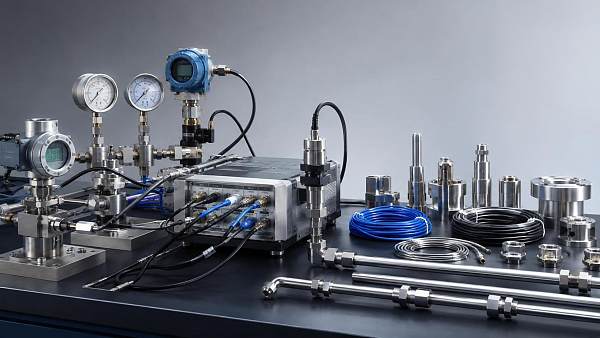
In a mixed industrial environment, that can include flow and level meters, temperature and pressure transmitters, optical microscopes, universal testing machines, and NDT systems. Each device generates decisions, not just numbers.
A simple way to read metrology regulations is this: they ask whether your measurement is suitable for its intended use, technically traceable, and defensible during review. If one of those elements is missing, compliance becomes fragile.
The strongest programs connect regulatory requirements with actual risk. A laboratory balance and an ultrasonic flaw detector do not carry the same consequences, so control depth should follow process impact.
This is also where sector intelligence matters. Platforms such as PIAS track regulation changes, export control signals, and technology shifts that affect how high-end instruments are selected, maintained, and documented.
Is calibration enough, or does traceability change the compliance picture?
Calibration alone is not the full answer. A device may be adjusted and tested, yet still fail a serious audit if the calibration chain cannot be traced back to recognized standards.
Traceability means there is an unbroken, documented path from your measurement result to a national or international reference. It also means the associated uncertainty is known, not guessed.
This distinction matters most when measurement results trigger release decisions, safety interlocks, or legal settlement. In those cases, metrology regulations expect evidence, not confidence statements.
Consider a few common situations:
- A radar level meter passes a field check, but the reference tool used for verification has an expired certificate.
- A material testing machine is calibrated, but the load cell uncertainty is not reflected in final acceptance criteria.
- An industrial CT system produces repeatable images, yet software version changes are undocumented.
In all three cases, the issue is not only accuracy. It is evidence quality. Metrology regulations increasingly look at the measurement system, the reference chain, and the data record together.
A quick comparison helps clarify the difference
If calibration shows the instrument behaved properly, traceability explains why the result can be trusted outside your own facility. That is often the deciding factor.
Which instruments usually draw the most attention during audits?
Auditors rarely examine every device with the same intensity. They usually focus on instruments connected to product release, safety protection, regulatory reporting, or commercial settlement.
In process industries, flow meters, pressure transmitters, and temperature devices often sit near the top of the list. Their readings influence custody transfer, hazardous condition detection, and control loop stability.
In manufacturing and materials evaluation, optical metrology tools, tensile testers, hardness systems, and NDT equipment receive more scrutiny. These instruments support conformity claims, defect decisions, and long-term reliability evidence.
A practical way to prioritize is to ask four questions:
- Does this instrument affect safety barriers or alarm thresholds?
- Does it determine pass or fail status?
- Is the result used in customer, regulatory, or insurance discussions?
- Would a bad reading create hidden cost or hidden risk?
If the answer is yes to any of these, metrology regulations should be translated into tighter control intervals, stronger records, and clearer ownership.
This is especially relevant in environments where PIAS often concentrates its reporting: corrosive pipelines, high-temperature assets, aerospace structures, wafer inspection, and extreme-condition material testing.
Why do audit findings still happen even when certificates are available?
Because certificates solve only one part of the problem. Metrology regulations are often broken by weak process control, not missing paper.
One common issue is interval setting. Teams keep annual calibration by habit, even when drift history suggests six months for one instrument and eighteen months for another.
Another issue is poor change control. Sensor replacement, firmware updates, probe swaps, or fixture modifications can alter performance without triggering revalidation.
Data integrity is another weak spot. If records are split between spreadsheets, paper binders, and vendor emails, traceability becomes difficult to prove under time pressure.
The table below captures frequent findings and the more useful correction path.
In other words, metrology regulations reward disciplined systems. They do not reward archived certificates that no longer match operational reality.
How should audit readiness be built before the auditor arrives?
The most reliable approach is to treat audit readiness as a routine operating condition. Waiting until the audit window opens usually exposes disconnected records and unclear responsibilities.
Start with an equipment hierarchy. Separate critical measuring devices from lower-risk monitoring tools. Then define calibration methods, intervals, acceptance limits, and traceability expectations for each group.
Next, make evidence easy to retrieve. For every critical instrument, the record set should show identification, location, status, latest calibration, reference standard, uncertainty, and any change history.
Where digital transformation is underway, it helps to connect measurement records with maintenance systems and quality events. That reduces blind spots between failure analysis and metrology control.
A focused readiness checklist often works better than a long procedure manual:
- Confirm all critical devices have current status and readable labels.
- Verify traceability statements and accreditation details for reference standards.
- Check whether recent repairs or software changes triggered requalification needs.
- Review out-of-tolerance events and documented impact assessments.
- Make sure personnel can explain the system, not only produce files.
That last point matters. Auditors often test whether the organization understands why its metrology regulations exist, not only whether forms were completed.
What is the smarter next step if your program feels compliant but not fully defensible?
Begin with the measurements that could hurt quality, safety, or financial accuracy if they drift quietly. That review usually reveals where metrology regulations need stronger implementation rather than more documentation.
Then compare three things side by side: instrument criticality, traceability strength, and record accessibility. Gaps between those three often explain why audits become stressful.
For teams working with advanced sensing, NDT, optical measurement, or material testing, it is also worth monitoring technology-specific regulatory updates. Measurement rules evolve as instruments become more digital, connected, and software-driven.
That is where an intelligence source like PIAS becomes useful in a practical sense. Ongoing updates on industrial metrology, inspection technologies, and global regulation shifts help turn compliance from a reactive task into a measured operating discipline.
A solid metrology program is rarely built by one big correction. More often, it improves through clearer intervals, stronger traceability, better data linkage, and quicker response to change.
If the goal is audit readiness with fewer surprises, start by mapping critical instruments, validating traceability paths, and testing whether your records can support a hard question in minutes, not hours.
Related Intelligence
 Silicon Pressure TransmittersSep 08, 2026Pressure Measurement Applications: Selecting Sensors for Process Safety and ControlPressure measurement applications: learn how to select reliable sensors for process safety, accurate control, harsh media, pressure transients, and dependable plant performance.
 Commercial InsightsSep 07, 2026How to Evaluate a Precision Instrumentation Supplier for Industrial Testing ProjectsChoose a precision instrumentation supplier with confidence. Compare calibration traceability, technical expertise, lifecycle cost, and data support for reliable industrial testing.
 Wireless IIoT NodesSep 07, 2026What IP68 Really Protects Against in Extreme-Environment Sensor DeploymentsExtreme environment adaptability IP68: learn what IP68 protects against, its limits, and how to choose reliable sensors for harsh deployments.
 Wireless IIoT NodesSep 05, 2026How Edge Computing Changes Sensor Data Latency and Reliability in Industry 4.0Industry 4.0 sensors edge computing reduces latency, strengthens reliability, and keeps critical operations responsive during network disruptions. Explore practical deployment insights.
 Wireless IIoT NodesSep 04, 2026How to Select Precision Sensing Sensors for Reliable Industrial Process ControlPrecision sensing sensors: learn how to select reliable solutions for industrial process control, from accuracy and diagnostics to environmental resilience and maintenance.
 Silicon Pressure TransmittersSep 03, 2026How to Design Hydraulic Pressure Monitoring for Early Leak and Overload DetectionHydraulic pressure monitoring guide for early leak and overload detection—optimize sensor placement, alarm logic, and data analysis to reduce downtime.
 Universal Testing MachinesSep 02, 2026How to Choose Programmable Extreme Environment Testing for Material QualificationProgrammable extreme environment testing: learn how to select reliable systems for material qualification, precise control, traceable data, and real-world failure analysis.
 Nanoindentation TestersSep 01, 2026Which ISO Standards Guide Polymer Crystal Analysis for Reliable Material Testing?ISO polymer crystal analysis: discover which ISO standards support reliable DSC testing, crystallinity evaluation, melting behavior, and material performance decisions.
 Wireless IIoT NodesAug 31, 2026What Data Does Industry 4.0 Need for Reliable Production Analytics?Industry 4.0 data needs analytics built on trustworthy process, condition, quality, and material data. Discover how traceable measurements power reliable production decisions.
 Wireless IIoT NodesAug 30, 2026Selecting Process Control Sensors for European Plants: Standards, Accuracy, and IIoT IntegrationProcess control sensors Europe: learn how to select compliant, accurate, IIoT-ready instruments for safer, more reliable plant operations.
 Commercial InsightsAug 29, 2026Pressure Measurement in Latin America: Growth Drivers and Demand by IndustryPressure measurement Latin America: explore growth drivers, industry demand, digitalization, and supplier insights for energy, mining, water, and process industries.
 Wireless IIoT NodesAug 28, 2026Industrial Sensing for Process Plants: A Practical Guide to Measurement PointsIndustrial sensing guide for process plants: learn how to select reliable flow, level, pressure, temperature, and condition-monitoring measurement points.
 Universal Testing MachinesAug 27, 2026How to Select Material Testing Equipment for Rubber Across Tensile and Fatigue TestsMaterial testing equipment for rubber: learn how to select tensile and fatigue systems with the right grips, sensors, controls, and environmental options for reliable results.