Is industrial metrology worth upgrading in 2026?
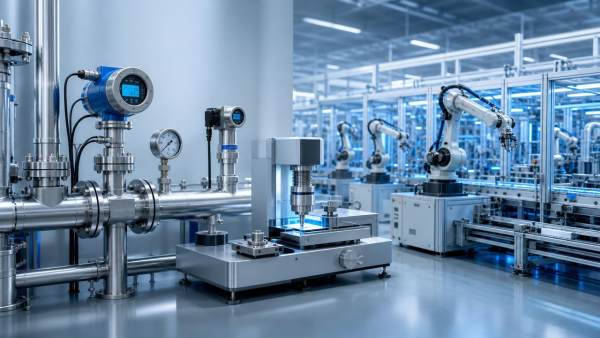
In 2026, industrial metrology is no longer a back-office quality function—it is becoming a strategic layer of smart manufacturing, predictive maintenance, regulatory compliance, and digital twin credibility.
The practical question is whether existing measurement infrastructure can still support faster production, harsher environments, and data-driven competitiveness.
Industrial metrology in 2026: a broader operating definition
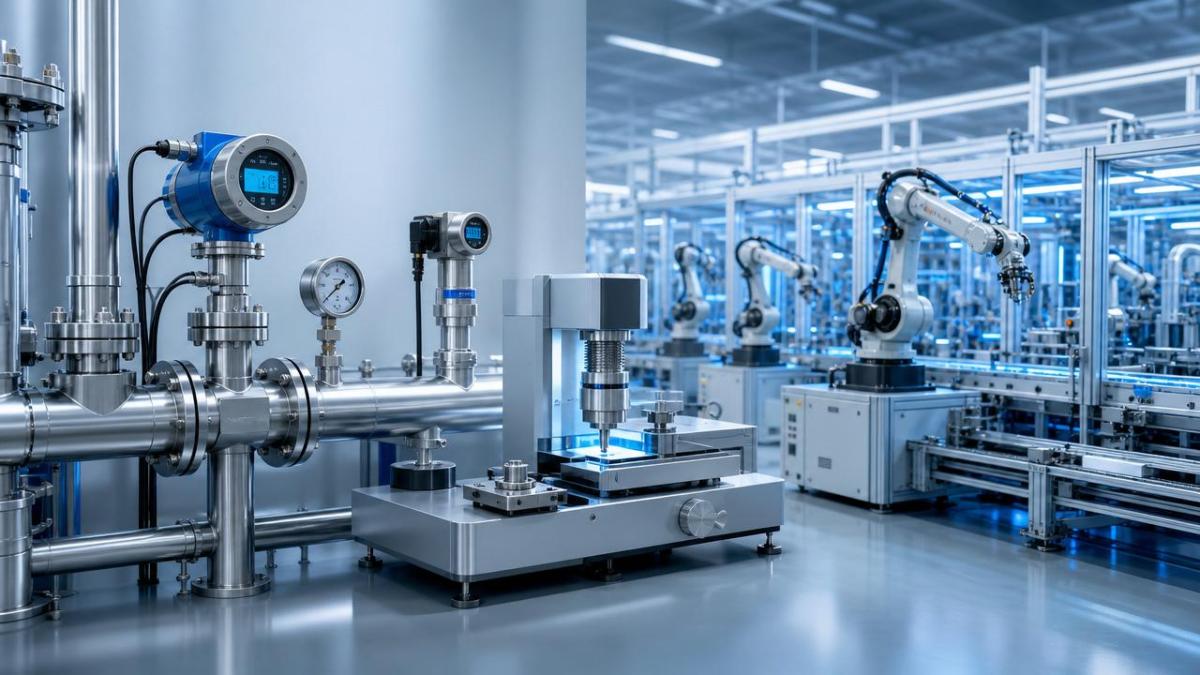
Industrial metrology covers the instruments, methods, software, and reference systems used to measure physical reality in production environments.
It includes flow, level, temperature, pressure, dimensional, optical, acoustic, electromagnetic, and mechanical performance measurements.
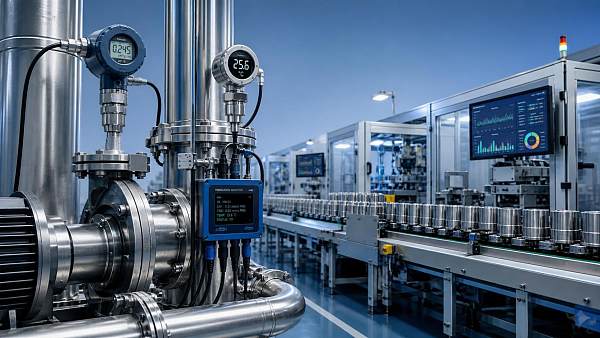
In a modern plant, industrial metrology connects physical signals with automation platforms, quality systems, and digital twin models.
This makes measurement accuracy a direct factor in yield, safety, energy efficiency, and asset reliability.
The scope is also expanding beyond calibration rooms and inspection benches.
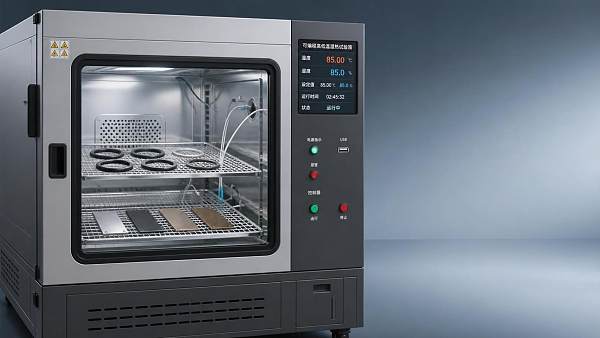
Sensors now operate inside corrosive pipelines, high-temperature chambers, robotic cells, cleanrooms, and remote energy infrastructure.
For this reason, upgrading industrial metrology is not only about buying more precise devices.
It is about improving signal quality, traceability, connectivity, interpretation, and decision speed across the production lifecycle.
Industry signals making upgrades more relevant
Several market and technology signals are changing the upgrade equation for industrial metrology in 2026.
Manufacturing systems are becoming faster, more automated, and less tolerant of delayed measurement feedback.
These signals do not affect every site equally.
However, they show why industrial metrology is becoming a foundation for operational intelligence.
When production data becomes a business asset, weak measurement chains create hidden commercial risk.
Business value created by better measurement infrastructure
Upgrading industrial metrology is worthwhile when it changes decisions, not only measurement specifications.
The strongest returns usually appear in four areas: quality stability, asset uptime, process control, and product validation.
Quality stability
Dimensional, optical, and material testing systems reduce uncertainty in incoming inspection, in-process verification, and final release.
Improved industrial metrology helps identify drift before it becomes scrap, rework, or customer rejection.
Asset uptime
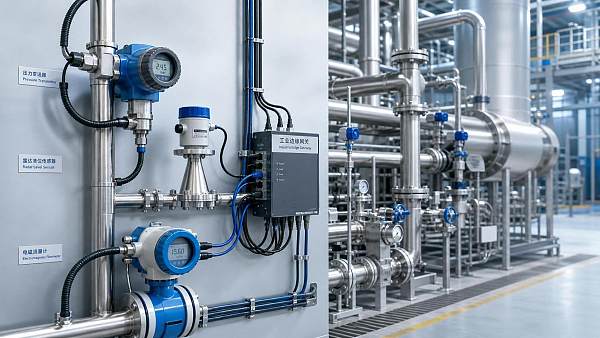
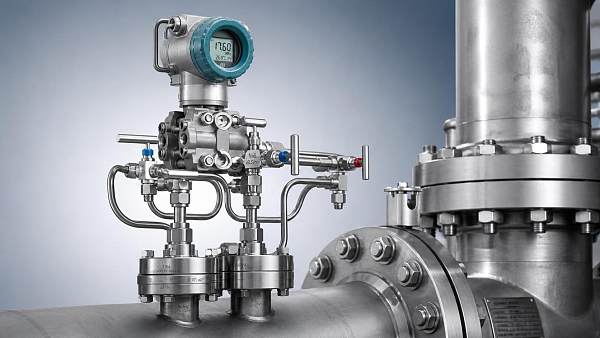
Pressure transmitters, temperature sensors, flow meters, and NDT systems reveal abnormal conditions earlier.
This supports condition-based maintenance rather than calendar-based intervention.
Process control
High-quality measurement stabilizes dosing, blending, heat treatment, coating, welding, and energy distribution.
In process industries, industrial metrology can also protect revenue through more reliable custody transfer and inventory measurement.
Product validation
New materials and compact components often fail in ways that traditional inspection cannot detect.
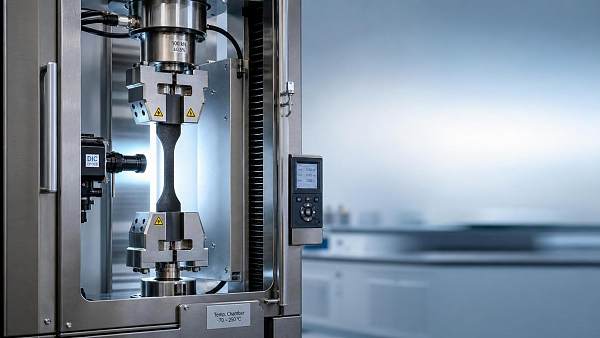
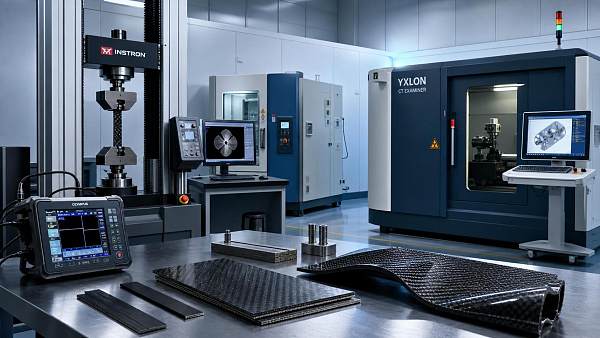
Industrial CT, phased array ultrasonics, microscopy, and fatigue testing improve confidence in design limits.
Typical upgrade objects across industrial metrology
A practical upgrade plan should start with the measurement objects that create the highest operational exposure.
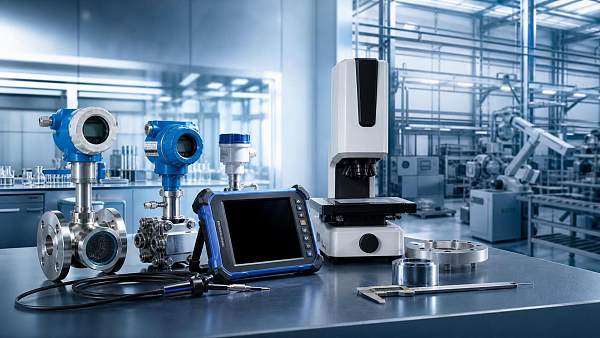
The following categories are common across energy, chemicals, electronics, automotive, aerospace, and general manufacturing.
These objects should not be assessed only by purchase cost.
They should be judged by failure cost, data importance, downtime exposure, and compliance consequences.
When an industrial metrology upgrade becomes essential
Not every instrument needs replacement in 2026.
A disciplined assessment separates essential upgrades from attractive but low-impact modernization.
- Measurement drift is repeatedly corrected after defects have already occurred.
- Critical sensors cannot provide digital diagnostics or health status.
- Manual inspection creates bottlenecks in automated production lines.
- Existing NDT methods miss small cracks, porosity, or internal geometry issues.
- Calibration records are fragmented, paper-based, or difficult to audit.
- Digital twin models show poor agreement with measured plant behavior.
- Extreme temperature, corrosion, vibration, or pressure exceeds original instrument assumptions.
These warning signs indicate that industrial metrology is limiting operational control.
In such cases, postponing upgrades can create higher costs than planned modernization.
When the return may be limited
Upgrading industrial metrology is not automatically valuable in every environment.
Returns may be limited when measurement data is not used in decisions.
A highly precise sensor adds little value if control systems ignore its diagnostics.
Advanced imaging also underperforms when defect libraries, acceptance criteria, and operator workflows remain unclear.
The same applies to AI-assisted inspection.
Without validated training data, industrial metrology algorithms can produce confidence without reliability.
A better path is to fix the measurement process before overinvesting in advanced features.
Practical upgrade framework for 2026
A structured framework helps convert industrial metrology upgrades into measurable outcomes.
- Map critical measurements. Identify measurements linked to safety, revenue, quality, and regulatory evidence.
- Quantify uncertainty. Review sensor accuracy, installation effects, calibration history, environmental exposure, and operator variation.
- Connect data pathways. Ensure instruments communicate with PLCs, historians, MES, CMMS, and analytics platforms.
- Validate decision rules. Define alarms, defect thresholds, maintenance triggers, and quality gates.
- Pilot before scaling. Test upgraded industrial metrology on one line, asset group, or inspection workflow.
- Measure outcomes. Track scrap reduction, downtime avoidance, audit effort, cycle time, and model accuracy.
This approach prevents scattered purchases and supports a defensible investment case.
It also aligns instrumentation teams, automation systems, quality functions, and digital transformation programs.
Data credibility as the hidden value layer
The most strategic value of industrial metrology in 2026 may be data credibility.
Digital systems can analyze millions of values, but they cannot correct unreliable physical inputs by themselves.
A predictive maintenance model needs stable vibration, pressure, temperature, and ultrasonic evidence.
A process optimizer needs trusted flow and level data.
A digital twin needs boundary conditions that reflect real assets, not approximate assumptions.
This is where industrial metrology becomes the tactile and visual nerve system of modern industry.
It translates micron-level deformation and invisible signals into decisions that software can trust.
Decision criteria for investment prioritization
A strong business case should compare upgrade cost against operational risk and data value.
The following criteria help prioritize industrial metrology projects without relying on vague modernization goals.
- Criticality: Does the measurement protect safety, product release, or financial settlement?
- Failure cost: What happens if the measurement is wrong, late, or unavailable?
- Environment: Is the instrument exposed to heat, corrosion, pressure, dust, or vibration?
- Connectivity: Can the measurement support automation, diagnostics, and secure data exchange?
- Traceability: Are records audit-ready, comparable, and linked to recognized standards?
- Scalability: Can the solution extend across sites, assets, and product families?
If several criteria score high, the upgrade is likely strategic rather than optional.
If most criteria score low, process discipline may matter more than new hardware.
Implementation cautions for successful modernization
Industrial metrology modernization can fail when deployment focuses only on specifications.
Installation quality, sampling frequency, shielding, mounting, calibration intervals, and software configuration often determine real performance.
Interoperability also deserves early attention.
New instruments should fit existing control architecture and future data platforms.
Cybersecurity must be considered for wireless sensors, remote diagnostics, and cloud-connected inspection systems.
Training is equally important.
Better industrial metrology requires people who understand uncertainty, measurement limits, and abnormal signal interpretation.
Conclusion and next operational steps
Industrial metrology is worth upgrading in 2026 when measurement quality constrains safety, productivity, compliance, or digital transformation.
The strongest value appears where physical measurements feed real decisions and measurable outcomes.
The next step is to audit critical measurement chains, rank exposure, and select one high-impact pilot.
PIAS will continue tracking industrial metrology trends across sensors, NDT, optical inspection, and material testing.
For organizations planning 2026 investments, the priority is clear: build measurement systems that make industrial data credible, actionable, and future-ready.
Related Intelligence
 Silicon Pressure TransmittersSep 03, 2026How to Design Hydraulic Pressure Monitoring for Early Leak and Overload DetectionHydraulic pressure monitoring guide for early leak and overload detection—optimize sensor placement, alarm logic, and data analysis to reduce downtime.
 Universal Testing MachinesSep 02, 2026How to Choose Programmable Extreme Environment Testing for Material QualificationProgrammable extreme environment testing: learn how to select reliable systems for material qualification, precise control, traceable data, and real-world failure analysis.
 Nanoindentation TestersSep 01, 2026Which ISO Standards Guide Polymer Crystal Analysis for Reliable Material Testing?ISO polymer crystal analysis: discover which ISO standards support reliable DSC testing, crystallinity evaluation, melting behavior, and material performance decisions.
 Wireless IIoT NodesAug 31, 2026What Data Does Industry 4.0 Need for Reliable Production Analytics?Industry 4.0 data needs analytics built on trustworthy process, condition, quality, and material data. Discover how traceable measurements power reliable production decisions.
 Wireless IIoT NodesAug 30, 2026Selecting Process Control Sensors for European Plants: Standards, Accuracy, and IIoT IntegrationProcess control sensors Europe: learn how to select compliant, accurate, IIoT-ready instruments for safer, more reliable plant operations.
 Commercial InsightsAug 29, 2026Pressure Measurement in Latin America: Growth Drivers and Demand by IndustryPressure measurement Latin America: explore growth drivers, industry demand, digitalization, and supplier insights for energy, mining, water, and process industries.
 Wireless IIoT NodesAug 28, 2026Industrial Sensing for Process Plants: A Practical Guide to Measurement PointsIndustrial sensing guide for process plants: learn how to select reliable flow, level, pressure, temperature, and condition-monitoring measurement points.
 Universal Testing MachinesAug 27, 2026How to Select Material Testing Equipment for Rubber Across Tensile and Fatigue TestsMaterial testing equipment for rubber: learn how to select tensile and fatigue systems with the right grips, sensors, controls, and environmental options for reliable results.
 Silicon Pressure TransmittersAug 26, 2026How to Select High Pressure Instrumentation for Corrosive and High-Temperature ServiceHigh pressure instrumentation selection for corrosive, high-temperature service: learn how to compare materials, seals, temperature limits, and installation risks for safer, longer-lasting performance.
 RTD/Thermocouple Sensors)Aug 25, 2026How to Choose High Precision Stainless Steel Sensors for Corrosive Industrial EnvironmentsHigh precision sensors stainless steel selection guide for corrosive industrial environments. Learn how to compare materials, seals, stability, and outputs for reliable long-term performance.
 Commercial InsightsAug 24, 2026How to Evaluate Industrial Measurement Equipment Suppliers in Latin America?Industrial measurement equipment Latin America buyers can learn how to compare suppliers by accuracy, certification, service, and logistics to reduce risk and source with confidence.
 Commercial InsightsAug 23, 2026How to Improve Process Plant Reliability in Extreme Environments?Extreme environment adaptability for process plants starts with reliable sensing, smart materials, and targeted inspection. Learn practical ways to reduce downtime and boost uptime.
 Universal Testing MachinesAug 22, 2026How to Select Material Testing Solutions for Composites in Aerospace and AutomotiveMaterial testing solutions for composites: learn how aerospace and automotive teams choose the right mix of mechanical, NDT, and durability tests to cut risk and speed approval.