How to choose a precision measurement instruments OEM
Choosing a precision measurement instruments OEM is a strategic decision that directly affects product quality, compliance, delivery reliability, and long-term competitiveness. The right partner should offer more than factory capacity. It should prove metrology expertise, disciplined quality systems, customization strength, and dependable global support. This guide presents a practical checklist to evaluate OEM options with clearer technical and commercial judgment.
Why a checklist matters when selecting a precision measurement instruments OEM
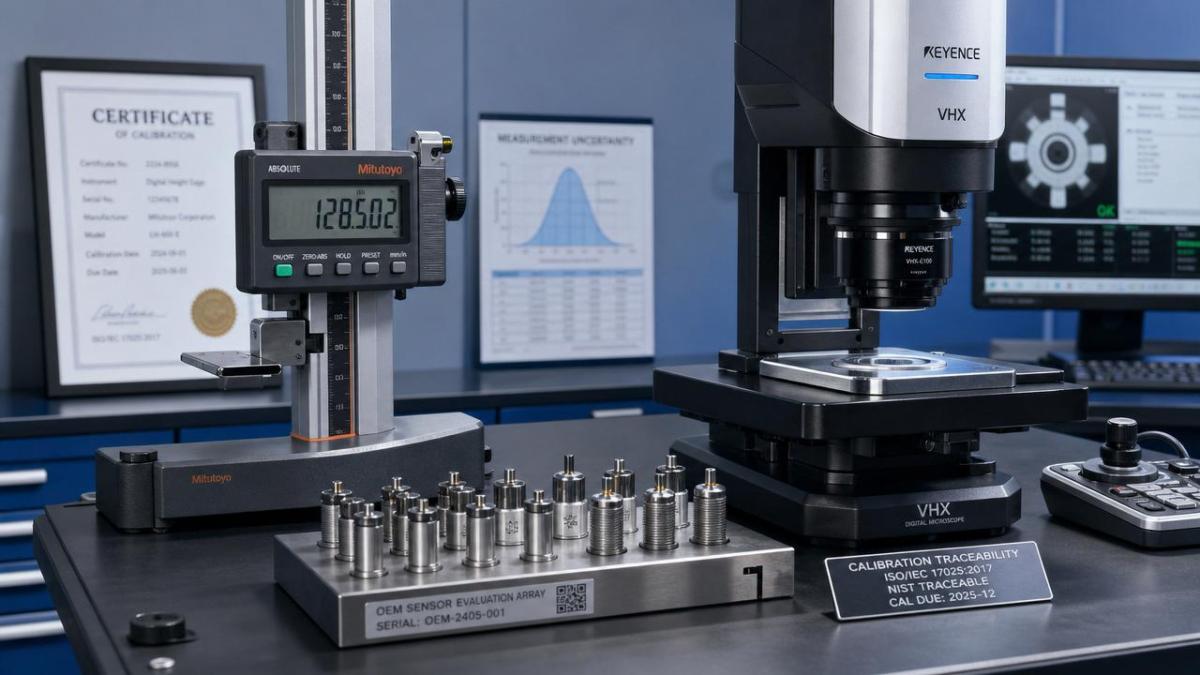
Precision instruments sit at the center of industrial decisions. A weak OEM can introduce drift, unstable calibration, traceability gaps, and delayed service. Those failures often appear after market launch, when correction costs rise sharply.
A structured checklist reduces selection bias. It helps compare suppliers across measurable criteria, including engineering depth, process control, validation capability, and lifecycle support. This is especially important in metrology, NDT, optical inspection, and material testing applications.
For businesses operating around Industry 4.0, a precision measurement instruments OEM should also support data integrity, digital connectivity, and integration with automation systems. Hardware accuracy alone is no longer enough.
Core checklist for evaluating a precision measurement instruments OEM
- Verify metrology competence by reviewing calibration methods, uncertainty statements, traceability routes, and familiarity with ISO, IEC, ASTM, or industry-specific validation practices.
- Check quality system maturity through ISO 9001 records, incoming inspection controls, process validation, corrective action history, and change management discipline.
- Assess engineering depth by examining sensor design capability, signal processing knowledge, fixture development, embedded software resources, and tolerance stack-up analysis.
- Confirm customization ability for probes, optics, housings, interfaces, firmware, and communication protocols without compromising repeatability or regulatory conformity.
- Review production consistency using Cp/Cpk data, gauge R&R studies, first article reports, and batch-to-batch performance records for similar assemblies.
- Evaluate supply chain resilience by mapping critical components, second-source plans, lead-time buffers, export control exposure, and obsolescence management procedures.
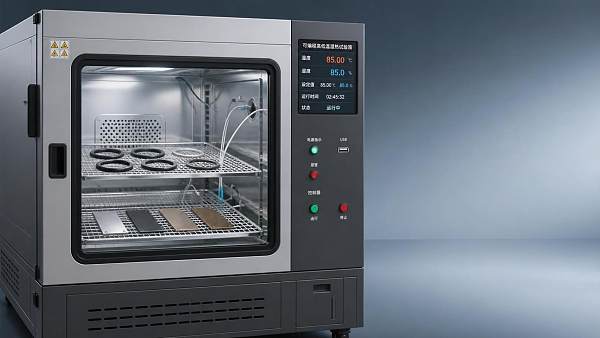
- Inspect test infrastructure, including environmental chambers, vibration setups, EMC testing access, optical benches, and precision calibration equipment.
- Ask for documented reliability evidence such as thermal cycling, life testing, drift analysis, accelerated stress results, and field failure feedback loops.
- Confirm digital integration support for 4-20mA, RS-485, Modbus, Industrial Ethernet, wireless options, or cloud-ready data export requirements.
- Review service capability by checking response times, spare parts planning, remote diagnostics, calibration intervals, and multilingual technical documentation.
- Compare commercial transparency through tooling ownership terms, NRE structure, MOQ logic, warranty scope, and hidden validation cost exposure.
- Request reference cases from flow measurement, NDT, microscopy, transmitters, or material testing projects that match your performance environment.
What strong evidence looks like
A capable precision measurement instruments OEM usually provides more than presentations. It offers calibration certificates, design review records, validation plans, pilot build reports, and issue-closing evidence. These materials reveal whether quality is designed into the process or inspected afterward.
Good OEM candidates also explain measurement limits clearly. They do not promise unrealistic accuracy without defining conditions, media, temperature range, mounting method, or operator influence.
Scenario-based considerations for different applications
Flow and level measurement
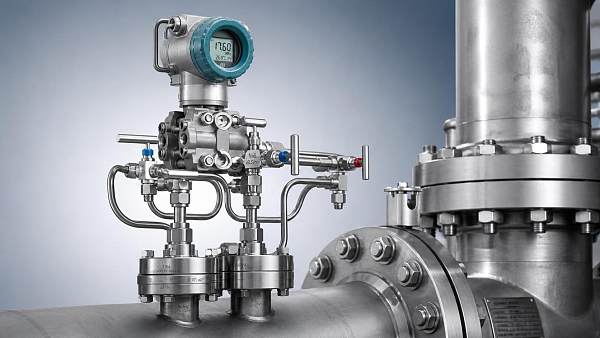
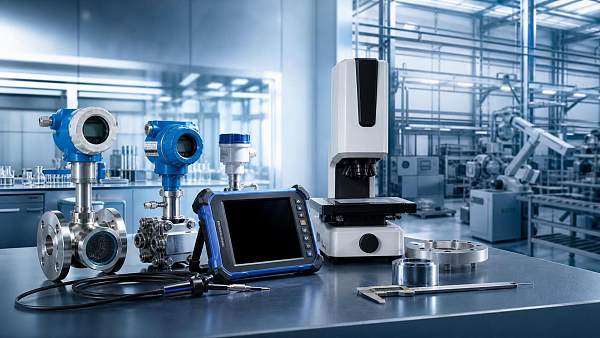
For Coriolis, radar, or pressure-based systems, focus on media compatibility, pressure ratings, signal stability, and hazardous area compliance. Small material or sealing errors can distort results in corrosive or high-pressure conditions.
A suitable precision measurement instruments OEM should understand process noise, installation effects, and fluid property variation. Ask for compensation algorithms and field calibration support.
NDT equipment
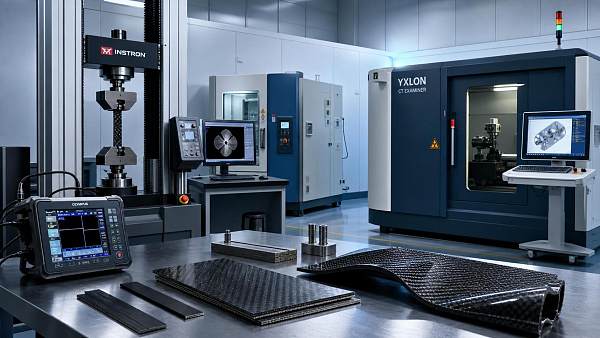
For ultrasonic, phased array, or industrial CT systems, software capability matters as much as hardware. Defect recognition, image reconstruction, and data storage integrity all influence inspection credibility.
Check whether the OEM understands code requirements, reference block usage, probe characterization, and repeatable defect simulation. Generic electronics manufacturing experience is not enough here.
Optical microscopes and vision systems
Optical systems require strict control of illumination, lens quality, vibration isolation, image processing, and stage repeatability. Seemingly minor assembly variation can reduce contrast and measurement confidence.
If the project involves wafer inspection, surface profiling, or microscopic defect analysis, the precision measurement instruments OEM should provide MTF, repeatability, and environmental sensitivity data.
Material testing machines
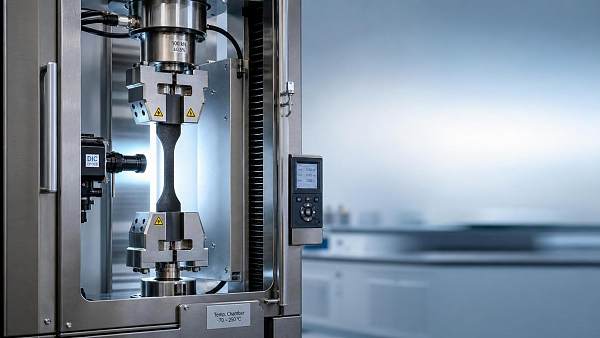
Universal testing systems depend on load cell accuracy, frame stiffness, extensometer performance, and software curve integrity. Errors often come from alignment, fixture quality, and sampling behavior.
Review how the OEM validates tensile, compression, fatigue, or high-temperature testing. Ask whether it can support chamber integration and long-cycle durability studies.
Commonly overlooked risks
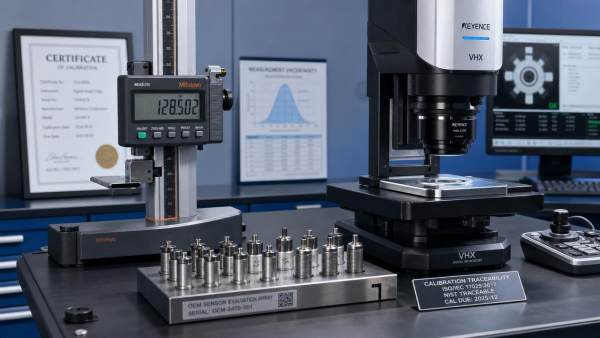
- Ignoring calibration traceability. Accuracy claims without traceable standards create audit problems and undermine customer confidence later.
- Overlooking firmware control. Unmanaged software revisions can change measurement behavior between batches without visible hardware differences.
- Underestimating environmental effects. Temperature, vibration, humidity, dust, and EMC exposure often shift real-world performance far from lab results.
- Accepting vague tolerances. Broad specifications hide repeatability weaknesses and make incoming acceptance harder to enforce.
- Focusing only on unit price. A cheaper precision measurement instruments OEM may cost more through rework, field failures, and support delays.
- Skipping service planning. Missing spare parts, calibration support, or local technical response can shorten useful product life.
Practical execution steps
Start with a weighted evaluation sheet. Score each precision measurement instruments OEM across technical capability, compliance, production control, digital integration, and service support. Weight criteria by application risk, not by convenience.
Next, request a controlled sample or pilot build. Define acceptance around repeatability, accuracy, environmental stability, communication reliability, and documentation completeness. Avoid approving suppliers from drawings alone.
Then perform a process audit. Review calibration assets, component storage, software version control, nonconformance handling, and outgoing inspection discipline. If possible, compare what is documented with what is actually practiced.
Finally, build commercial safeguards into the agreement. Include change notification rules, traceability requirements, validation responsibilities, spare parts duration, and field failure response expectations.
Conclusion and next action
Selecting the right precision measurement instruments OEM means balancing metrology rigor, manufacturing stability, and lifecycle partnership value. The strongest choice is rarely the one with the lowest quote. It is the one that consistently proves precision, traceability, adaptability, and support.
Use this checklist to narrow candidates, request evidence, and validate performance in realistic conditions. A disciplined selection process will protect product credibility, improve delivery confidence, and strengthen long-term competitiveness in advanced industrial markets.
Related Intelligence
 Universal Testing MachinesSep 02, 2026How to Choose Programmable Extreme Environment Testing for Material QualificationProgrammable extreme environment testing: learn how to select reliable systems for material qualification, precise control, traceable data, and real-world failure analysis.
 Nanoindentation TestersSep 01, 2026Which ISO Standards Guide Polymer Crystal Analysis for Reliable Material Testing?ISO polymer crystal analysis: discover which ISO standards support reliable DSC testing, crystallinity evaluation, melting behavior, and material performance decisions.
 Wireless IIoT NodesAug 31, 2026What Data Does Industry 4.0 Need for Reliable Production Analytics?Industry 4.0 data needs analytics built on trustworthy process, condition, quality, and material data. Discover how traceable measurements power reliable production decisions.
 Wireless IIoT NodesAug 30, 2026Selecting Process Control Sensors for European Plants: Standards, Accuracy, and IIoT IntegrationProcess control sensors Europe: learn how to select compliant, accurate, IIoT-ready instruments for safer, more reliable plant operations.
 Commercial InsightsAug 29, 2026Pressure Measurement in Latin America: Growth Drivers and Demand by IndustryPressure measurement Latin America: explore growth drivers, industry demand, digitalization, and supplier insights for energy, mining, water, and process industries.
 Wireless IIoT NodesAug 28, 2026Industrial Sensing for Process Plants: A Practical Guide to Measurement PointsIndustrial sensing guide for process plants: learn how to select reliable flow, level, pressure, temperature, and condition-monitoring measurement points.
 Universal Testing MachinesAug 27, 2026How to Select Material Testing Equipment for Rubber Across Tensile and Fatigue TestsMaterial testing equipment for rubber: learn how to select tensile and fatigue systems with the right grips, sensors, controls, and environmental options for reliable results.
 Silicon Pressure TransmittersAug 26, 2026How to Select High Pressure Instrumentation for Corrosive and High-Temperature ServiceHigh pressure instrumentation selection for corrosive, high-temperature service: learn how to compare materials, seals, temperature limits, and installation risks for safer, longer-lasting performance.
 RTD/Thermocouple Sensors)Aug 25, 2026How to Choose High Precision Stainless Steel Sensors for Corrosive Industrial EnvironmentsHigh precision sensors stainless steel selection guide for corrosive industrial environments. Learn how to compare materials, seals, stability, and outputs for reliable long-term performance.
 Commercial InsightsAug 24, 2026How to Evaluate Industrial Measurement Equipment Suppliers in Latin America?Industrial measurement equipment Latin America buyers can learn how to compare suppliers by accuracy, certification, service, and logistics to reduce risk and source with confidence.
 Commercial InsightsAug 23, 2026How to Improve Process Plant Reliability in Extreme Environments?Extreme environment adaptability for process plants starts with reliable sensing, smart materials, and targeted inspection. Learn practical ways to reduce downtime and boost uptime.
 Universal Testing MachinesAug 22, 2026How to Select Material Testing Solutions for Composites in Aerospace and AutomotiveMaterial testing solutions for composites: learn how aerospace and automotive teams choose the right mix of mechanical, NDT, and durability tests to cut risk and speed approval.
 Wireless IIoT NodesAug 21, 2026How to Evaluate Wireless Pipeline Monitoring Systems for Remote Leak Detection?Wireless pipeline monitoring systems: learn how to evaluate leak detection accuracy, false alarms, wireless reliability, integration, and lifecycle fit before choosing a solution.