How to Improve Process Plant Reliability in Extreme Environments?
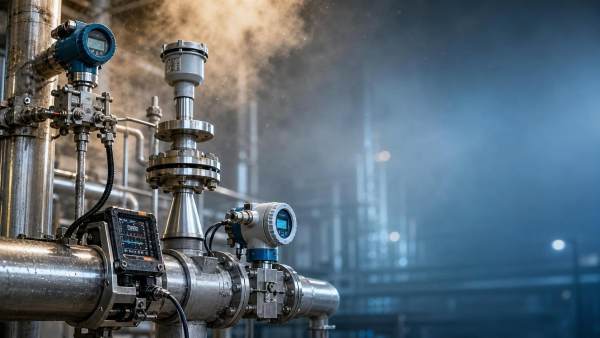
At 2 a.m., reliability stops being a theory. It becomes a question of whether a transmitter still reads accurately when ambient heat is pushing electronics to their limit, whether a level meter can see through vapor and dust, whether a small undetected crack turns into a shutdown nobody budgeted for. For project managers and engineering leads, this is the reality behind extreme environment adaptability for process plants. Harsh conditions are not edge cases anymore; in many sectors, they are simply normal operating conditions.
From offshore platforms and chemical processing units to mining, hydrogen handling, and high-temperature utilities, process plants are expected to run continuously while facing corrosion, vibration, pressure cycling, contamination, and severe weather. Improving reliability in these environments is not about adding one “rugged” device and hoping for the best. It requires a coordinated approach that connects instrumentation, inspection, materials behavior, maintenance planning, and decision-making.
The most successful plants treat reliability as a sensing-and-response system. They invest not only in mechanical robustness, but in how well they can detect weak signals before those signals become failures.
Why harsh environments break plants in ways standard designs often miss
In extreme conditions, equipment rarely fails for one simple reason. Problems compound. A pressure transmitter exposed to heat may drift slightly. That drift affects control behavior. The control loop starts compensating more often. Valves cycle harder. Vibration increases. Seals wear faster. Maintenance teams may only see the final symptom, not the chain that created it.
This is why project leaders should avoid thinking of reliability only in terms of asset strength. In harsh environments, reliability also depends on measurement quality. If your plant cannot trust what it is sensing, it cannot respond correctly.
Several failure drivers show up repeatedly across sectors:
- Corrosive media attacking wetted parts, seals, impulse lines, and exposed housings
- Thermal extremes causing drift, expansion mismatch, embrittlement, and electronics stress
- Dust, foam, vapor, or buildup reducing the effectiveness of level and flow measurement
- Continuous vibration loosening connections and shortening instrument life
- High pressure or pressure cycling accelerating fatigue in piping, welds, and fittings
- Moisture ingress, salt spray, and outdoor exposure degrading connectors and enclosures
In practice, improving uptime means designing for these interactions from the start, not reacting to them after commissioning.
Start with the instruments that define operational truth
When plant conditions are difficult, the margin for bad measurement is small. Flow, level, temperature, and pressure devices are not just process accessories; they are the operational truth layer of the plant. If that layer is unstable, every downstream decision becomes less reliable.
For example, industrial flow and level meters used in aggressive or high-pressure service must be selected for both media compatibility and measurement resilience. Coriolis flow meters can provide highly accurate mass flow measurement in valuable process streams, but their performance depends on proper installation, vibration isolation, and understanding of multiphase or entrained-gas conditions. Radar level systems, especially higher-frequency designs, can be valuable in tanks with dust, vapor, or condensate, but not every radar deployment works equally well unless antenna choice, mounting geometry, and signal processing are aligned with the application.
Likewise, automated temperature and pressure transmitters should not be treated as commodity items in harsh zones. Sensor element stability, diaphragm material, fill fluid behavior, remote seal design, and enclosure protection all affect long-term reliability. In plants exposed to thermal shock or corrosive atmospheres, a lower upfront device cost often leads to higher lifecycle cost through recalibration frequency, nuisance trips, or hidden drift.
That is where a more disciplined selection philosophy matters: choose instruments based on failure modes, not just datasheet ranges.
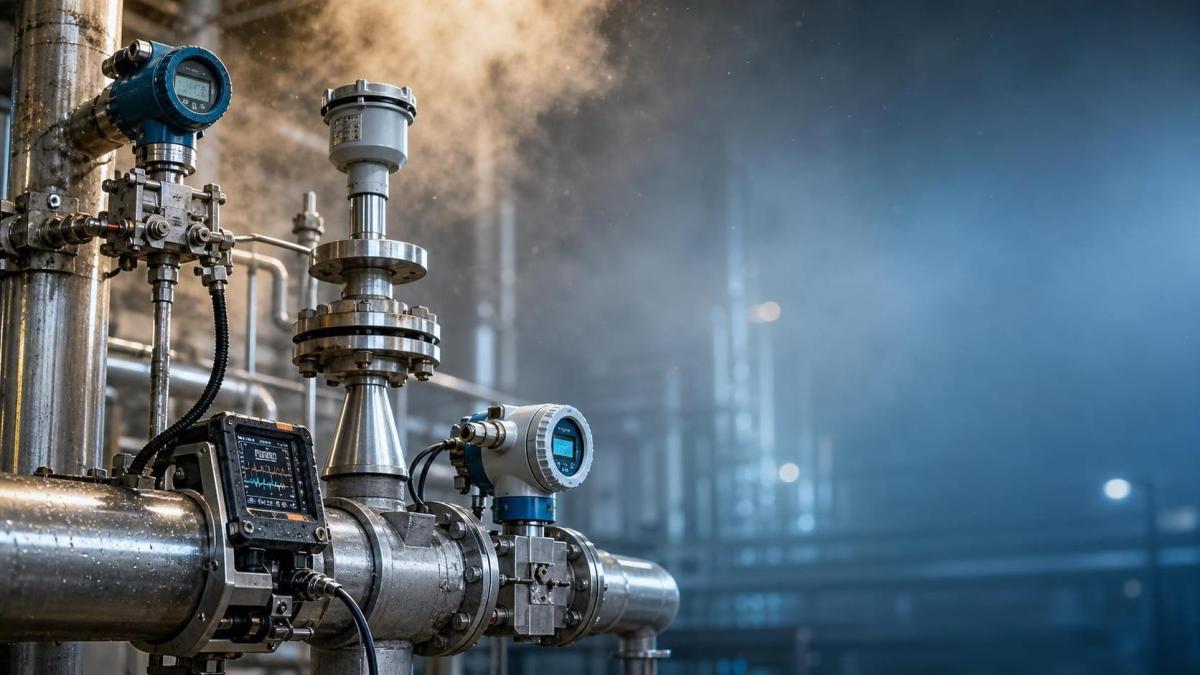
Extreme environment adaptability for process plants depends on material choices more than many teams admit
Project schedules often focus attention on line sizes, capacity targets, and automation architecture. Material selection can get reduced to a procurement exercise. In extreme environments, that is a mistake.
Reliability is strongly shaped by whether the selected materials can tolerate real operating stresses over time, including chemical attack, cyclic loading, erosion, and temperature variation. This applies not only to piping and vessels, but also to instrument diaphragms, cable jackets, gaskets, mounting brackets, and protective windows.
A plant may appear well specified on paper and still underperform if materials were chosen around nominal conditions instead of realistic transients. Startup, shutdown, flushing, cleaning cycles, and upset conditions often create the harshest stress combinations. Testing material behavior under representative conditions is therefore not a luxury. It is part of risk control.
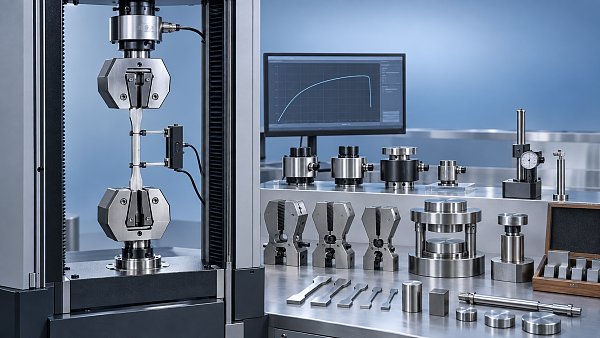
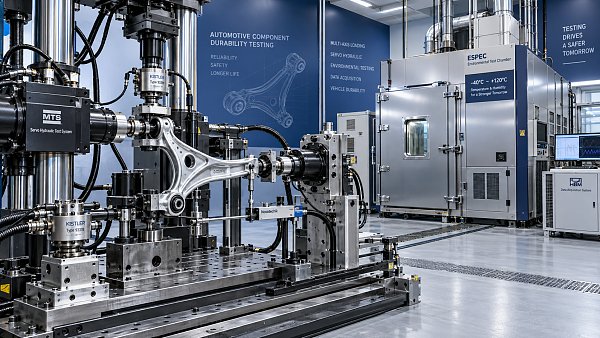
Material mechanics testing and environmental simulation help engineering teams validate how metals, polymers, composites, and coatings respond to repeated strain, compression, vibration, or heat exposure. That kind of insight is especially useful when plants are introducing new process chemistries, decarbonization-related media, or upgraded throughput targets that change operating envelopes.
Inspection should move closer to the failure origin
Many plants still inspect on a calendar basis, even when their operating environments vary dramatically across assets. That approach is familiar, but it is not always effective. In harsh duty, damage does not spread evenly. It concentrates in specific welds, elbows, supports, nozzles, rotating interfaces, and thermal transition points.
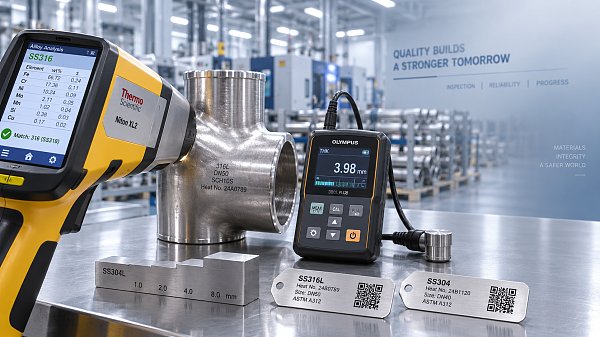
Non-Destructive Testing plays a crucial role here, not as a compliance afterthought, but as an early-warning system. Techniques such as phased array ultrasonics can help identify fatigue cracks, lack of fusion, corrosion under insulation risk zones, and weld discontinuities before they become critical. Industrial CT and other advanced methods may also support failure analysis or precision quality investigation in high-value components.
For project leaders, the key question is not “Do we perform NDT?” but “Are we inspecting the right features at the right intervals with the right resolution?” In extreme environments, smarter inspection targeting often delivers more value than simply increasing the volume of inspections.
A good practice is to map inspection strategy to three realities:
- Where process stress is highest
- Where consequence of failure is greatest
- Where early damage is hardest to detect through routine operations
This is also where cross-functional alignment matters. Reliability engineers, operations staff, inspectors, and instrumentation specialists often see different parts of the same degradation story. Plants improve faster when those views are stitched together instead of kept in separate reports.
Digital visibility is useful only when the signals are trustworthy
There is understandable excitement around predictive maintenance, wireless sensing, and digital twin programs. But in difficult industrial environments, digital initiatives fail when they are built on weak source data. A dashboard cannot compensate for unstable sensors, poor signal interpretation, or unvalidated alarm thresholds.
That does not mean digitalization should be delayed. It means the sequence matters. First, stabilize measurement integrity. Then connect and analyze.
For process plants seeking stronger extreme environment adaptability, the most practical digital gains usually come from a few focused actions:
- Adding condition-relevant sensing rather than flooding the system with generic data points
- Using industrial Ethernet or reliable 4–20mA infrastructure where deterministic signal quality matters
- Deploying wireless sensors in hard-to-reach zones where manual rounds leave blind spots
- Correlating pressure, temperature, flow, and vibration changes to detect drift patterns early
- Reviewing false alarms and missed alarms to refine maintenance triggers
Organizations like PIAS increasingly highlight the value of strategic intelligence in this area: not just collecting news about sensors and industrial metrology, but understanding how measurement technologies behave under real dust loads, pressure extremes, acoustic interference, or inspection complexity. For project teams, that kind of insight helps prevent expensive decisions based on marketing language instead of application fit.
Common reliability mistakes in severe-duty plants
Even experienced teams repeat a few patterns that weaken resilience.
One is overspecifying equipment in one dimension while ignoring another. A device may have the right pressure rating but poor resistance to vibration. A transmitter may survive temperature extremes yet become unreliable because cable routing or mounting was poorly planned.
Another is assuming a lab-certified instrument will perform the same way in the field. Real plants introduce buildup, pulsation, electromagnetic noise, condensate, maintenance access constraints, and operator workarounds. Reliability lives in those details.
A third mistake is separating measurement technology from maintenance planning. Instruments are often selected during design, then handed over with little discussion about calibration intervals, spare strategy, inspection points, or failure diagnostics. In harsh service, that handoff gap becomes costly.
What project managers should prioritize during design and upgrade phases
If you are leading a new build, expansion, or brownfield upgrade, reliability in extreme environments should be reviewed as a system-level design objective. A useful way to frame it is to ask where the plant is most likely to lose visibility, not just where it is most likely to lose hardware.
Priorities usually include:
- Critical measurement review: Identify which sensing points have direct impact on safety, product quality, energy efficiency, and unplanned shutdown risk.
- Application-specific instrument selection: Match flow, level, temperature, and pressure technologies to actual media behavior and environmental exposure.
- Materials validation: Confirm compatibility under both steady-state and transient conditions.
- Inspection planning: Define NDT methods and intervals based on damage mechanisms rather than habit.
- Data architecture: Ensure the plant can capture, trust, and act on asset health signals.
- Maintainability: Check whether field teams can safely access, test, clean, and replace critical components without creating new risk.
This is not glamorous work. It rarely gets highlighted in project launch presentations. But it is often the difference between a plant that merely starts up and a plant that stays dependable under pressure.
Reliability grows when precision and practicality meet
In severe environments, there is no single fix for reliability. Better materials without better sensing still leave blind spots. Better digital platforms without better inspection still miss physical degradation. Better instruments without practical maintenance planning still disappoint in the field.
The most resilient process plants are built around a simple discipline: detect early, verify accurately, and respond before stress accumulates. That is the real meaning of extreme environment adaptability for process plants. It is not only about surviving harsh conditions. It is about maintaining decision-quality information when conditions are at their worst.
For project leaders, that mindset changes procurement choices, inspection strategy, commissioning priorities, and digital investment. And in an industry where downtime, safety incidents, and quality losses are all expensive in different ways, that shift is more than technical. It is strategic.
Related Intelligence
 Wireless IIoT NodesOct 07, 2026How to Select Wireless Industry 4.0 Sensors for Reliable Machine MonitoringIndustry 4.0 sensors wireless guide: select reliable machine-monitoring devices by evaluating data quality, radio resilience, battery life, cybersecurity, and integration.
 Confocal Laser MicroscopesOct 06, 2026How to Select an Industrial Microscope for PCB, Solder Joint, and Bond InspectionIndustrial microscopy for electronics inspection: learn how to select the right system for PCB, solder joint, and bond inspection with practical tips on optics, lighting, resolution, and workflow.
 Wireless IIoT NodesOct 05, 2026Smart Wireless Sensing Solutions for Reliable Condition Monitoring in Remote AssetsSmart wireless sensing solutions enable reliable remote asset monitoring with actionable data to reduce downtime, improve safety, and optimize maintenance.
 80GHz Radar Level TransmittersOct 04, 2026How to Assess a Radar Level Meter Exporter for Hazardous-Area Tank ProjectsRadar level meters exporter assessment guide for hazardous-area tank projects—compare certifications, materials, documentation, lifecycle support, and total acquisition cost.
 Universal Testing MachinesOct 03, 2026Choosing Testing Equipment: Match Load Range, Accuracy, and Fixtures to Test NeedsIndustrial equipment specification guidance for testing equipment: match load range, accuracy, and fixtures for reliable results. Explore the selection checklist.
 Eddy Current & MPIOct 02, 2026Selecting Portable Material Testing Equipment for Field Inspection and QAPortable material testing equipment selection guide for reliable field inspection, QA traceability, safety compliance, and smarter material decisions.
 Commercial InsightsOct 01, 2026Selecting Process Instrumentation Solutions for Chemical Plants: Measurement RisksProcess instrumentation solutions for chemical plants: identify measurement risks, improve reliability, and choose technologies that support safer, smarter operations.
 Digital Profile ProjectorsSep 30, 2026Profile Projector Prices: What Buyers Should Compare Beyond the Initial CostProfile projectors price comparisons go beyond the initial quote. Explore optics, software, accuracy, service, and total ownership costs to choose the right inspection system.
 High-frequency Fatigue TestersSep 29, 2026Selecting Fatigue Durability Testing Equipment for Automotive ComponentsFatigue durability testing equipment selection for automotive components: match loading modes, controls, fixtures, and data quality to real-world failure mechanisms.
 Wireless IIoT NodesSep 28, 2026How to Design Industrial Sensing for Reliable Smart Factory OEE DataIndustrial sensing technology for smart factory OEE: learn how to design trusted signals, synchronize events, and improve production data reliability.
 Silicon Pressure TransmittersSep 27, 2026Selecting Pressure Transmitters for Middle East Heat, Dust, and Hazardous ZonesPressure transmitters Middle East guide: select reliable instruments for extreme heat, dust, corrosion, and hazardous zones with practical installation insights.
 Commercial InsightsSep 26, 2026How to Select a Benchtop Environmental Test Chamber for Thermal Cycling TestsBenchtop environmental testing chambers: learn how to select the right model for thermal cycling, airflow, ramp rates, payloads, and reliable test data.
 RTD/Thermocouple Sensors)Sep 25, 2026Selecting High-Temperature Sensors for Extreme Environments: Limits That MatterExtreme environment sensors high temperature: learn how to select reliable systems for harsh heat, corrosion, vibration, and thermal cycling.