How process plant instrumentation cuts downtime risk

For enterprise decision-makers, unplanned shutdowns are strategic threats, not simple maintenance events.
A strong process plant instrumentation strategy gives earlier warning, clearer diagnostics, and faster response across complex operations.
When flow, level, pressure, temperature, and condition signals stay accurate, plants reduce surprises and protect throughput, safety, and margins.
This article explains how process plant instrumentation cuts downtime risk, what to prioritize, and how to avoid costly implementation mistakes.
What is process plant instrumentation, and why does it matter for downtime?

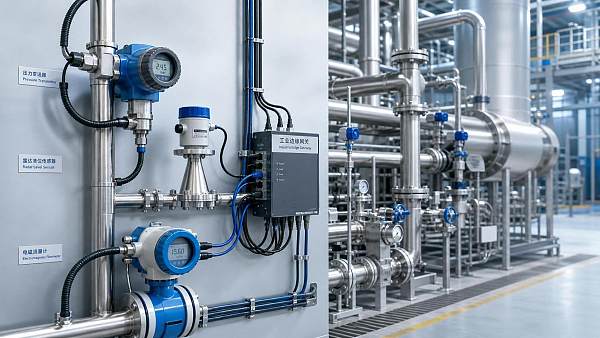
Process plant instrumentation includes sensors, transmitters, analyzers, control devices, and data interfaces used to monitor and regulate industrial processes.
It turns physical conditions into usable signals for operators, automation systems, maintenance teams, and digital platforms.
Without reliable process plant instrumentation, small deviations stay hidden until they become shutdowns, product loss, or safety incidents.
Instrumentation reduces blind spots in pipelines, vessels, reactors, pumps, compressors, and storage systems.
It supports stable control loops, predictive maintenance, alarm integrity, and root-cause analysis after disturbances.
In modern plants, process plant instrumentation also feeds Industrial Ethernet, historians, analytics platforms, and Digital Twins.
That data layer matters because downtime rarely starts with a dramatic failure.
It usually begins with subtle drift, unstable levels, pressure spikes, thermal imbalance, or poor measurement confidence.
PIAS closely tracks this shift toward deeper sensing intelligence across flow measurement, automated transmitters, NDT, optical metrology, and testing systems.
The common goal is simple: perceive problems earlier, verify conditions faster, and preserve operating continuity.
Which instrumentation points have the biggest impact on uptime?
Not every measurement point carries equal operational value.
The highest-impact process plant instrumentation usually sits around bottlenecks, safety-critical assets, and unstable process transitions.
The most important categories often include:
- Flow meters for custody, blending, batching, and utility efficiency.
- Level instruments for tanks, separators, boilers, and hazardous chemical storage.
- Pressure transmitters for pump protection, leak detection, and process stability.
- Temperature transmitters for heat balance, reaction control, and equipment health.
- Vibration and condition sensors for rotating assets tied to production continuity.
For example, inaccurate flow measurement can mislead operators about feed balance and create off-spec output before alarms trigger.
A drifting radar level meter may cause overfill risk or unnecessary pump trips.
An unstable pressure transmitter can hide fouling, cavitation, or valve issues that slowly damage equipment.
The strongest process plant instrumentation programs rank points by consequence, not by quantity.
That means linking each instrument to one of three outcomes: production continuity, safety protection, or quality assurance.
Where conditions are harsh, device selection should consider corrosion, dust, foam, vibration, pressure class, and cleaning cycles.
How does process plant instrumentation help detect failure before shutdown happens?
The value of process plant instrumentation is not limited to real-time display.
Its real power comes from trend visibility, deviation detection, and diagnostic context.
Early failure signals often appear as patterns rather than alarms.
Examples include slowly rising differential pressure, abnormal temperature spread, unstable level response, or repeated control valve corrections.
When process plant instrumentation is integrated with analytics, these weak signals become actionable maintenance indicators.
Common early-warning mechanisms include:
- Trend analysis against normal operating envelopes.
- Instrument self-diagnostics for drift, plugging, or communication issues.
- Cross-validation between related measurements.
- Alarm rationalization that separates nuisance events from real threats.
- Predictive models using historian and condition-monitoring data.
Consider a heat exchanger network.
Small temperature deviations may point to fouling long before throughput drops.
In a pump train, pressure and flow changes may reveal recirculation or wear before a shutdown trip occurs.
In storage and transfer systems, level anomalies may uncover buildup, false echoes, or venting issues.
PIAS highlights how advanced sensing, NDT, and intelligent diagnostics extend this warning window.
That wider warning window is what cuts downtime risk in practical, measurable ways.
How should plants choose the right process plant instrumentation for harsh environments?
Selection mistakes create hidden downtime risk even when devices look accurate in vendor literature.
The right process plant instrumentation must match both the process and the environment.
Start with the real operating profile, not only design specifications.
Actual startup cycles, contamination levels, vibration, cleaning methods, and maintenance access often decide field reliability.
Use this practical evaluation checklist:
High-performance technologies such as Coriolis meters, radar level devices, and monocrystalline silicon transmitters can improve resilience when correctly applied.
However, advanced technology does not compensate for poor installation logic or missing data integration.
What are the most common mistakes that weaken downtime prevention?
Many plants invest in process plant instrumentation but still struggle with repeated stoppages.
The problem is often not device absence, but system weakness.
Frequent mistakes include:
- Choosing instruments by purchase price instead of lifecycle risk.
- Installing redundant points without clear decision logic.
- Ignoring calibration discipline and signal quality checks.
- Failing to connect instrumentation data with maintenance workflows.
- Treating alarms as notifications rather than engineered interventions.
Another major issue is fragmentation.
Flow data, pressure trends, inspection records, and asset tests often sit in separate systems with limited correlation.
That blocks clear root-cause analysis during instability.
PIAS emphasizes stitched intelligence because instrument signals gain value when connected with NDT findings, visual inspection, and material behavior evidence.
This broader view helps distinguish process variation from physical degradation.
The best downtime reduction efforts combine reliable process plant instrumentation with disciplined interpretation, not hardware alone.
How can plants build a practical implementation roadmap without overextending budgets?
A successful rollout does not begin with full replacement.
It begins with prioritization, data value mapping, and measurable business outcomes.
A practical process plant instrumentation roadmap often follows five steps.
- Identify assets linked to the highest downtime cost.
- Review instrumentation gaps, drift history, and alarm burden.
- Upgrade critical measurement points first.
- Connect signals to analytics, CMMS, or historian platforms.
- Track results through downtime hours, quality loss, and intervention speed.
Wireless sensing can help where cabling cost delays deployment.
Smart diagnostics can reduce manual rounds for low-access or hazardous zones.
Verification tools such as NDT and material testing can support decisions around repair timing and remaining life.
That combination creates a stronger resilience model than isolated sensor upgrades.
Quick FAQ table: common questions about process plant instrumentation
Process plant instrumentation cuts downtime risk by converting uncertainty into measurable operating intelligence.
The most effective strategy focuses on critical assets, harsh-environment fit, diagnostic quality, and connected decision-making.
When instrumentation data is stitched with inspection, testing, and analytics, plants gain earlier warnings and stronger operational resilience.
The next step is to review the highest-consequence measurement points and define which gaps most directly increase shutdown exposure.
Related Intelligence
 Silicon Pressure TransmittersSep 03, 2026How to Design Hydraulic Pressure Monitoring for Early Leak and Overload DetectionHydraulic pressure monitoring guide for early leak and overload detection—optimize sensor placement, alarm logic, and data analysis to reduce downtime.
 Universal Testing MachinesSep 02, 2026How to Choose Programmable Extreme Environment Testing for Material QualificationProgrammable extreme environment testing: learn how to select reliable systems for material qualification, precise control, traceable data, and real-world failure analysis.
 Nanoindentation TestersSep 01, 2026Which ISO Standards Guide Polymer Crystal Analysis for Reliable Material Testing?ISO polymer crystal analysis: discover which ISO standards support reliable DSC testing, crystallinity evaluation, melting behavior, and material performance decisions.
 Wireless IIoT NodesAug 31, 2026What Data Does Industry 4.0 Need for Reliable Production Analytics?Industry 4.0 data needs analytics built on trustworthy process, condition, quality, and material data. Discover how traceable measurements power reliable production decisions.
 Wireless IIoT NodesAug 30, 2026Selecting Process Control Sensors for European Plants: Standards, Accuracy, and IIoT IntegrationProcess control sensors Europe: learn how to select compliant, accurate, IIoT-ready instruments for safer, more reliable plant operations.
 Commercial InsightsAug 29, 2026Pressure Measurement in Latin America: Growth Drivers and Demand by IndustryPressure measurement Latin America: explore growth drivers, industry demand, digitalization, and supplier insights for energy, mining, water, and process industries.
 Wireless IIoT NodesAug 28, 2026Industrial Sensing for Process Plants: A Practical Guide to Measurement PointsIndustrial sensing guide for process plants: learn how to select reliable flow, level, pressure, temperature, and condition-monitoring measurement points.
 Universal Testing MachinesAug 27, 2026How to Select Material Testing Equipment for Rubber Across Tensile and Fatigue TestsMaterial testing equipment for rubber: learn how to select tensile and fatigue systems with the right grips, sensors, controls, and environmental options for reliable results.
 Silicon Pressure TransmittersAug 26, 2026How to Select High Pressure Instrumentation for Corrosive and High-Temperature ServiceHigh pressure instrumentation selection for corrosive, high-temperature service: learn how to compare materials, seals, temperature limits, and installation risks for safer, longer-lasting performance.
 RTD/Thermocouple Sensors)Aug 25, 2026How to Choose High Precision Stainless Steel Sensors for Corrosive Industrial EnvironmentsHigh precision sensors stainless steel selection guide for corrosive industrial environments. Learn how to compare materials, seals, stability, and outputs for reliable long-term performance.
 Commercial InsightsAug 24, 2026How to Evaluate Industrial Measurement Equipment Suppliers in Latin America?Industrial measurement equipment Latin America buyers can learn how to compare suppliers by accuracy, certification, service, and logistics to reduce risk and source with confidence.
 Commercial InsightsAug 23, 2026How to Improve Process Plant Reliability in Extreme Environments?Extreme environment adaptability for process plants starts with reliable sensing, smart materials, and targeted inspection. Learn practical ways to reduce downtime and boost uptime.
 Universal Testing MachinesAug 22, 2026How to Select Material Testing Solutions for Composites in Aerospace and AutomotiveMaterial testing solutions for composites: learn how aerospace and automotive teams choose the right mix of mechanical, NDT, and durability tests to cut risk and speed approval.